Key Takeaways
- A direct booking website lets hosts accept reservations without relying on OTAs like Airbnb, saving 12–18% in commission fees.
- Hosts gain full control over pricing, policies, branding, guest communication, and upsells.
- A direct booking site helps build a long-term, recognizable rental brand, not just an Airbnb listing.
- Essential features include real-time availability, secure payments, calendar sync, automation, SEO, and trust signals.
- Platforms like WordPress, Lodgify, Hostaway, Guesty, Hostfully, and Uplisting make setup easy—even without tech skills.
- SEO, social media, email marketing, and paid ads are critical to driving traffic and bookings.
- Costs include domain, hosting, booking engine, payment processing, maintenance, and marketing, but ROI is higher long-term.
- Direct bookings are legal, safe, and scalable when done with proper tools, policies, and compliance.
- Overall, building a direct booking website is a smart long-term investment for hosts aiming for growth, stability, and higher profits.
Airbnb’s direct booking website means having a dedicated website for guests and lists the properties so the guest can come and directly book instead of using any OTA platform. The main benefit hosts or property owners get is no commission and the chance to build their own brand in the rental industry.
For guests, they can get a more personalized experience and more offers from the hosts.
For those who are just starting their careers in this rental industry or who have already been working for years, moving to a direct booking website for rental can prove to be one of the best decisions. But this comes with confusion and concern about how to build a website, what the cost would be, what features to mention, and how to attract guests and generate consistent direct bookings without relying on OTAs.
Do not worry at all, because today we are here to help you with everything you need to know for the Airbnb direct booking website, from building to promoting. You don’t need advanced technical skills to get started, as Platforms like WordPress, Hostify, and other vacation rental website builders offer ready-made templates and built-in booking features.
Stick with us; we will walk you through a detailed guide on the Airbnb direct booking website for hosts.
We Help You Create a
Booking Website
What Is an Airbnb Direct Booking Website?
A direct booking website is a host’s personal online travel agency where the host lists the properties, sets pricing, with an integrated booking engine so guests can directly book the property without searching on third-party platforms like Airbnb.
The contact information is given to the vacation rental website, so the guests can contact or use the direct booking button to book the property. Many hosts have dedicated social media pages where they promote their property, and guests can reach out to the host through social channels, too.
Guests can explore the property, check descriptions, facilities, availability, and pricing on the direct booking website. Some websites may have a dedicated blog page or recommendations for nearby sights.
(25%) of hosts and property managers moved to a direct booking site for their business growth in 2024. This is because short-term rental platforms charge 14 – 18% from guests and a service fee from hosts, with many restrictions. Having a direct booking website, property owners and hosts can save this fee.
Hosts can easily make booking websites using WordPress, Lodgify, Hostaway, and Guesty.
A direct booking website is different from an Airbnb listing in terms of:
- On your direct booking site, you set your own rules, prices, fees, cancellation policy, and brand story.
- Zero commission fees.
- You build your own guest list (Airbnb doesn’t share data).
No competition next to you. (On Airbnb, guests see your listing and 20 similar listings)
Avoid stuffing too many words or using ALL CAPS. Instead, make your title guest-focused and easy to scan.
Booking Engine vs Channel Manager
If you are planning to have your own short-term rental direct booking channel, then you may either go for a booking engine or a channel manager. How do they differ?
A booking engine lets guests book your property directly from your website. It handles availability, pricing, payments, and instant confirmations. This is just like Airbnb, but on your own platform.
A channel manager connects all your booking channels (Airbnb, Booking.com, Vrbo, and direct website) in one place. It updates your calendar, rates, and availability automatically so you never deal with double bookings or manual edits.
Why Hosts are Switching to Airbnb Direct Booking Websites?
Hosts, property owners, or those who have dedicated rental websites share their real-life stories on why they switched to a booking website:
- No worrying about getting shut down by Airbnb for the weird/unfounded reasons.
- More control over how things are run, and decision-making, etc.
- More control over guest experience/branding
Most hosts are afraid of having a separate booking website because they worry about the payment process, find guest screening to be a hassle, and feel uncomfortable without AirCover. They also think STR platforms already have an established audience, so it would be harder to attract guests on their own.
But the reality is that an Airbnb direct booking website can help,
Avoid High Airbnb Service Fees
With an Airbnb direct booking website, you need to pay 0$ commission or any charge, but let’s check how the OTA platforms are charging you,
- Starting Oct 27, 2025, Airbnb moved all PMS-connected hosts to a 15.5% host-only fee.
- VRBO pay-per-booking charge of 8% per booking (5% commission + 3% processing).
- Booking.com charges 10–25%, with a global average of 15%.
When you have a website for your property booking, the whole profit is yours, with no additional charges or fees.
Higher Per-Peservation Value
With direct bookings, hosts can increase average booking value by offering ancillary services and upsells without OTA limitations. Add-ons such as flexible check-in times, premium services, or local experiences can be easily included in the direct booking flow. Guests benefit from greater flexibility and choice, while hosts gain more control over pricing and overall booking value.
Build Your Own Brand
Let’s be honest, do you have a unique identity in front of your guests? You are like one of thousands of hosts listing your property on Airbnb for your guests. But having a short-term rental direct booking channel, you have your own identity, your tone of voice, your personalized commitment to your guests.
With a website logo, the color, the narration, the reviews, and your unique property features, your guests remember you. This builds trust and your authority, like any other business out there. You get the chance to build a community of loyal guests.
Own Your Guest Data (Email + Phone)
Airbnb does not share much data about the guest, which is a reason hosts can not personalize the communication or properly market their property.
But with a website, you can save the emails, phone numbers, age, preferences, and make a detailed buyer persona. Now, whether you run meta ads about your rental property or want to use organic content, you can reach the right audience.
Increase Profit Margins
Most property owners or hosts who are focusing on expanding their rental business move to a direct booking website because Airbnb cuts a good amount of profit as a charge. With 0$ commission, you can keep the whole profit and use it to expand your business, which means a good increase in your profit margin.
More Control Over Policies & Pricing
Airbnb has its own set of policies and pricing that a host can not personalize based on their preferences. But when you are running your rental business without any control of Airbnb, you can set your own polices, house rules, check-in and check-out times, and everything.
Offer discounts for your guests or special offers, as you want to build your relationship with your guests fully under your own control and decision.
Flexibility in Payments
Hosts can choose their preferred payment gateway and set their own payout schedule, giving full control over financial management. Guests benefit from a variety of convenient payment options—such as credit cards, digital wallets, or direct transfers—making the booking process smooth and hassle-free.
Long-Term Business Stability
When you are running your rental business under a platform control, you can not properly market your property, nor have a separate brand visibility. Today, to reach the global guest, a separate and strong online presence is most important. By walking through this path, you can expect your long-term business sustainability.
Ability to Run Paid Ads for Bookings
A direct booking website gives hosts full control over marketing, making paid advertising an effective strategy to drive reservations. While organic marketing helps, running targeted campaigns on platforms like Facebook, Instagram, Google, or TikTok allows you to reach a wider audience and attract more guests directly. Unlike OTA listings, where marketing spend benefits the platform, here your investment promotes your property and strengthens your brand, helping you generate bookings without paying commission fees.
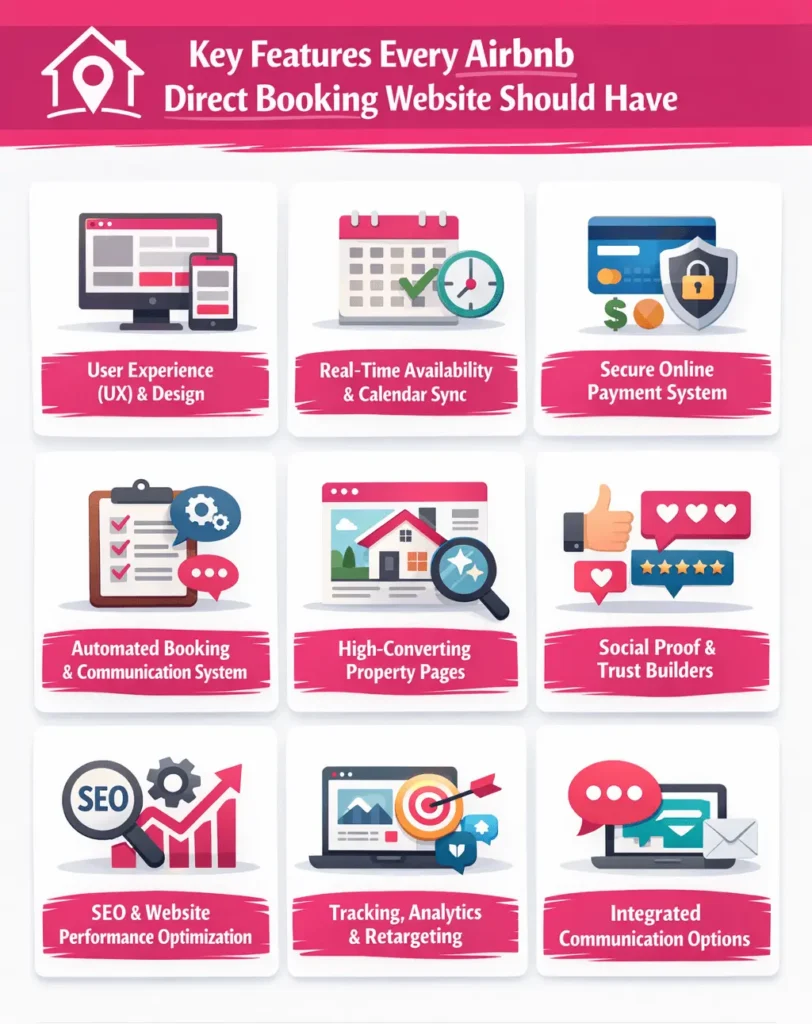
Key Features Every Airbnb Direct Booking Website Should Have
Your Airbnb direct booking website is the digital face of your rental business. Guests will come to your website to check the property and book. If the user experience, or navigation, is not good, or if you do not optimize the pages, then chances are high that guests will move to your competitors’ site and never come back.
For a good booking website, the UX design should be nice with clear layouts, live calendars, a good payment system, and properly SEO optimized. Let’s check the features that you should be careful with when creating your rental booking website.
1. User Experience (UX) & Design
A direct booking website should be clean, intuitive, and visually consistent with your brand. Use a clear color palette, simple layouts, and easy-to-read fonts to guide guests naturally through the site. Avoid clutter by focusing on essential information—strong headlines, short descriptions, high-quality images, and clear calls to action—so guests can quickly understand your property and move toward booking with confidence.
2. Real-Time Availability & Calendar Sync
A direct booking website should be featured with keeping your properties’ availability accurate at all times with live calendar updates. It should sync with OTAs like Airbnb, Booking.com, and VRBO. For this, some use iCal or a channel manager. As soon as a guest books a property in any of the OTAs, the website gets updated automatically. This helps prevent double bookings.
After the reservation, guests get instant confirmations and automated emails that reduce manual work.
3. Secure Online Payment System
For the guest’s convenience, a direct booking rental website must have multiple payment options with a secure payment Gateway. If guests find it difficult to make the payment, then they may not want to take the hassle and not book.
For each property, there should be transparent pricing and fees, so the guest can clearly know what they are paying for with no hidden charges.
4. Automated Booking & Communication System
Today, everything is online, and the Airbnb platform is very convenient to use with everything digital, from booking, communication to payment. Your website should have an automated booking system too, such as Instant Booking or Request-to-Book.
To reduce the manual work, most booking engines (like Lodgify, Uplisting, Hostaway, WP Booking System) automatically collect guest details at checkout. These details: name, email, phone, and stay dates, are stored in your dashboard.
Also, embed signup forms or pop-ups on your site that automatically save guest emails into your email marketing platform.
Or if you use RM/Automation Tools like GoHighLevel, HubSpot CRM can store all visitor/guest data automatically.
5. High-Converting Property Pages
Each property page should include clear, original descriptions that highlight what makes your rental unique. A complete and well-organized list of amenities, along with transparent house rules and booking policies, helps set clear expectations before guests book. This is especially important for hosts who have had their Airbnb property turned off and want a reliable, independent booking channel. Clear property pages build trust, reduce guest confusion, and minimize the risk of disputes after check-in—making guests more confident in booking directly.
6. Social Proof & Trust Builders
You are working hard for your guest satisfaction and getting reviews, and there must be some previous 5-star reviews too. Use these as a tool for trust building. The rental direct booking website should have a separate section on the home page for the guest reviews. If you are active on social media pages, then share the reviews are post with a good caption to attract the guests’ attention.
7. SEO & Website Performance Optimization
A direct booking website needs strong SEO and fast performance to attract real guests.
A SEO-optimized website must have content with keyword-rich titles, headings, and meta descriptions. The best is using local keywords like “vacation rental in [city]” so travelers can find you easily.
Keep your site fast with optimized images. You can add vacation rental schema markup to help Google understand your property details better. SEO takes time but improves visibility and boosts your chances of ranking higher in search results.
8. Tracking, Analytics & Retargeting
Your direct booking website should track every visit so you know where your guests come from. This way, you can know which pages convert best.
- Install Google Analytics to monitor traffic and user behavior.
- The Meta Pixel lets you retarget visitors with Facebook and Instagram ads.
- Use UTM tracking to get clear insights into which campaigns or links are driving bookings.
9. Integrated Communication Options
Guests should be able to contact you easily and quickly, similar to the experience they get on Airbnb. A direct booking website should include clear communication options such as a contact form, live chat, or a WhatsApp chat button. Automated replies and quick-response tools help answer common questions instantly, even when you are unavailable. Faster response times build trust, reduce booking hesitation, and improve the overall guest experience, increasing the likelihood of direct bookings.
Benefits of Building Your Own Direct Booking Website
For hosts, it’s about financial gain and building their own brand.
- You save around 12–18% on Airbnb fees because there’s no platform charging commission.
Increase your revenue with repeat guests since you can keep their contact info and invite them to book again without extra fees. - Build a professional brand online by having your own website that shows your property.
Create higher trust and credibility because guests see you as a real business. - You get flexibility in your pricing and upsells, and offer add-ons like early check-ins, tours, or breakfast without restrictions.
- Do SEO and rank for local keywords, so travelers searching for stays in your area can discover you directly on Google.
- You can run ads and retarget visitors using Meta Pixel or Google Ads, helping you bring back people who visited your website but didn’t book.
Benefits of Building a Direct Booking Website for Your Guests
For guests, it’s about a more personalised experience at a better price.
- Guests enjoy a lower total cost with no hidden fees. Direct booking removes platform service fees and gives them a small discount from the host.
- The pricing is more transparent and easier to understand.
Guests get more flexibility with cancellation, payments, and check-in/check-out times. They can discuss their needs directly with the host instead of following strict platform rules. - Direct booking gives guests a direct line with the host. Guests can ask questions, request special arrangements, and feel more confident before their stay.
- Guests receive a more personalised experience.
- Direct communication helps build trust and comfort for the guest.
How to Create an Airbnb Direct Booking Website (Step-by-Step Guide)
To create an Airbnb direct booking website, you can use a platform such as WordPress or another one, choose your domain, and buy a hosting plan based on your budget. Then the design part comes, where you can use templates, but be careful about the information sections you are adding to the pages, so your guests get proper information.
Step 1: Choose a Platform
The first step is to decide which platform you want to use to build your direct booking website. Some popular options include:
- WordPress + Booking Plugins – A flexible CMS where you can add booking engines and automation features using plugins like WP Booking System or MotoPress.
- Lodgify – A vacation rental website builder with a built-in booking engine, payment processing, and calendar sync.
Hostaway – Provides a full PMS with website builder, booking engine, and channel management. - Guesty – Offers a branded direct booking website and multi-channel property management.
These already include booking and automation features.
Step 2: Register Domain + Hosting
Buy a domain name that reflects your rental brand or location—something easy to remember and relevant to travelers searching for short-term stays. Next, select a reliable hosting plan that ensures your website is fast, secure, and available 24/7.
Website speed and uptime are critical for both user experience and SEO, as slow or unavailable websites can lead to lost bookings. For WordPress or other CMS platforms, consider hosting providers optimized for performance and security, such as SiteGround, Bluehost, or WP Engine.
Step 3: Add Booking Engine + Calendar Sync
Integrate a booking system that allows guests to check real-time availability and make instant reservations. To prevent double bookings across platforms, sync your calendar with Airbnb, Booking.com, and Vrbo using iCal or a dedicated channel manager. This ensures that your website always reflects accurate availability, reduces manual work, and builds guest trust. Popular booking engines include Lodgify, WP Booking System, Guesty, and Hostaway.
Step 4: Set Up Payment Gateway (Stripe recommended)
Connect a secure payment method, such as Stripe or PayPal, so guests can pay directly on your website using credit/debit cards or digital wallets. Transparent and reliable payment options improve guest confidence and increase conversion rates. Make sure your checkout process is smooth, mobile-friendly, and PCI-compliant for security.
Step 5: Design High-Converting Pages
Each of the pages on your website should have a nice and clear design that is easy to navigate. Keep these pages on your website,
Airbnb Direct Booking Websites Pages:
- Home
- Property details
- Gallery
- Pricing
- Privacy Policy
- Contact
- Blog
Add these to your vacation rental website design
- Custom domain name
- Logo, Branding, Colors
- Hero title & image
- Unique selling points (USPs)
- Promotions
- Guest reviews
- Badges & certifications
- Website footer
- Clear call-to-action (CTA)
A clear layout and easy navigation help to keep the visitor stay longer on the page longer. If they find it difficult to find information like where your property listings are, or how easily and quickly they can book.
Place the “Book Now” button or other CTA buttons cleverly so the guest can easily find them.
Add high-quality, eye-catching, and original pictures of your properties. You can take help from a professional photographer. Also, in the logo, use a simple, easy-to-remember, and include your brand color in it.
Along with the most important point is the mobile responsiveness because 90% of people navigate websites from their mobile devices.
Step 6: Add Trust Elements
Either you can make a separate trust element page to showcase your guests’ testimonials or add a section on the home page. Mention the reviews, verified badges, or security icons. You may share your Airbnb 5-star reviews of any other testimonials you got from other booking platforms.
Step 7: Track Everything
Each of your guests’ information, which page they are staying longer, where they came from, and which property they are checking longer. These are easily trackable with Google Analytics.
Meta Pixel tracks visitors who land on your website from Facebook or Instagram. UTM links add small tags to your URLs so you can see exactly which source brought a visitor
So, set up,
- Google Analytics
- Meta Pixel
- UTM Links
How to Get More Bookings Through Your Direct Booking Website?
One of the main concerns a property owner or host has when moving to a direct booking website is how to get bookings. Initially, it may seem a bit tough, but adopting a proper strategy like SEO optimization, social media promotion, or a paid ad campaign can make the calendar full of bookings.
1. SEO Optimization
A lot of hosts underestimate how much organic search can bring free bookings. If someone types “luxury cabin in Asheville” or “pet-friendly stay in Miami,” and your direct site appears.
For Airbnb direct booking SEO, the goal is to attract travelers with high booking intent and convert them into direct guests. This requires strong Local SEO, a fast and mobile-friendly website, optimized property pages, and content that supports travel-related searches. By combining location-based keywords, trust signals like reviews, and a clear booking flow, hosts can improve visibility on Google and reduce reliance on OTAs over time.
What You Need to Do for Direct Booking SEO:
- Keyword Research (Booking-Intent Focused): Research keywords travelers actually use, such as “vacation rental in [city],” “pet-friendly stay in [area],” or “Airbnb alternative in [location].” Prioritize location-based and intent-driven keywords over generic terms.
- Local SEO Optimization: Optimize for geo-keywords, add location pages, and include nearby landmarks, neighborhoods, and attractions to strengthen local search visibility.
- On-Page SEO for Property Pages: Optimize titles, headings (H1–H3), meta descriptions, image alt text, internal links, and URLs for each property page to improve rankings and conversions.
- Website Speed & Performance: Improve page speed by compressing images, using caching, and choosing quality hosting. A fast-loading site improves rankings and reduces booking drop-offs.
- SEO-Friendly Website Structure: Ensure your website is mobile-friendly, secure (HTTPS), and easy to navigate, with clear internal linking between pages.
- Content That Attracts Travelers: Publish local guides, FAQs, seasonal travel content, and “things to do” articles to bring in organic traffic at different stages of trip planning.
- Guest Reviews & Trust Signals: Display guest reviews, ratings, and testimonials to improve credibility, engagement, and booking confidence.
- Link Building & Local Citations: Build backlinks from local tourism websites, travel blogs, directories, and hospitality platforms to increase domain authority.
- Traffic from Airbnb & Repeat Guests: Encourage repeat guests to book directly by offering exclusive discounts, flexible policies, or added perks (while staying platform-compliant).
- Clear Booking Paths & UX Optimization: Use visible CTAs, live calendars, and a simple checkout process to turn SEO traffic into confirmed bookings.
Add schema markup like “LodgingBusiness” or “Hotel” schema. This can help Google understand your listing better.
Cover helpful blog content like “Best things to do in ___,” “Local food guide,” or “Family activities near ___” attract organic readers.
Good SEO becomes helpful for long-term growth, and it keeps bringing direct bookings without paying commission to OTAs.
2. Social Media Strategy
You can use social platforms to drive direct bookings, promote targeted ads, and post valuable, engaging content regularly for organic reach. Also, connect with the guest by replying to comments or through the inbox. Make a plan and a Google Sheet with content publication dates, good captions, attractive property photos to share, and move ahead with a good social media strategy.
Instagram/Facebook engagement is converting at 0.91% CTR across hospitality. TikTok ads yield 73% video completion rates.
3. Email Marketing for Repeat Guests
Email campaigns can get sub-50% open rates but turn one-time guests into repeats that raise the chance of filling 20-30% of calendars from past bookers.
Property owners or hosts can collect the emails easily from the website visitor. The best is sending custom design and personalized emails by segmenting the audience, instead of sending generic emails to all audience.
CleverTap is an amazing tool to send emails using custom templates or images inside the emails, and send them to the target audience.
4. Paid Ads (Meta, TikTok, Google)
Paid Ads are the best to reach a wider audience, that is, your guests worldwide or from the selected countries you want your guests to come from. For this, you need to spend some bucks, but that is for sure worth it.
| Platform | Avg CPC | Avg ROI | Conversion Rate |
| Google Ads | $2.69 | $8 per $1 | 4.40% |
| $1.86 | $4.20 per $1 | 1.85% | |
| TikTok | $0.98 | $3.60 per $1 | 1.22% |
5. Retargeting Using Pixel Tracking
Stats show Facebook pixel retargeting converts website abandoners at 2-3x higher rates than cold traffic for rentals. Custom audiences from property views get 15-25% booking uplift.
Most guests check the photos, read a bit, and leave; sometimes to compare prices on Airbnb.
Pixel tracking helps you bring those same visitors back.
When you add a Meta Pixel or Google Tag to your direct booking website, you can retarget anyone who visited your site but didn’t complete a booking. These ads show up on Instagram, Facebook, or Google.
6. Guest Loyalty Program
Loyalty incentives boost repeat bookings by 25-40% in short-term rentals by rewarding returns. Airbnb hosts can use this to get more repeat bookings.
Cost Breakdown for Building a Direct Booking Website
A direct booking website is like your own mini Airbnb. But one that you fully control. And yes, there are some costs involved. Here’s what you should expect, in simple words:
- Domain & Hosting: A domain is your address ($10–$20/year). Hosting keeps your website live ($3–$30/month, depending on quality).
- Booking Engine: This is what lets guests check availability, book, and pay directly on your site. You can use tools like Lodgify, WP Booking System, or similar. These usually start around $12–$20/month.
- Channel Manager (Optional at first, important later): If you want your Airbnb, Booking.com, and direct website calendars to sync automatically (so no double bookings), you’ll need a channel manager. Tools like Hostaway, Uplisting, or Guesty cost anywhere from $20 to $50+ per month, depending on your setup.
- Payment Processing: When a guest pays through Stripe or PayPal, they take a small fee, usually around 2.9% + 30¢ per transaction. It’s the same system Airbnb uses behind the scenes. This is a normal cost for any business accepting online payments.
- Website Design & Setup: Now, this depends on you:
- If you build it yourself, it might cost as little as $0–$200.
- A freelancer may charge $500–$4,000 based on your needs.
- Agencies can go $3,000–$15,000+ for custom work.
- Maintenance & Security: Websites need small updates, backups, and security checks. This usually costs $10–$200/month.
- Marketing Budget (The part most hosts forget): If you want traffic, you need at least a small budget for visibility. This can be $50–$200/month for small-scale hosts. If you run ads, you may need $300–$1,000+.
- Extra Tools (Optional but Helpful): You need a review widget or CRM tools. These costs can be small ($10–$100/month).
- Professional Photos: It’s the #1 thing that improves booking conversions. Pro photos cost $100–$500. You pay one time, and it pays off in higher nightly rates and more direct bookings.
Best Tools, Platforms & Templates for Direct Booking Websites
Today, creating a website and running your online business is no more a matter of piles of code or an expensive web developer. You can use Lodgify, Hostaway, or WordPress to make your own direct booking rental website. Here we have mentioned some of the popular tools that can help you create your own website.
1. Lodgify
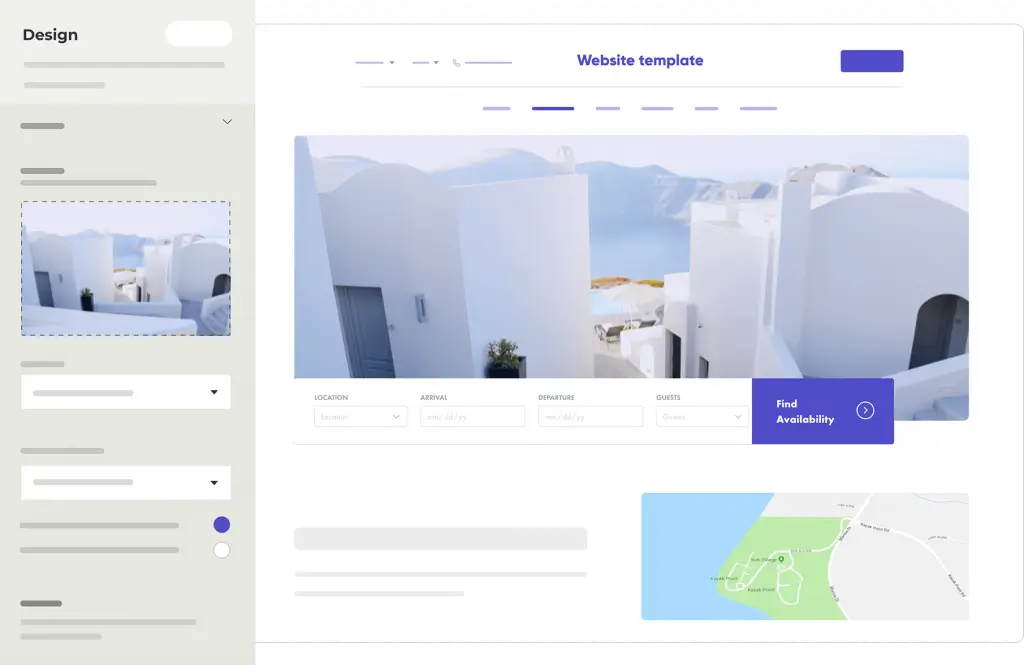
Lodgify lets you create a fully functional direct booking website in just a few minutes. You can pick a template that you like. Add your property details, and connect your domain. Your site is ready to take bookings. It also comes with a built-in booking engine, payment processing, and calendar sync with Airbnb/Booking.com. Explore Lodgify’s website builder and ready-made templates designed specifically for short-term rentals.
Good to know:
No tech skills needed. Everything is drag-and-drop. It also offers SEO-friendly templates.
2. Hostaway
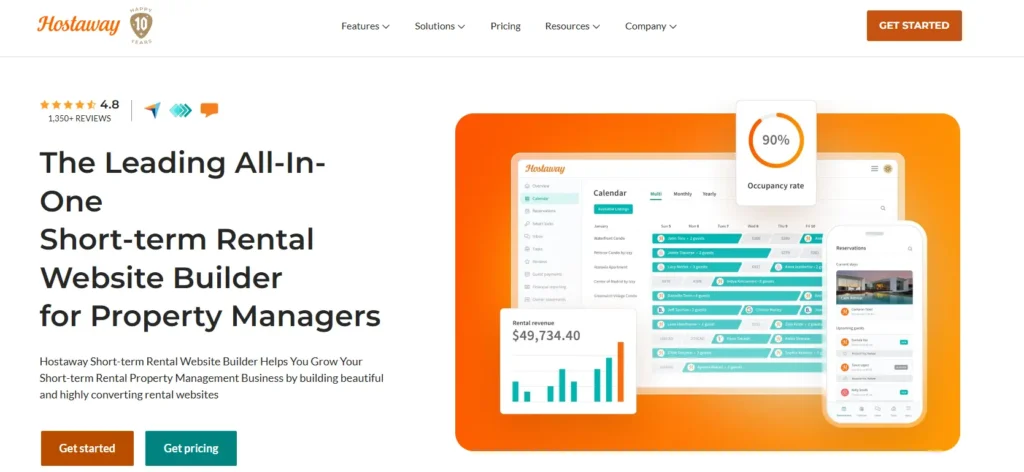
Hostaway gives you a booking engine + website builder. This works perfectly with its powerful PMS and channel manager. You can create a direct booking page or a full website where guests can search availability and book instantly. Hostaway offers ready-made templates and a website builder to help short-term rental hosts attract more direct bookings.
Good to know:
Hostaway is the host with multiple listings. It keeps your Airbnb, Booking.com, and VRBO calendars synced automatically.
3. Guesty
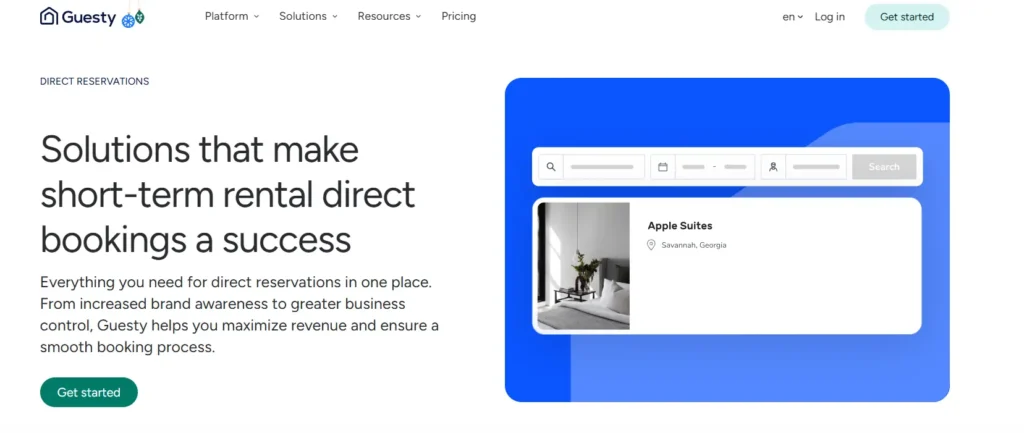
Guesty offers a branded direct booking website for Pro and Enterprise users. You can also add their booking engine to any existing website. The platform manages everything and multi-channel distribution. Guesty offers ready-made templates to help hosts manage bookings and attract more guests directly.”
Good to know:
It’s a full-service PMS, so the website becomes just one part of your entire property management workflow.
4. Uplisting
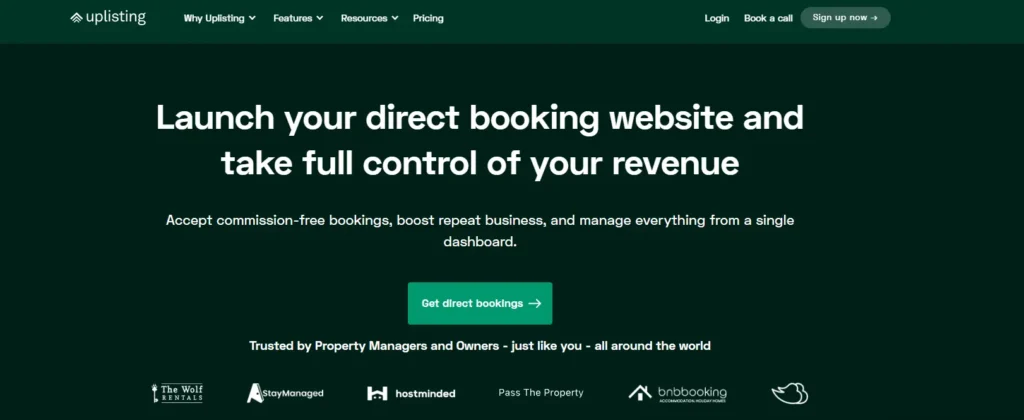
Uplisting includes a simple but effective direct booking site that is mobile-optimized and quick to set up. You can also embed its booking widget into any website. It handles availability, syncing, guest messaging, and payment processing. Build your short-term rental website quickly with Uplisting’s templates and integrated booking tools.
Good to know:
Uplisting is very clean, fast, and reliable; no complicated setup.
5. Hostfully
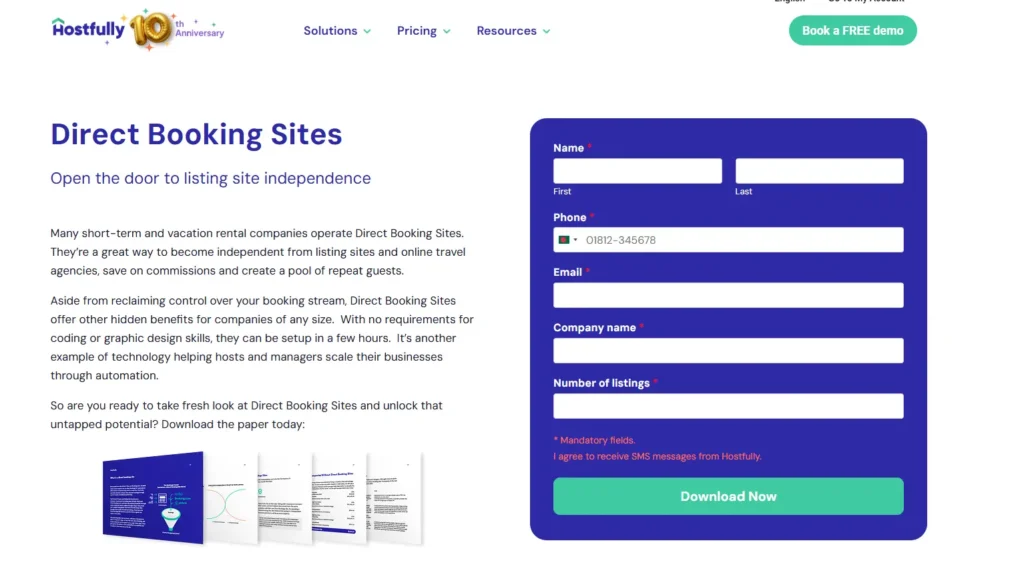
Hostfully lets you create a branded direct booking website. Or you can simply embed its booking/search widget into your current site (like WordPress or Wix). All availability and rates update automatically from its PMS. Build your short-term rental website quickly with Hostfully’s website builder and integrated booking features.
Good to know:
It integrates smoothly with many OTAs and tools for more control while keeping everything synced.
6. WordPress + Booking Plugins (WP Booking System, MotoPress, etc.)
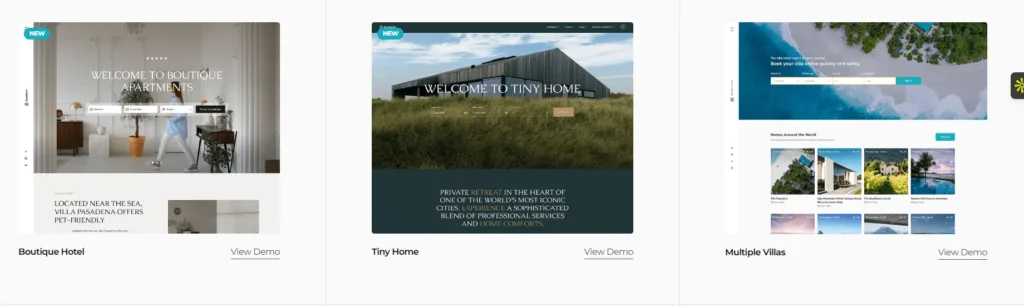
With WordPress, you can build a fully custom direct booking website. Add a booking plugin or a PMS widget. You can get instant bookings with payment processing. It gives you total control over branding and layout. WordPress offers flexible templates and plugins to help hosts create branded direct booking sites.
Good to know:
You can customize everything: design, features, SEO, marketing, and tracking.
When One Is Better Than Others
- Just starting out, small scale: Lodgify, Uplisting; easy setup, minimal time investment.
- Managing multiple properties or growing portfolio: Hostaway, Guesty, Hostfully; strong channel management, automation, and scalability.
- Custom branding & full control: WordPress + Booking System; flexible design, custom workflows, full control.
- Balanced features + ease + automation: Hostfully or Hostaway; enough power without overcomplication.
Comparing Direct Bookings vs Airbnb
First thing is, your profit stays yours with a direct booking website, and you get full control over your online rental business and guests.
With an OTA platform like platform you need to pay a commission to them. Though Airbnb has its own customer base where hosts do not need to spend much marketing effort, this limits the branding and communication. While having an Airbnb direct booking website, you get to build your own brand in the rental industry and goal for long-term business stability.
Category | Direct Bookings | Airbnb |
Commission Fees | No OTA commission; only payment processing fees (e.g., Stripe). | 15.5% host-only fee (as of Oct 27, 2025). |
Brand Control | Full control over website, design, policies, and guest experience. | Limited control; must follow Airbnb’s rules, layout, and policies. |
Guest Communication | Direct contact with guests from start to finish; no platform restrictions. | Messaging stays inside Airbnb; some limits on sharing info before booking. |
Marketing Needs | Requires your own marketing (SEO, ads, social media, repeat guests). | Airbnb provides built-in traffic and a global audience. |
Risk Levels | Higher responsibility: fraud checks, payments, screening, policies. | Safer for beginners: Airbnb handles payments, verification, and AirCover. |
Direct Booking Website Examples (Real-Life Inspiration)
Check these two direct booking rental websites that showcase their properties beautifully on their websites and attract guests.
Prime Executive
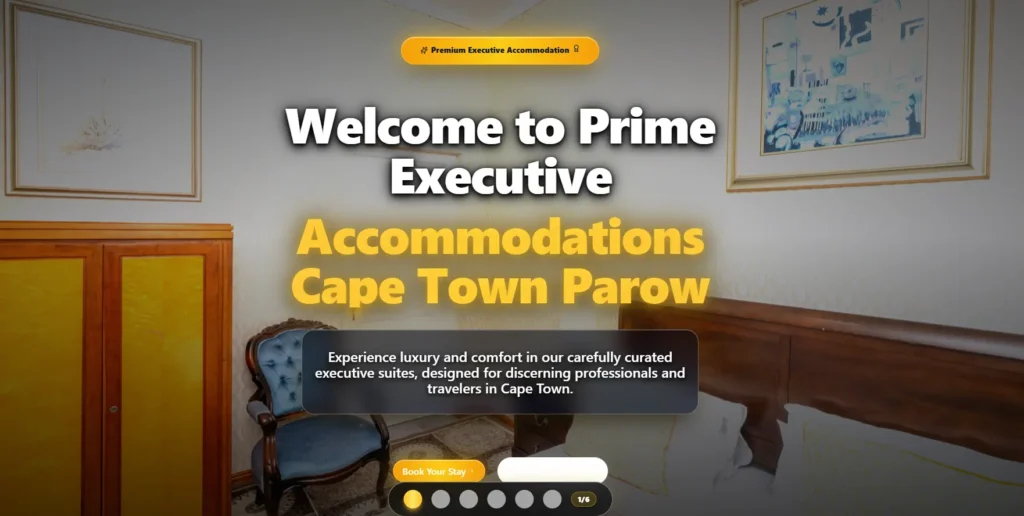
Prime Executive uses a very clean and premium-looking design. Their homepage highlights luxury amenities and high-quality photos. There are clear CTAs (“Book Now”) for a smooth experience for guests. They also showcase multiple properties with well-organized details. The website loads fast and gives a professional booking feel.
Unique features:
- Polished brand identity
- Strong visuals and room showcases
- Gallery
- Easy booking flow + instant confirmation
- Great for attracting business travelers and long-stay guests
Parker Guest House
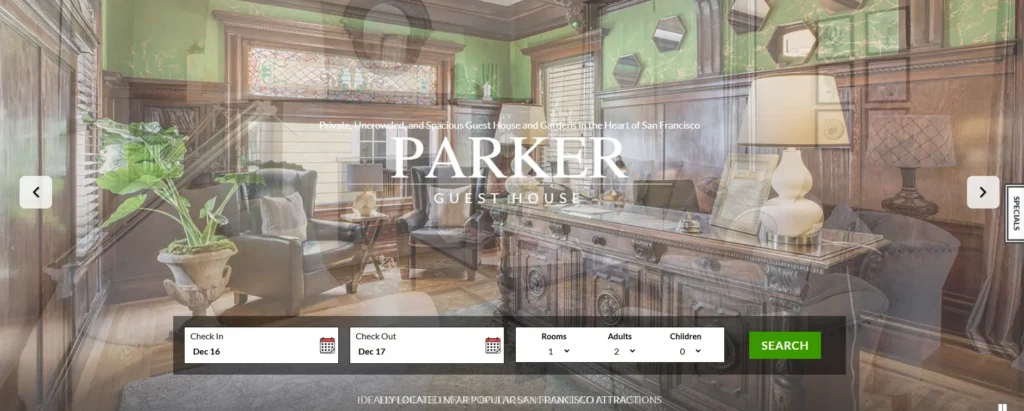
Parker Guest House shows a warm, boutique-style design. You get a reflection of the charm of the property. They use friendly copy, clear room descriptions, and highlight what makes them different. Their website also shows reviews, awards, and local recommendations.
Unique features:
- Strong storytelling and personality
- Trust-building elements (reviews, awards, media mentions)
- Simple navigation and clear room categories
- Appeals to travelers who value experience + local atmosphere
How STR Assistance Can Help You Build a Direct Booking Website?
Do you Need Help to Create Airbnb Dircet Booking Website?
STR Assistance is a short-term rental (STR) company providing expert virtual assistant for Airbnb and other vacation rental platforms. Our experienced VAs specialize in guest communication, pricing optimization, cleaning management, and full STR operations.
Unlike traditional website development companies, we truly understand the STR industry. We also have a dedicated marketing team handling Airbnb content marketing, SEO, and a specialized team focused on creating direct booking websites.
We’ve already helped many clients build professional, high-converting direct booking websites, so you don’t need to worry about design, management, or technical setup. We handle everything for you, making it easy to grow your rental business and maximize direct bookings.
Is an Airbnb Direct Booking Website Worth It? ( Conclusion)
Yes, an Airbnb direct booking website is worth every one of your efforts and money. You invest your time and money in creating your own brand in the rental industry, whatever you earn is fully yours, and you get full control to expand your rental business.
- You keep more profit. No 12–18% OTA fees, no commissions, and every booking gets more money.
- You build your own brand, not Airbnb’s. Guests remember you, return to you, and trust your business long-term.
- You gain full control. Pricing, policies, payments, upsells, marketing, repeat guests, and the entire guest experience stay in your hands.
Do You Still Have Questions About Airbnb Direct Booking Websites?
Here are answers to the most common questions about Airbnb direct booking websites:
How to Launch a Direct Booking Website in Minutes?
Use a platform like WordPress, Lodgify, or Guesty. Choose a template, add your property details, connect payments, and publish.
How do I find my bookings on Airbnb?
Go to your Airbnb Host Dashboard → Calendar → Reservations. All upcoming and past bookings appear there.
Do guests trust direct booking websites?
Yes, if the website looks professional, has clear policies, verified payment options, and strong reviews. Trust grows with transparency.
How do I sync my Airbnb calendar?
Copy your Airbnb iCal link and paste it into your direct booking site or channel manager. Then import the platform’s calendar back into Airbnb. This makes syncing two-way.
Can I connect Stripe to my direct booking website?
Yes. Most booking site builders and PMS tools let you connect to Stripe in a few clicks through their payment settings.
How do I prevent double bookings?
Use iCal syncing or a channel manager. They update your calendar automatically when a booking comes in from any platform.
Is it legal to take direct bookings?
Yes. Direct bookings are legal as long as you follow your local short-term rental laws, licensing rules, and tax requirements.