Airbnb Host Damage Protection reimburses hosts up to $3 million for guest-caused damage. But most claims fall apart because of the gap between what hosts expect and what they actually receive. Also, Airbnb’s policy officially changed on April 20, 2026, with stricter evidence rules. AI-generated photos are now banned, along with several other rule changes.
In the rental business, most Airbnb hosts only read their damage protection policy after something goes wrong. By then, it’s often too late. That’s why every Airbnb host must have a clear idea of damage protection rules, AirCover policies, and all.
AirCover for Hosts is a part of the damage protection policy, which sounds great on paper. The host may get up to $3 million in damage protection, free with every booking and no enrollment needed. In reality, many hosts claim they get only 40 to 70 percent from their documented losses. Reddit threads are full of frustrated hosts asking for $20,000 and being offered $959.
This guide comes from inside STR Assistance’s own claims process. We work closely with hosts every step of the way, follow Airbnb’s rules carefully, and take full responsibility for each claim from start to finish. Nujhat Jabin, our Head of Operations, leads the team behind that process, having filed 300+ Airbnb damage claims for hosts across 800+ managed listings, with a 98% approval success rate.
To help you claim the damage protection policy if something happens to your Airbnb, we will discuss what’s covered in the Host Damage Protection Terms and what’s not. Also, how to file a claim that wins, and what to do when one gets denied or reduced.
- Key Takeaways
- Coverage limit: AirCover for Hosts provides up to $3 million in damage reimbursement per booking, free with every Airbnb stay.
- Filing deadline: You have 14 days from checkout or before the next guest checks in, whichever comes first. The second clause is the trap most hosts miss.
- 2026 changes: AI-generated photos are banned, smoke odor claims need professional invoices, consumables like shampoo and coffee are excluded, and arbitration moved back to AAA.
- Why claims fail: Missed deadlines, weak documentation, no pre-stay baseline photos, and inability to prove the guest caused the damage are the top four reasons.
- It’s not insurance: AirCover is a contractual guarantee from Airbnb. It pays depreciated value, not full replacement cost. Most hosts still need separate short-term rental insurance.
What is Airbnb Host Damage Protection?
Host Damage Protection is the piece of AirCover for Hosts that actually pays out when something goes wrong. If a guest causes physical damage during their stay, or damages your belongings and refuses to pay, this coverage reimburses you up to $3 million per incident.
Or we can say, Airbnb Host Damage Protection is a formal claims process that provides a structured way to handle damage incidents rather than leaving hosts and guests to resolve them independently.
This policy helps reduce hosting risk, increases trust in the platform, and encourages property owners to list their homes on Airbnb. It also aims to stay unbiased, as hosts must meet Airbnb’s requirements and provide sufficient evidence to claim.
It applies automatically to every Airbnb booking. You don’t need to enroll, you don’t pay extra, and you don’t need to add it manually. The moment you accept a booking on the platform, you become eligible for the damage protection policy.
Before we go deeper, two things you should understand right away. Damage Protection is not insurance. It’s a contractual guarantee from Airbnb.
We’ll come back to why that distinction matters when you’re filing or disputing a claim.
What Is Included in AirCover for Hosts
AirCover for Hosts comes with four protections together: damage protection, liability insurance, guest identity verification, and a 24/7 safety line.
You should know which category your damage falls into.
- Host Damage Protection: Up to $3 million for guest-caused property damage when the guest doesn’t pay.
- Host Liability Insurance: Up to $1 million if you’re legally responsible for a guest injury or damage to their belongings.
- Guest Identity Verification: Airbnb verifies guest identities and screens reservations for risk signals.
- 24-Hour Safety Line: Priority support from trained safety agents for urgent issues during a stay.What Changed in Airbnb’s 2026 Damage Policy
What Changed in Airbnb's 2026 Damage Policy
Airbnb updated its Host Damage Protection terms effective April 20, 2026. The biggest changes are an AI evidence ban, a new definition of legitimate evidence, stricter smoke odor rules, formal exclusion of consumables, and a return to AAA arbitration in the US. This is the most significant update since Host Damage Protection was introduced in 2022.
If your claims are based on the old rules, you need to update it. Here’s what’s different.
1. AI-Generated Evidence Is Now Banned
Airbnb bans strictly AI-generated, AI-enhanced, upscaled, or synthetic photos and receipts in damage claims. Host needs original, unaltered camera files.
Airbnb introduced this rule after a Manhattan superhost case. The host submitted a $16,000 claim after a guest spotted the same coffee-table crack in different positions across multiple photos. Even routine cleanup filters can now lead to automatic rejection.
2. "Legitimate and Verifiable Evidence" Has a Formal Definition
Evidence should be true, accurate, and not doctored or falsified in any way. You need proof of causation that shows the guest directly caused the damage.
Previously the term was undefined and inconsistent. Now it has formal requirements. Timestamped photos, dated receipts, professional repair quotes, and a clear evidence chain that proves the damage happened during the responsible guest’s stay.
3. Smoke Odor Claims Require Professional Remediation Invoices
Hosts can no longer claim for smoke odor based on personal cleaning. You now need an invoice from a professional remediation service. New rules also clarify acceptable remediation types and the proof of causation.
Worth noting: this works both ways. Guests can’t file minor smoke complaints against you without solid evidence.
4. Linen Stain Eligibility Has Been Narrowed
Standard linen stains are now part of normal hosting. If removing the stains needs professional cleaning, you may be compensated.
Hosts on Reddit have reported linen claims in the $80–$150 range under the new rules. If you’re filing for makeup, blood, or food stains, you can get higher compensation.
Interestingly, we once helped a host recover $200 for damaged bed sheets. The guest had not only stained the sheets but had also burned one side and tried to hide the damage before checking out.
5. Consumables Are Now Formally Excluded
Hosts provide the consumable items, and guests use them during their stay. These items are no longer eligible for damage claims.
The items are: toiletries, paper products, lightbulbs, disposable batteries, coffee, tea, sugar, milk, cleaning supplies, and shampoo or coffee pods.
6. Hosts Must Take "Reasonable Care" to Avoid Loss
The updated terms clarify that hosts must take reasonable care to prevent damage. If you fail to do so it could affect claim eligibility. Airbnb can use this clause to reduce or deny payouts. So, document your maintenance and inspection routine.
7. US Arbitration Moved Back to AAA
The primary US arbitration provider has switched from ADR Services to the American Arbitration Association (AAA). The proceedings are now confidential.
Filing costs are around $225 under AAA versus $400 or more previously. The confidentiality clause also means you won’t see public records of similar cases.
8. Terms Acceptance Deadline Was April 20, 2026
Every host account created before February 5, 2026, has to accept the updated Terms and Privacy Policy by April 20, 2026, to keep using Airbnb.
If you miss the acceptance, it will mean no new bookings, paused payouts, and frozen host tools. If for any reason you haven’t accepted the new terms yet, log in immediately.
What Airbnb Host Damage Protection Covers
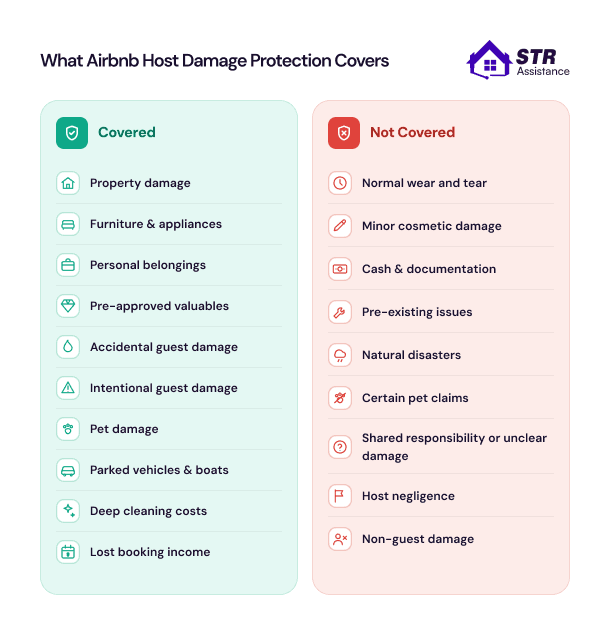
Host Damage Protection covers physical damage to your property and belongings, certain valuables, pet damage, parked vehicles, deep cleaning costs, and lost booking income up to $3 million per incident.
Here’s what each covered category is, with the gotchas every host should know.
Property Damage and Personal Belongings
The policy covers structural damage, furniture, appliances, electronics, and pre-approved valuables like fine art or jewelry. This includes holes in walls, broken windows, damaged flooring, ruined sofas, cracked appliances, and stolen TVs.
Pre-approved valuables only qualify if you’ve documented them with timestamped photos and proof of ownership before the stay.
Guest-Caused Damage Types
Both accidental and intentional damage caused by guests or their invitees are covered.
Accidental damage is the common case: a wine spill on the rug, a broken lamp, a chipped countertop. Intentional damage includes party-related destruction, vandalism, and theft. You have to prove the guest did it, not the previous one, and not normal wear.
Pet Damage Protection
Damage caused by guest pets is covered, whether your listing allows pets or the guest brought an unauthorized animal.
Common pet claims include chewed furniture, scratched flooring, urine-soaked carpets, and torn upholstery. If your listing is pet-friendly, this comes up regularly. If your listing prohibits pets and a guest brings one anyway, you may still qualify. Also, you have grounds for a separate claim under house rule violations.
Vehicle and Boat Coverage
Cars, boats, and other watercraft that you park or store on your property are covered against guest-caused damage.
You become eligible when a guest backs into your parked car in the driveway or damages a stored kayak. Remember to keep separate auto and watercraft insurance for those cases.
Deep Cleaning Protection
You can claim the AirCover compensation for extra cleaning costs for guest-caused situations like pet accidents, biohazard cleanup, and professional smoke odor removal. If your own Airbnb cleaning management team handles turnovers, they should be the ones flagging these situations before cleanup begins, not after.
For biohazard cleanup (blood, vomit, drug residue), you must get itemized invoices from a specialized service.
Booking Income Loss Protection
AirCover compensates for the lost income if you have to cancel confirmed Airbnb bookings because of guest damage. Though this rule is underused.
If a guest damages your kitchen and you have to cancel the next three bookings while it’s repaired, attach the cancellation screenshots to your claim. The reimbursement covers the booking revenue you lost, not just the repair.
What Airbnb Host Damage Protection Does NOT Cover
AirCover does not cover normal wear and tear, cosmetic damage, personal cash, maintenance issues, natural disasters, certain pet-related claims, and damage where shared responsibility is unclear.
Most denied claims fall into one of these categories.
Normal Wear and Tear
Gradual deterioration from regular use is never covered, even when the damage is visible after a guest’s stay.
Faded paint, scuffed floors, worn-down upholstery, and minor stains from repeated use are part of hosting. Airbnb’s review team is trained to spot these patterns.
Cosmetic Damage
Minor cosmetic damage like small scratches, surface scuffs, or tiny chips that don’t affect function isn’t covered.
A scratched coffee table, a small wall scuff, or a chipped ceramic mug falls below the threshold. Threshold is fuzzy, but if a reasonable person would say “that’s just hosting,” Airbnb will likely agree.
Personal Cash and Valuables
Cash, securities, and valuables you didn’t pre-document are excluded from AirCover.
Don’t leave cash, jewelry, or unprotected valuables in the property. If something high-value is on site, you should document it with timestamped photos, proof of purchase, and an itemized inventory before the guest arrives.
Maintenance Issues
Pre-existing maintenance problems and damage you could have prevented with reasonable upkeep are not covered.
A leaky pipe that finally burst during a guest’s stay is your problem, not theirs. Same with appliances that were already failing. The 2026 “reasonable care” clause makes this stricter than before.
Natural Disasters
Damage from earthquakes, floods, hurricanes, fires not caused by guests, and other natural events isn’t covered under AirCover.
These belong on your homeowner’s policy or a dedicated short-term rental insurance plan. AirCover is strictly for guest-caused losses, not acts of nature.
Pet Damage Limitations
Pet coverage has limits around assistance animals, certain accumulated damage patterns, and damage that shows clear signs of host negligence.
If your listing allows pets and the damage is consistent with normal pet behavior, expect closer scrutiny. Service animals are legally protected, and you can’t refuse a claim purely because the animal was on the property.
Shared Responsibility Situations
When it’s unclear whether the guest, a prior guest, or a host-caused issue led to the damage, Airbnb may deny or split the claim.
Back-to-back bookings without clear pre-check-in documentation create this exact problem. Without timestamped baseline photos before the guest arrived, Airbnb has reasonable doubt about causation.
How to File an Airbnb Host Damage Protection Claim?
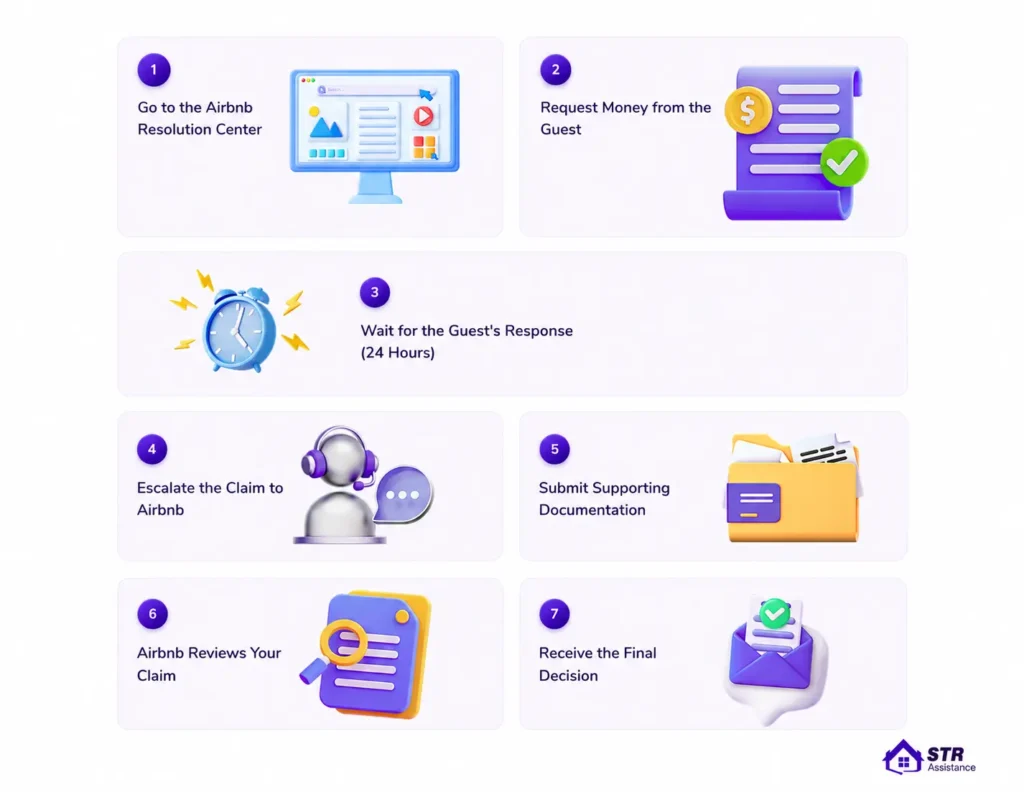
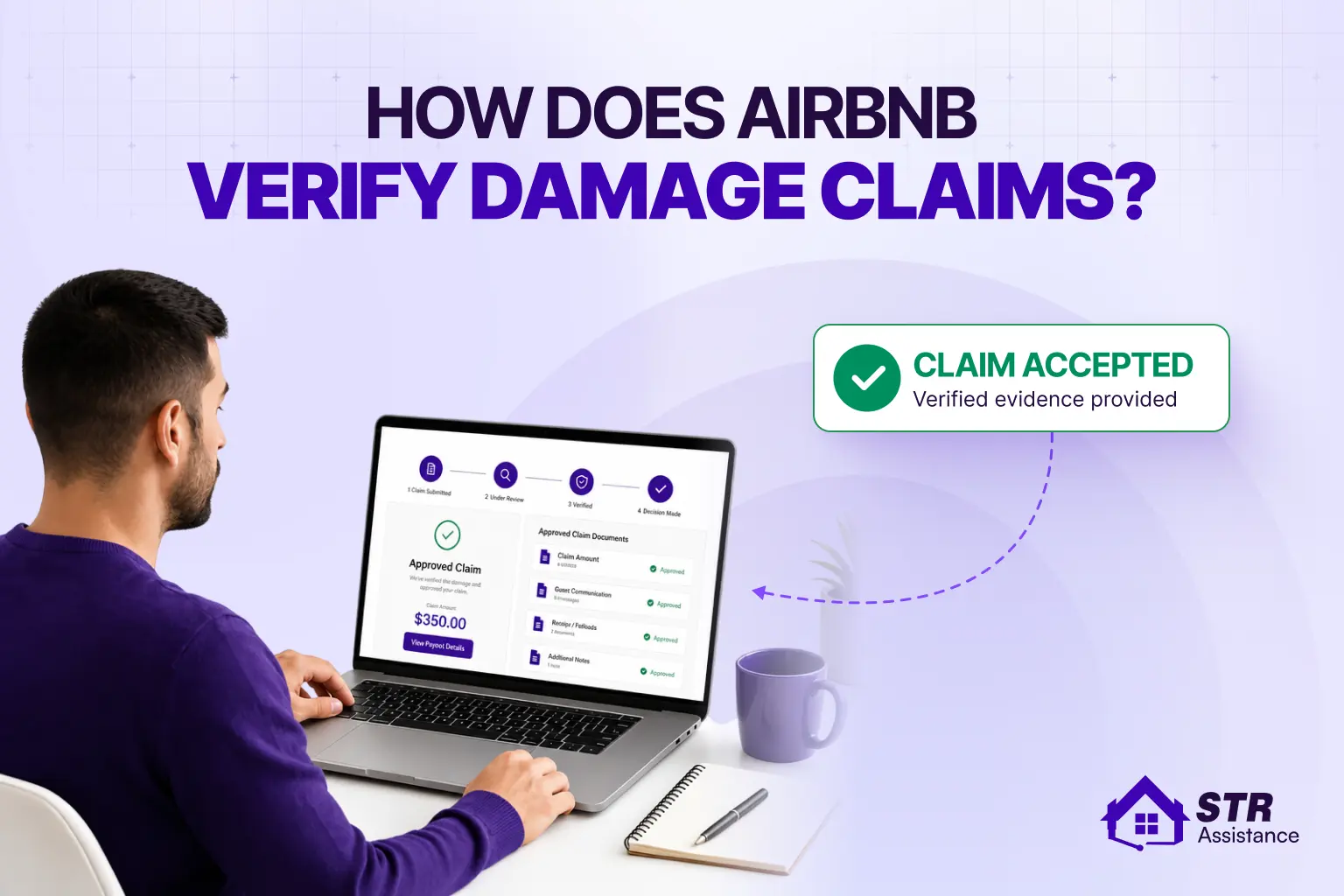
To file a Host Damage Protection claim, document the damage, contact the guest through Airbnb’s Resolution Center within 14 days, and contact Airbnb if the guest doesn’t pay. Then submit your evidence, including photos and invoices, with a clear written description.
To get the compensation for the damage, you must have proper evidence and every single detail.
Below we break down the filing rule that confuses most hosts, then walk through each step in order.
The 14-Day Filing Rule Explained
You must submit the claim within 14 days of checkout. But if a new guest checks in sooner, the deadline becomes that check-in time.
If your next guest is arriving in two days, your filing window is two days. Not 14. If you miss it, your claim is invalid. Only 56.75% of claimed amounts approved and 43.25% of claims denied or reduced below requested amount. This proves Airbnb does not make any exceptions.
In peak season, such as summer, Thanksgiving, or the Christmas holiday season, this gets serious. Your cleaner finds a cracked tile at 12:00 PM. Your next guest checks in at 4:00 PM the same day. You now have roughly four hours to photograph everything and get a repair estimate. Then submit a Resolution Center request.
In our work with hosts running multiple properties, we’ve seen hosts lose claims worth thousands because they assumed they had 14 days. But they need instant cleaner reporting, pre-built evidence templates, and a Resolution Center workflow that can be executed in under an hour.
Practical tip: set a calendar reminder the moment damage is discovered. Treat the next guest’s check-in time as your hard deadline.
Step-by-Step Claim Filing Process
The claim process moves through seven stages, from documenting the damage to receiving the final decision. Each step has a specific time window.
Here’s the full sequence, with what to do at each stage.
Step 1: Go to Airbnb's Resolution Center
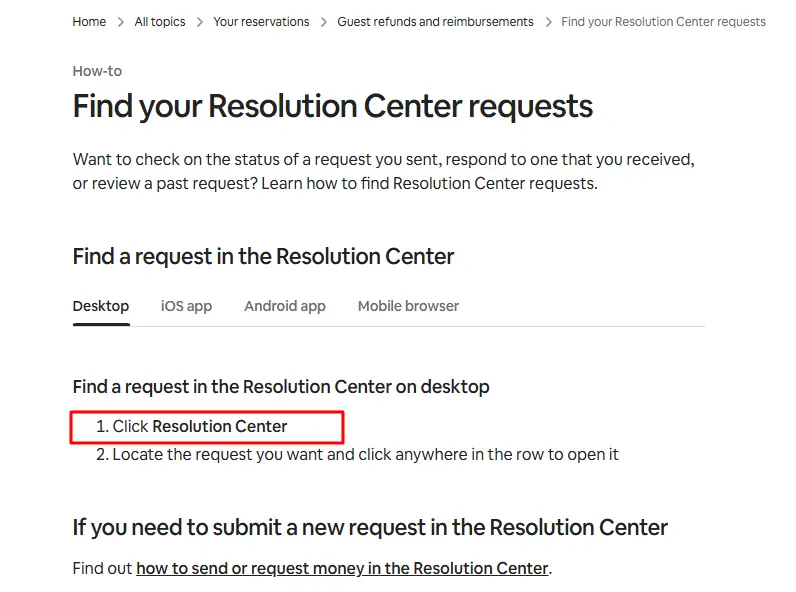
Log in to airbnb.com, go to your inbox, open the relevant reservation, and click the Resolution Center option. You can also access it directly from the help menu. Use the desktop site if possible. The mobile app has fewer filing options and is harder to navigate during a time-sensitive claim.
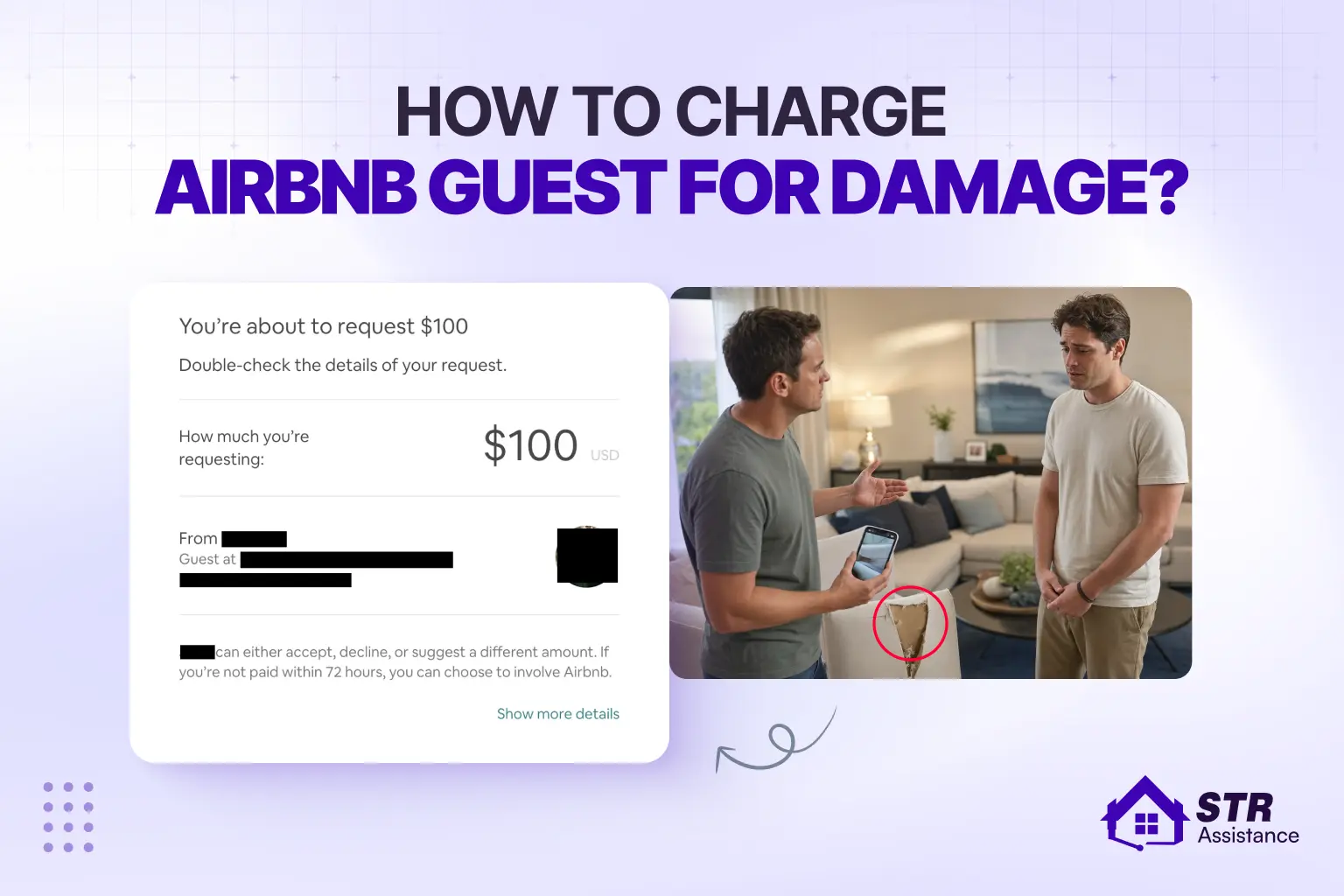
Step 2: Select "Request Money" from the Guest
Choose the reservation and select the reason as damage, missing items, or unexpected cleaning. Enter the amount based on your repair estimate or receipts. Write a brief, factual description. For a full walkthrough on calculating the right amount to charge, see our guide on how to charge an Airbnb guest for damage.
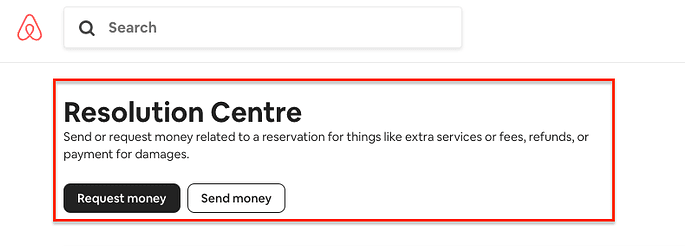
Step 3: Wait for Guest Response (24 Hours)
The guest has 24 hours to accept the request, pay partially, decline, or ignore it. If they pay in full, the case closes. If they decline, partially pay, or don’t respond, you move to the next step. Don’t escalate before 24 hours have passed. Airbnb requires you to give the guest a chance first.
Step 4: Escalate to Airbnb if Needed
After 24 hours without resolution, the option to involve Airbnb appears in the Resolution Center. Click it. Airbnb Support takes over and reviews the case under Host Damage Protection. You’ll receive a case number. Save it for every future communication.
Step 5: Submit All Documentation
Upload every piece of evidence: timestamped photos, professional repair quotes or paid invoices, the guest message thread, your itemized damage list, and any proof of ownership for valuable items. Submit it all in one batch. Airbnb’s review team works faster when they don’t have to chase missing pieces.
Step 6: Airbnb's Claims Team Reviews the Submission
The team reviews documentation, may contact you for clarifications, and assesses whether your evidence meets the new 2026 “Legitimate and Verifiable Evidence” standard. Reviews typically take a few days to several weeks depending on complexity. Respond to follow-ups within 24 hours. A 24-hour lag can push your case to the back of the queue.
Step 7: Final Decision
Airbnb sends a final decision: full approval, partial reimbursement (often reduced for depreciation), or denial. Payouts are processed within roughly two weeks of approval. If the decision isn’t what you expected, you can appeal. We cover the appeals process in the next section.
Why Airbnb Damage Claims Get Denied or Reduced
The most common reasons claims get denied or reduced are missed deadlines, weak documentation, or no pre-stay baseline photos. Some hosts claim wear and tear as damage, and amounts that don’t match the evidence.
Reason | % of Denials | Details |
Insufficient documentation | 50% | Wrong file format, poor sequencing, or missing evidence. |
Wear and tear | 20% | Damage classified as “gradual deterioration” not guest-caused. |
Pre-existing damage | 13% | Host can’t prove damage happened during the guest’s stay. |
Insufficient proof | 10% | Format/sequencing issues trigger automatic rejection. |
Outside coverage scope | 7% | Claim falls into AirCover exclusion categories. |
Almost every denial we’ve seen comes down to one of the following ten failures.
- Miss the 14-day deadline, and the claim is usually over, even if you’re only a few hours late.
- Time matters. File within 10 minutes of discovering damage → 91% approval rate. Wait longer than 10 minutes → drops to 57% approval rate.
- No pre-check-in photos means no proof that the damage wasn’t already there.
- Wear and tear isn’t damage. Scratched paint, aging furniture, and normal use are rarely covered.
- “The room was damaged” isn’t enough. Show exactly what was damaged, what caused it, and what it costs to fix.
- No invoice, quote, or receipt? Airbnb has very little to base a payout on.
- Keep important conversations on Airbnb. Messages sent through text or WhatsApp are much harder to use as evidence.
- Don’t clean up or repair the damage before documenting it. Once the evidence is gone, it’s hard to prove what happened.
- If your photos suggest the damage existed before the stay, the claim will likely be rejected.
- Inflated costs can hurt your credibility. Claim what it actually costs to repair or replace the item.
- A partial payout doesn’t always mean the case is closed. If you have stronger evidence, it may be worth appealing.
What to Do If Your Claim Is Denied or Reduced
You can request clarification from Airbnb in writing. Then submit additional evidence as an appeal. Now you can correct any documentation gaps and go through senior support if the case warrants it.
A denial or partial payout isn’t always final. Many hosts accept the first decision because they don’t realize they can push back.
- Request a clear explanation: Ask Airbnb in writing exactly why the claim was reduced and what evidence would change the outcome, and reference your case number.
- Submit fresh evidence: If you get new photos, an updated professional estimate, or additional message history after the initial decision, submit them as an appeal.
- Push back on depreciation: If the reduced offer reflects depreciation on items that shouldn’t depreciate (like flooring or recently purchased appliances), provide proof of purchase and replacement cost.
- Escalate to senior support: Call Airbnb directly, reference your case number, and ask to speak with a senior claims agent if the front-line decision feels wrong.
- Consider AAA arbitration: For larger claims, the 2026 shift back to AAA makes arbitration more accessible. The filing costs now are roughly $225, much cheaper than before.
- Pursue the guest separately: AirCover is contractual, not insurance, so nothing stops you from pursuing the guest in small claims court for the gap. Know more about what happens if you don’t pay Airbnb damages.
What Documentation to Include With Every Claim
Every winning claim should contain six core documents: before photos, after photos, video of the damage, repair estimates or paid receipts, an itemized list, and the Airbnb message thread.
This should be like a small evidence package. Submit it all at once by organizing everything cleanly.
- Before photos: Take timestamped photos during your pre-check-in inspection to show the property’s condition before the guest arrives.
- After photos: Take both wide-angle and close-up photos of the damage. Include the surrounding area for context.
- Video walkthrough: Record a short video of the damaged area. Videos can provide details that photos may miss.
- Repair estimates or receipts: Collect professional, itemized estimates or invoices whenever possible.
- Itemized damage list: Create a simple list showing each damaged item and its repair or replacement cost.
- Ownership proof: Keep purchase receipts or older photos showing the item before the damage occurred, especially for expensive items.
- Airbnb message thread: Keep all communication on Airbnb and save messages related to the stay and the damage.
How to Write a Strong Claim Description
Follows a four-part structure to write a strong claim description: state the facts, establish causation, reference the evidence, and itemize the cost.
Most descriptions are too vague. “The guest damaged the living room” gets reduced. The version below gets approved.
Example:
“During post-checkout inspection on March 12, our cleaner discovered a 4-inch crack on the granite kitchen countertop (see photos 1 and 2). The crack was not present in the pre-check-in inspection photos taken March 9 (photo 3). The guest acknowledged the damage in the message thread (screenshot attached). Professional repair quote from Granite Pros LLC: $680, attached as PDF.”
What to Do When a Guest Denies Causing Damage
Stay calm and professional in the Airbnb message thread, present timestamped evidence that establishes the damage occurred during their stay, and escalate to Airbnb support if the guest refuses to engage or pay
A guest denial doesn’t end the claim. It just means Airbnb makes the final call. Your job is to give them everything they need to side with you.
How the Airbnb Process Works When a Guest Disputes Your Claim
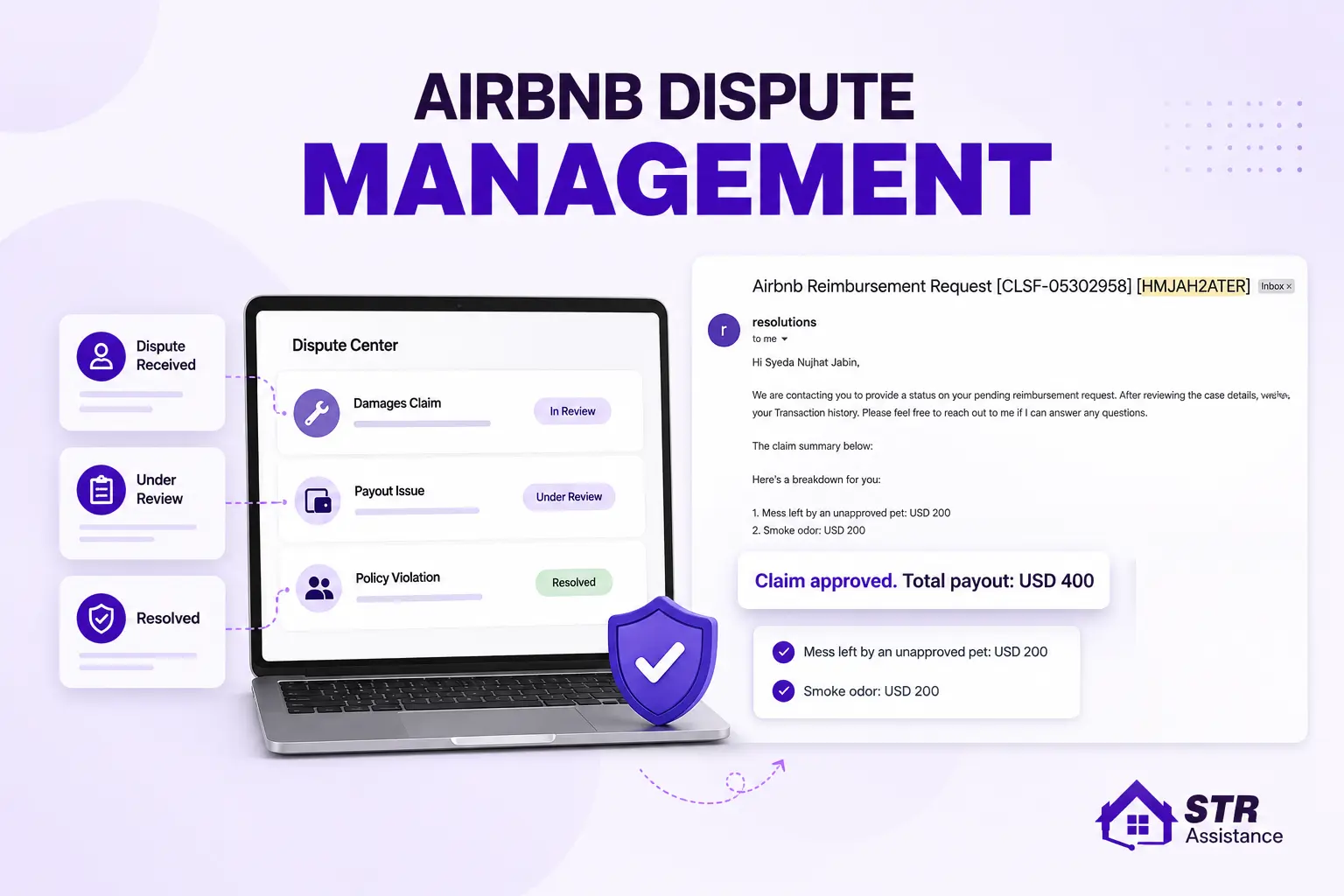
When a guest disputes your reimbursement request, Airbnb Support reviews both sides of the conversation, examines the evidence, and decides whether to approve, reduce, or deny the claim.
They’re looking for three things: clear proof the damage exists, clear proof it happened during this guest’s stay, and a reasonable cost backed by professional documentation. Anything missing weakens your position.
How to Respond Professionally to Guest Disputes
Keep every message factual, polite, and on the Airbnb platform. Avoid accusations, share evidence calmly, and let the documentation make your case.
Here’s a script we’ve used hundreds of times in disputes: “Thanks for getting back to me. I understand this isn’t an outcome you expected. Attached are timestamped photos from before your stay (March 9) and after your stay (March 12) showing the damage clearly wasn’t there before. I’d like to resolve this directly so we don’t need to involve Airbnb. The professional repair quote is $680.” Calm, factual, evidence-led. Aggressive messages tank claims, even when the host is right. For more on this, see our work on Airbnb dispute management.
How to Escalate a Damage Claim to Airbnb Support
After 24 hours without resolution, click “Involve Airbnb” in the Resolution Center. For larger or urgent cases, call Airbnb Support directly and reference your case number.
Live agents can review on the spot and often push cases forward faster than the messaging queue. For party damage or major incidents, call first. Get the case documented immediately, then build out your evidence package.
How to Prevent Guest-Caused Property Damage on Airbnb
To prevent property damage, start with screening guests properly. You should set clear house rules and maintain a detailed inventory. Most importantly, document the property condition before and after every stay. Security devices can help you, but tools have to comply with Airbnb’s policies.
- Create a detailed house manual. Mention clear rules around parties, smoking, pets, and quiet hours, written in a way guests will actually read.
- Use check-in and check-out photos. Keep timestamped images of every room before each stay and right after checkout.
- Install approved security devices. Outdoor cameras and noise sensors are allowed under Airbnb’s rules when properly disclosed. But indoor cameras are not.
- Screen guests carefully using tools. First-time bookers, last-minute one-night stays, and guests with no profile photo carry higher risk.
- Maintain updated inventory records using a simple spreadsheet of high-value items, purchase dates, and current values.
- Set clear house rules. State the rules, state the consequences, and reference Airbnb’s policy. Guests respect what’s documented.
Managing Airbnb Damage Claims Across Multiple Properties
When you have multiple-property claims, you need more standardized inspection workflows and a centralized documentation system. You have to be very careful with deadline tracking across listings and consistent communication templates.
Managing damage claims for one property is manageable. Managing them across five, ten, or twenty listings here is how you do it.
- Operational challenges: Multiple cleaners, multiple turnover windows, multiple deadlines. One missed report, and you’ve lost a claim.
- Standardized claim workflows: Every property uses the same inspection checklist, photo protocol, and reporting timeline.
- Documentation systems for consistency: Centralized photo storage, dated folder structures, and shared templates so any team member can pick up a claim and run it.
- Tracking deadlines and evidence: A simple spreadsheet or PMS field that flags claim deadlines per booking. The 14-day rule combined with back-to-back bookings creates dozens of micro-deadlines per month.
- Virtual assistant support for Airbnb claims management: A trained virtual assistant for Airbnb can handle the inspection-to-claim pipeline.
When Hosts Should Consider Additional Insurance
Most serious Airbnb hosts need separate insurance with AirCover. The reason is that AirCover is contractual rather than insurance. Airbnb only pays depreciated values and excludes natural disasters, off-platform bookings, and many other cases.
If your Airbnb is generating meaningful income, treating AirCover as your only safety net is a financial risk. Here’s some more rental insurance you should consider.
1. Short-Term Rental Insurance: Dedicated short-term rental policies (Proper Insurance, Safely, Pikl) are for vacation rentals and cover gaps AirCover has. They cover natural disasters, off-platform bookings, and structural risks. The coverage actually matches how your property is being used.
2. Landlord Insurance: Traditional landlord policies are for long-term rentals and may not fully cover short-term rental activity. If you’re hosting short-term and only carry landlord insurance, check the fine print carefully. Many policies exclude short-term rental activity entirely.
3. Commercial STR Policies: For hosts running multiple properties or treating short-term rental as a primary business, commercial STR policies provide higher limits. You can access business liability coverage and lost income protection. These are more expensive but appropriate for portfolios.
Also note: as of March 2025, Airbnb’s Host Liability Insurance moves to secondary coverage for hosts managing six or more listings.
How STR Assistance Helps Airbnb Hosts Manage Damage Claims and Disputes
Let’s Talk to Your Disputes Management Expert
STR Assistance helps Airbnb hosts with documentation systems, claim filing, evidence organization, dispute handling, and multi-property claim workflows so that nothing slips through the 14-day window.
Over the years, our team has handled 300+ Airbnb Host Damage Protection claims for hosts, with a 98% approval success rate.
From that experience, we’ve learned that claim outcomes often come down to one thing: documentation. That’s why we help hosts keep everything organized, including photos, invoices, repair estimates, cleaner reports, and other supporting evidence.
We’ve worked on small claims of $50–$200, for small damages like a broken table, or a stain on linen. Our highest recovery to date is $2,000, from a case where a guest’s unauthorized party led to multiple pieces of broken furniture and a cracked bathtub. On average, though, most approved claims land between $200 and $400.
We also assist with Resolution Center submissions, guest communication, and claim follow-ups when additional information is requested.
For hosts managing multiple properties, having a consistent process makes a big difference. Our team tracks every claim deadline closely, so nothing is filed late.
Conclusion
Airbnb Host Damage Protection works, but it works for hosts who know the process properly. The hosts who lose claims are the ones who depends on the marketing rather than the mechanics.
Three things matter more than anything else.
- First, the 14-day filing rule, including the trap where the next guest’s check-in becomes your real deadline.
- Second, the quality of your documentation, which the 2026 rules made stricter than ever.
- Third, the discipline to keep every communication on the Airbnb platform and every dollar amount with professional invoices.
To claim and get the compensation from AirCover, always remember to build the documentation system before you need it.
Pre-stay photos, post-stay inspections, professional repair quotes, and clean Resolution Center messages. Get those four right, and you’ll win the claims you should win. Do not forget to avoid the ones that were never going to qualify.
FAQ: Airbnb Host Damage Protection
AirCover for Hosts is the umbrella program that includes four protections: Host Damage Protection ($3M for guest-caused property damage), Host Liability Insurance ($1M for guest injury or property damage you're legally responsible for), guest identity verification, and a 24-hour safety line. Host Damage Protection is the part of AirCover specifically focused on reimbursing you for damage caused by guests.
Host Damage Protection covers up to $3 million per booking incident. The amount you actually receive depends on the documented value of the damage, the strength of your evidence, depreciation applied to older items, and whether the damage falls within Airbnb's covered categories. Claims are paid in USD regardless of your local currency.
You must file within 14 days of the guest's checkout, or before the next guest checks in, whichever comes first. The second clause is what trips most hosts up. If you have a same-day or next-day turnover, your real filing window may be hours, not days. Missing the deadline invalidates your claim regardless of how serious the damage is.
If the guest declines, partially pays, or doesn't respond within 24 hours of your Resolution Center request, you can escalate to Airbnb Support. Airbnb reviews your evidence and the guest's response, then makes the final decision. Stay calm and professional in all messages, keep everything on the platform, and let your timestamped evidence carry the case.
The April 20, 2026 update banned AI-generated evidence in damage claims, introduced a formal definition of "Legitimate and Verifiable Evidence," tightened smoke odor claims (professional remediation invoices now required), narrowed linen stain eligibility, formally excluded consumables (shampoo, coffee, lightbulbs), clarified the host's "reasonable care" obligation, and moved US arbitration back to AAA. All existing hosts had to accept the updated terms by April 20, 2026 to keep using the platform.
Yes. AirCover covers damage caused by guests' pets, whether your listing allows pets or the guest brought an unauthorized animal. Common covered scenarios include chewed furniture, scratched flooring, urine damage, and torn upholstery. Coverage may be limited if there's evidence of host negligence or if the damage pattern suggests it accumulated over time rather than during a specific stay.
Yes, but the 2026 rules tightened the evidence requirements significantly. You now need a professional remediation invoice to qualify. Personal cleaning, DIY deodorizing, or generic cleaning service receipts won't pass review. Document the odor immediately with timestamped photos and a video walkthrough, then hire a certified smoke remediation service before filing.
No. AirCover's Host Damage Protection is a contractual guarantee from Airbnb, not an insurance product. You're not a named insured, the program doesn't follow insurance regulations, and payouts often reflect depreciated value rather than full replacement cost. Most serious hosts need separate short-term rental insurance to cover the gaps, especially for off-platform bookings, natural disasters, and high-value items.
A strong claim includes timestamped before-and-after photos, a short video walkthrough of the damage, professional repair estimates or paid invoices on company letterhead, an itemized damage list, proof of ownership for valuable items, and screenshots of the relevant Airbnb message thread. Submit everything in one organized batch to speed up review.
No. AirCover only applies to bookings made through the Airbnb platform. Damage from Vrbo, Booking.com, Expedia, or direct bookings isn't covered. Each platform has its own damage protection programs with different rules, deadlines, and limits. If you list across multiple platforms, check each one's policy or carry a unified short-term rental insurance policy that covers all bookings.
Yes. If your claim is denied or reduced, you can request a written explanation, submit additional evidence as an appeal, and escalate to senior support through Airbnb's phone line. Reference your case number in every interaction. For larger claims that hit a wall, the 2026 shift back to AAA arbitration made formal dispute resolution cheaper (around a $225 filing fee). You can also pursue the guest directly in small claims court for the gap.
Yes, in most cases. AirCover is helpful but limited. It excludes natural disasters, off-platform bookings, normal wear and tear, consumables, and damage you can't prove the guest caused. It also pays depreciated value, not full replacement cost. A dedicated short-term rental insurance policy from a provider like Proper Insurance, Safely, or Pikl fills those gaps and is strongly recommended if your property generates meaningful income.

STR Assistance Team
We are a dedicated team of virtual assistants specializing in managing and optimizing short-term rental properties. With a passion for simplifying the lives of property owners, our team brings years of expertise in guest communication, pricing optimization, cleaning coordination, and overall property management across multiple rental platforms like Airbnb, Vrbo, and Booking.com.