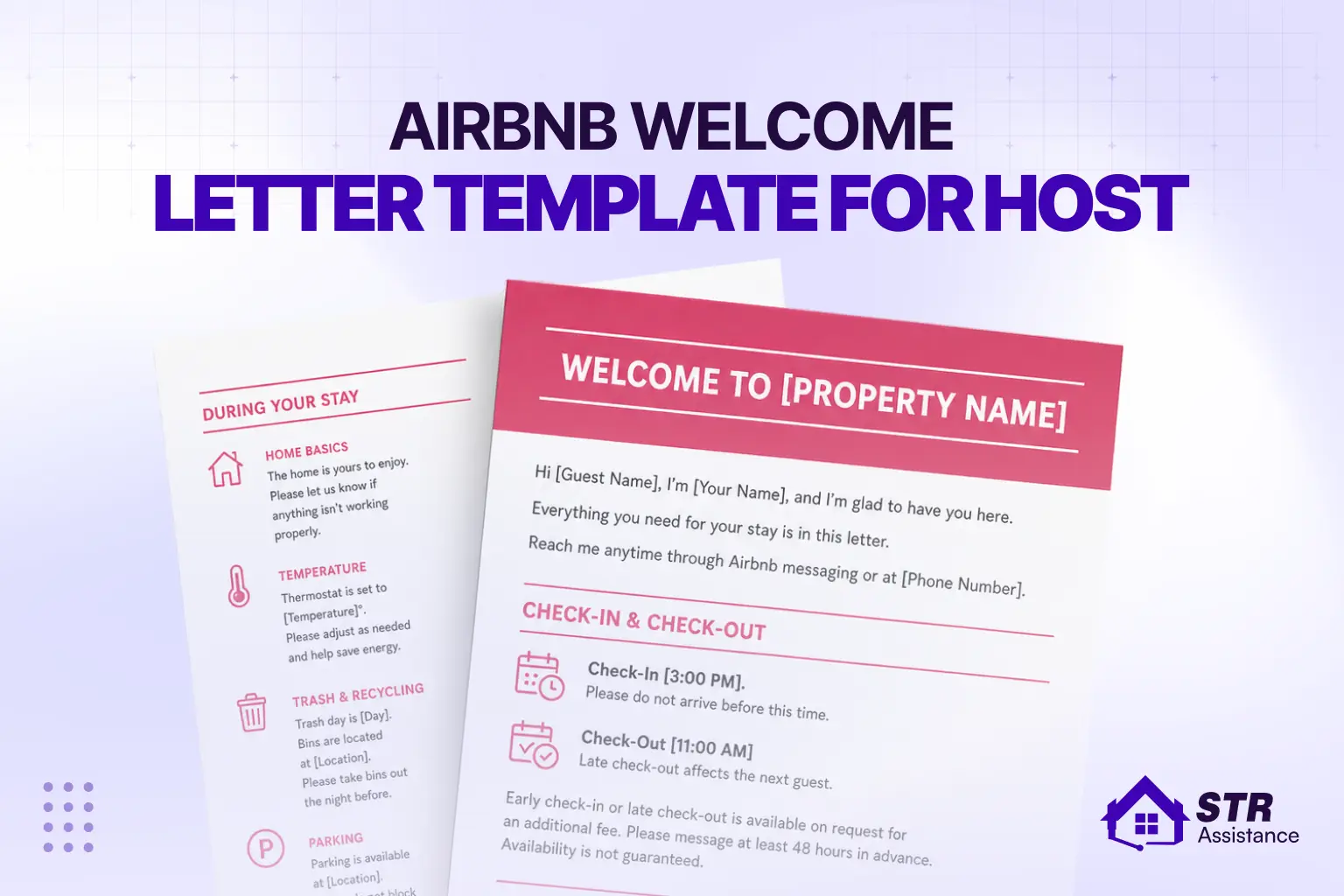
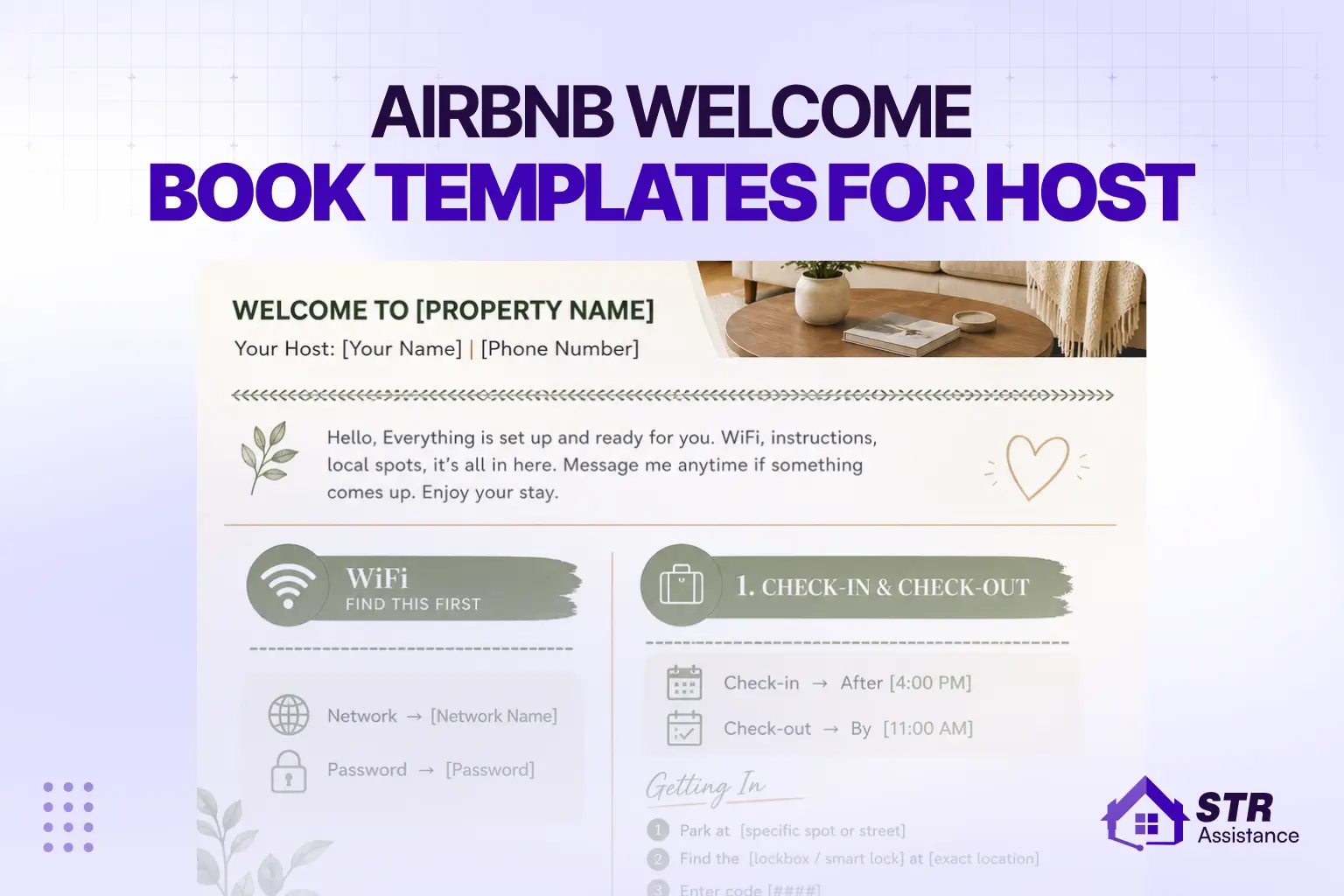
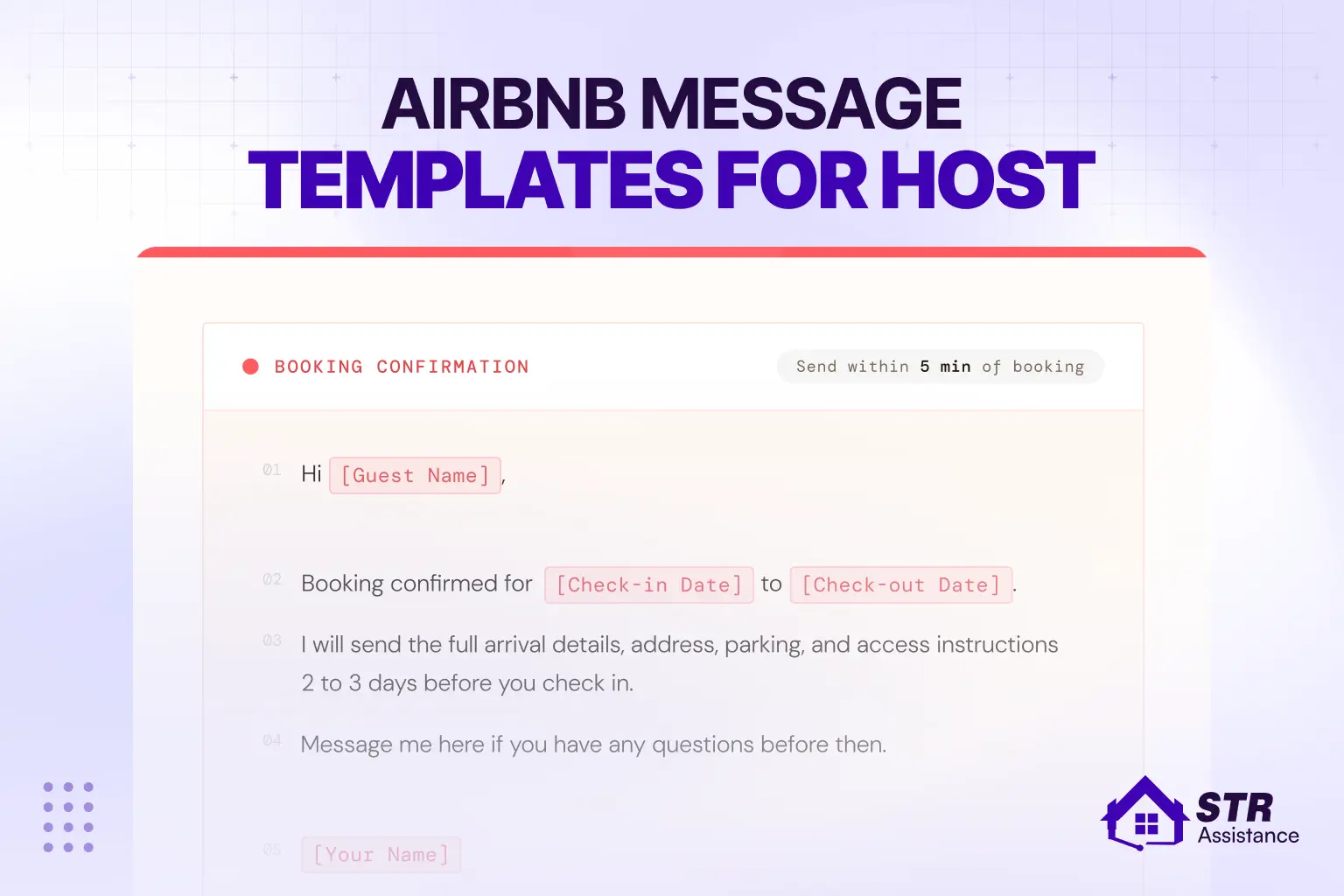
Without a written house rules template, hosts have no documentation, and no documentation means no recourse when something goes wrong. To host protect themself (property, reputation), a clear Airbnb house rules template sets expectations early. It covers check-in and check-out, quiet hours, smoking, pets, and parking instructions. If you need one, we provide a ready-to-use template designed to prevent issues (noise, extra guests, property damage) before they start.
Most hosts reach us after something has already gone wrong. A damaged property, a neighbor’s complaint, a bad review after a dispute. The first thing we check is the paper trail. In most cases, house rules were missing, vague, or never confirmed before check-in. Airbnb’s Resolution Center and AirCover for Hosts run on evidence. Without written rules, a guest accepted at booking, the claim collapses before it starts.
To avoid losses and protect your reputation, use a clear house rules template. Here, you get our house rules template, built from our active STR operations. Also shows you what to include in the ideal template, why each rule matters, and how it applies across different property types, from studios to luxury listings.
Download Our Airbnb House Rules Template ( Canva, Docs, and PDF Version)
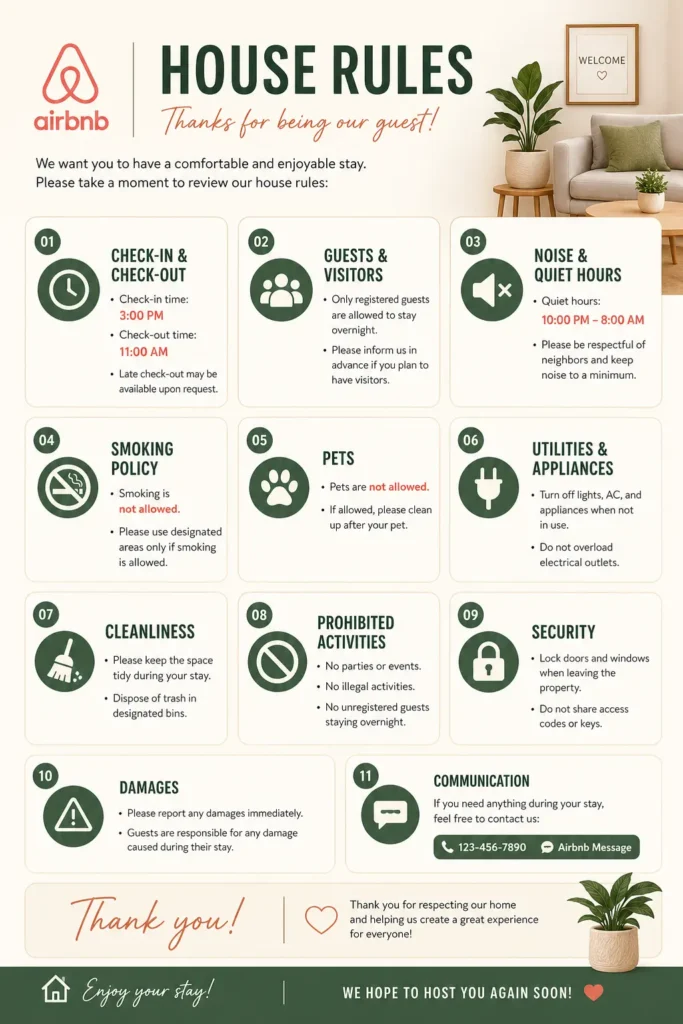
The house rules template we are gonna provide here is one we wrote, tested, and updated based on actual guest issues. Issues like noise complaints, smoking violations, and pet damage. If this issue occurred and, as a host, you have not put anything in writing, the dispute is unclaimable.
Exactly, we are gonna share that template that always works. It’s free, just update it and use it. From here, pick the format that fits how you work:
- Canva: Add your property name, colors, and logo. Edit directly in your browser.
- PDF: Print it, laminate it, include it in your welcome pack, or attach it to your check-in email.
- Word/Google Doc: Paste it into your Airbnb listing or adjust the wording to match your property.
Download Maintenance Checklist PDF
What are Airbnb's House Rules Templates?
A house rules template is a ready-made structure that covers all of that in a single customizable document. Instead of writing rules from scratch for each listing and risking gaps, a template gives you a tested format you fill in and use for the next guest.
Airbnb house rules are the conditions a guest agrees to before their booking goes through. They cover the basics like guest limits, quiet hours, smoking, pets, check-in, and check-out times. And anything else the host needs is followed during the stay. Guests cannot complete a booking without accepting it. With Instant Book, the acceptance is automatic. Either way, it’s on record before they arrive. Understanding your Instant Book settings on Airbnb, helps you decide whether automatic acceptance fits your property or whether reviewing each guest before confirming is the safer route.
Those rules appear on the listing page, in the booking terms, in the check-in instructions, in the Arrival Guide, in the welcome book, and in the Airbnb app’s trip details. Guests see them before they book and again once they’re inside.
That recorded agreement is what matters when something goes wrong. If a guest breaks a rule and disputes a charge, Airbnb checks whether they accepted your rules at booking. A written rule that the guest agreed to gives you a strong starting point in a Resolution Center case and helps your claim stand.
Airbnb lets hosts write their own rules because no two properties are the same. Building rules, HOA conditions, or local noise ordinances- Airbnb doesn’t cover those by default. Your house rules do. A proper template makes sure none of that gets left out.
Why Airbnb House Rules Are Important?
Airbnb house rules are important because its protect your property, set guest expectations before arrival, and reduce disputes and refund claims. They also support your position at the Airbnb Resolution Center. Here is how each one plays out in practice:
Protect The Property
Without written rules, guests can deny responsibility. When a guest accepts your Airbnb house rules template at booking, that acceptance is on record. It defines occupancy limits, behavioral expectations, and accountability before damage happens, not after.
When expectations are clearly stated and accepted at booking, it becomes easier to hold them accountable. It also defines limits on occupancy and behavior, which helps prevent problems before they start.
Set Guest Expectations Early
In daily short-term rental operations, most friction with guests arises when expectations are misaligned from the start. A clear house rules template closes that gap before check-in, not during the stay.
Outline rules accordingly, check-in/out time, quiet hours, and cleaning. Guests who see these before arrival show up knowing what is expected. That alone prevents a large share of day-to-day issues.
Reduce Disputes And Refund Claims
We handle refund claims and dispute cases regularly. Most of them come from confusion, not actual damage. Late check-out disputes, extra guests, noise complaints, in nearly every case, the guest says they weren’t told or informed. A well-written Airbnb house rules template removes that argument. They confirmed it at booking.
Improve Guest Experience And Reviews
Clear rules make stays more predictable. When noise limits and cleaning expectations are set in the house rules template before arrival. Most guests follow them without thinking much about it. The stay runs without friction. That’s what shows up in the review.
Help in Airbnb Resolution Center cases
When a host files a damage claim, Airbnb looks at the documentation. A house rules template accepted at booking is the starting point for any Resolution Center case. Without it, the claim is harder to support. With it, you have a documented record of exactly what the guest agreed to before they checked in.
What to Include in Airbnb House Rules in the Template?
In the template, cover the rules guests actually need during the stay. Set clear check-in and check-out times. State the maximum number of guests allowed. Define quiet hours, for example, 10 PM to 7 AM. Keep a strict no-smoking rule. Explain your pet policy with simple instructions. Set basic cleanliness expectations. Tell guests how to report damage. Include simple safety rules they must follow.
Check-In and Check-Out Rules
You strictly mention the check-in (after 3 PM) and check-out (by 11 AM) times. Also, provide check-in and check-out instructions, and mention delayed checkout due to an extra fine.
If early check-in is available, make it a paid add-on, not a free assumption. Same for late check-out. For self-check-in, add access instructions (lockbox code, smart lock process, key handover), everything is in writing in the template. Most check-in problems happen because this part is missing, not clear ot mot written.
Guest Limit and Visitors Policy
Before checking the clearly outlined maximum number of people allowed. No unregistered guest is allowed overnight who is not listed on the booking. When extra people show up, noise levels climb, and HOA warnings start coming in.
Also specify the visitors, their hours, and the maximum number of visitors on the template. Put the no-party rule here as its own line. Not inside the noise section. A standalone statement that events and gatherings are not permitted.
Noise and Quiet Hours
Set specific Airbnb quiet hours, something like (10 PM to 9 AM). Instruct guests to follow community respect rules and not to bother neighbors with loud music or other disruptive behavior. One noisy booking in a residential area can damage relationships with neighbors for the entire season.
In STR-dense neighborhoods, that reputation follows the listing. So cover everything that can harm the surrounding neighborhood. Cover outdoor spaces explicitly. Pools, patios, and balconies are where noise complaints actually come from. A rule limited to indoor noise misses the source entirely.
Smoking Policy
State whether smoking, vaping, and e-cigarettes are allowed indoors, outdoors, or not at all. If there is a designated outdoor spot, name it, such as a backyard, and require proper disposal of cigarette butts. If the property is fully smoke-free, say that without qualification.
Smoke odor is expensive to fix. Professional deodorization runs $200 to $500, depending on property size. The next guest notices if it is not done properly, and that shows up in the review.
Attach a specific dollar amount to the violation. “Additional charges may apply” does not hold in the Airbnb Resolution Center. A stated fee tied to professional remediation does.
Pets Policy
Guests bring their pet without saying anything, and next find the damage, and the claim collapses because nothing was written down. State the pet fee as a fixed number. A vague fee gives guests room to dispute it after check-out.
So, say it plainly, through a house rule, are pets allowed or not allowed? such as “must be house-trained,” “no pets on furniture,” and “leash rules”. Also, you mention the size limit, any breed restrictions, the pet fee amount, a $100 penalty, and that the guest is liable for any damage the animal causes.
Cleanliness Expectations
The cleaning fee covers the professional turnover. The house rules cover what guests are responsible for during the stay. Ask guests to maintain a reasonable level of cleanliness. Keep it specific, list simple tasks, such as starting the dishwasher, disposing of trash in bins, and taking off shoes.
Personal items packed before check-out. That is the standard for a reasonable handover, not a deep clean. Because deep cleaning costs around $250, simple maintenance can save this fee. That’s why a single clear line in the template rules prevents the cleaner from arriving at unsorted rubbish on collection day.
Damages and Security
Accidents happen, so note before that- guests are responsible for damages exceeding normal wear and tear. State that damage or malfunction should be reported immediately through Airbnb messaging. Guests who report it promptly are manageable. Guests who check out silently leave a gap in the timeline, weakening the Resolution Center claim.
Tell guests to lock all doors and windows when they leave. Also, let them know about any exterior cameras. Also state that damage beyond normal wear is processed through Airbnb’s Resolution Center under AirCover for Hosts. Guests who understand the process up front cause fewer disputes after the stay.
Safety Rules
Fire extinguisher location and smoke and CO detector locations are legally required disclosures in most jurisdictions. State them clearly, no Illegal activities with illegal substances and dangerous items
Provide instructions for safe use of heaters, stoves, or fireplaces. Detectors must not be tampered with. If the property has a pool or hot tub, state usage hours and that children must be supervised near water.
Appliance items such as grills, fire pits, and wood stoves require specific setup. Include those instructions here and then repeat them in the welcome book. Guests who do not know how something works either avoid it or misuse it. These safety basics are usually part of a proper Airbnb safety checklist.
Airbnb House Rules Template (Copy & Paste)
Here’s the ready-to-use template. This template covers every rule category that matters in real STR operations. This template is not based on assumptions. It comes from real operational use in our short-term rental listings. We have tested and refined it through live guest interactions and adjusted it based on actual issues we’ve handled. Now here is the 100% guest satisfaction template you can just copy and adjust accordingly:
HOUSE RULES — [Property Name]
CHECK-IN & CHECK-OUT
- Check-in: [4:00 PM] — Please do not arrive before this time.
- Check-out: [11:00 AM] — Late check-out affects the next guest’s arrival.
- Early check-in and late check-out are available on request for an additional
fee. Request at least 48 hours in advance. Availability is not guaranteed. - Access is via [lockbox / smart lock / in-person handover].
Full instructions will be sent 24 hours before your arrival.
GUEST CAPACITY & VISITORS
- Maximum occupancy: [X] guests overnight.
- All guests staying overnight must be registered at the time of booking.
- Unregistered overnight guests are not permitted under any circumstances
- [Optional: Daytime visitors are welcome between [9:00 AM] and [9:00 PM].
Overnight stays are for registered guests only.] - Parties, events, and large gatherings are strictly prohibited.
NOISE & QUIET HOURS
- Quiet hours: [10:00 PM] to [8:00 AM].
- Please keep noise low in all outdoor areas during quiet hours —
patios, balconies, pools, and driveways included. - We have close neighbors. Please be respectful at all times,
not only during quiet hours. - Noise complaints from neighbors may result in immediate cancellation
of the reservation without a refund.SMOKING POLICY
- Smoking, vaping, and e-cigarettes are not permitted anywhere indoors.
- [If applicable: Smoking is permitted in the designated outdoor area
at [specific location] only.] - [If fully smoke-free: This is a completely smoke-free property,
including all outdoor areas.] - Evidence of indoor smoking will result in a cleaning and
deodorization fee of [$XXX], charged through Airbnb.PET POLICY:
[If pets are NOT allowed:]
- No pets are permitted at this property.
- Undisclosed pets will result in an additional cleaning fee and may result in cancellation of the reservation.
[If pets ARE allowed:]
- Pets are welcome with prior approval. Please message before booking.
- Maximum [X] pet(s). Weight limit: [X lbs]. No aggressive breeds.
- A non-refundable pet fee of [$XX] applies per stay.
- Pets must not be left unattended inside the property.
- Please keep pets off furniture unless covered by the throws provided.
- Clean up after your pet in all outdoor areas.
- Any damage caused by pets will be claimed through Airbnb’s Resolution Center.
CLEANLINESS & TRASH
- Please wash dishes or run the dishwasher before check-out.
- Dispose of all trash in the bins provided before you leave.
[Recycling: blue bin. General waste: black bin. Compost: green bin.] - Remove all personal belongings from the property at check-out.
- Laundry: [Leave used towels on the bathroom floor /
Place used linens in the laundry basket provided.] - We do not expect the property to be spotless — just left in a reasonable condition for the cleaning team.
PROPERTY USE & CARE
- Please do not move or rearrange furniture.
- The following areas are off-limits: [garage / storage room /
owner’s closet / specify]. - Parking is available for [X] vehicles in [driveway/garage/
designated spot]. No additional vehicles on the property. - [If applicable: Please follow the posted instructions before
using the grill / fire pit / outdoor kitchen.] - Do not remove any items — including décor, kitchen equipment,
or supplies — from the property.SAFETY RULES
- No candles, open flames, or incense inside the property.
- Fire extinguisher is located at [specific location].
- Smoke and CO detectors are installed throughout. Do not tamper
with or without these devices. - Please lock all doors and windows when leaving the property
and at night. - Alarm code: [include or send separately for security].
- [If pool or hot tub present:]
- Pool/hot tub hours: [8:00 AM] to [10:00 PM].
- Children must be supervised by an adult at all times near the water.
- Please shower before entering the hot tub.
- Emergency services: [local number].
Host contact: [your number or Airbnb message].DAMAGE & SECURITY DEPOSIT
- A security deposit of [$XXX] is held through Airbnb and released
[X] days after check-out if no issues are reported. - If something breaks or malfunctions during your stay, please
report it immediately via Airbnb messaging. - Early reporting allows us to fix issues before the next guest
arrives — we appreciate the honesty. - Damage beyond normal wear and tear will be assessed and claimed
through Airbnb’s Resolution Center. - Intentional damage or unreported damage discovered after check-out
will result in a full claim, supported by documented evidence.ADDITIONAL NOTES
- [HOA rules, building regulations, local noise ordinance details,
or any property-specific requirements go here.] - [Example: This property is governed by [HOA Name] rules.
Guests are expected to comply with all community guidelines. - [Example: Local noise ordinance enforces quiet between
[10:00 PM] and [7:00 AM] on weekdays and [11:00 PM] to [8:00 AM] on weekends. Violations may result in fines issued to the host.]By completing your booking, you confirm that you have read and agreed to all house rules listed above.
Thank you for staying with us. We hope you have a great stay.
[Host Name / Property Name]
How to Write an Effective Airbnb House Rules Template
To write an Airbnb house rules template, keep it clear, specific, and friendly. Focus on your top 5-10 rules, use positive language. Also, include local regulations, and repeat key rules in messages and guides to prevent confusion and reduce guest issues.
Guests follow what they understand. When wording is vague or aggressive, interpretation varies. That’s where issues start. Here’s the details thing to follow while writing the template:
Keep Rules Clear and Neutral
In real bookings, confusion starts with unclear wording. Write rules in a simple, neutral tone. “Please leave the property in a tidy condition” works better than harsh wording.
Avoid Aggressive Language
Strong or threatening rules create friction before check-in. We see that, while we are testing our template, guests often feel uncomfortable before they even arrive. That usually leads to poor communication during the stay. Keep it firm, but calm.
Prioritize Your Top Rules
Airbnb only shows a small preview of your house rules. If key rules are buried, guests miss them. Keep your top 5-10 rules and put the most important ones first:
- Check-in and check-out times
- Quiet hours
- Guest limits
- No parties
These are the rules that break most often in daily operations.
Use Positive Instructions
Say what guests should do, not just what to avoid. “Please lock all doors when you leave” is clear and actionable. This works better than negative phrasing. Guests respond better to clear actions.
Add Local and Property Rules
Some rules are not optional. They come from the building or area. Include them clearly:
- HOA or building rules
- Noise limits and quiet hours
- Parking restrictions
Most disputes fail because they were never written. We have seen this common pattern when we help with claim disputes. The primary stage to prevent is house rule template.
Airbnb House Rules Examples by Property Type
At STR Assistance, we review house rules across listings and identify where they fail during real guest stays, such as noise complaints, extra guests, and misuse of space. Based on those patterns, we’ve built and refined rule sets for each property type. Because we understand, each property type breaks differently.
Studios get noise complaints because sound travels through shared walls. Family homes attract extra guests and parking overflow. Luxury properties become expensive claims when damage goes undocumented. Pet-friendly listings cause the most post-stay friction when nothing about pets was documented in the template before arrival.
Rules copied from another listing miss all of that. The examples below are written around what actually goes wrong in each one.
Studio / Apartment
The building is the risk. Shared walls, shared hallways, shared entry. One complaint from a neighbor or building manager can trigger a listing warning before the guest even checks out. Studio rules exist to contain that exposure.
HOUSE RULES — [Studio Name]
- 2 guests maximum. No exceptions.
- Registered guests only. Do not share the building entry code.
- Quiet hours: 9:00 PM – 9:00 AM. Sound carries between units.
- No smoking or vaping inside the unit or building.
- Trash in designated bins at [location]. Not left in the hallway.
- No parties or additional visitors.
- Check-in: [4:00 PM] | Check-out: [10:00 AM]
Family Home
More space invites more assumptions. Guests bring extra vehicles, extra people, and treat the outdoor area like a private venue. Parking and the pool are where problems surface first. Both need hard boundaries, not suggestions.
HOUSE RULES — [Family Home Name]
- [X] guests maximum. All must be registered at booking.
- [2] vehicles in the driveway only. No overnight street parking.
- No visitors after [9:00 PM].
- Quiet hours: 10:00 PM – 8:00 AM, indoors and outdoors.
- No parties or events.
- Pool hours: 8:00 AM – 9:00 PM. Children are supervised at all times.
- Grill use outside only. Clean after each use.
- Run dishwasher and take out trash before check-out.
- Check-in: [4:00 PM] | Check-out: [11:00 AM]
Luxury Property
Replacement costs are high. A single undocumented incident, like a stained rug, a broken fixture, or a burn mark, becomes a difficult claim without written rules the guest accepted before arrival. The detail here is not excessive. It is necessary.
HOUSE RULES — [Luxury Property Name]
- [X] guests maximum. Full guest list confirmed before arrival.
- Shoes off at the entrance. Slippers provided.
- Do not move furniture or décor.
- No food or drinks near upholstered furniture or rugs.
- No smoking, vaping, candles, or open flames anywhere on the property.
- Hot tub: 10:00 AM – 10:00 PM only. Shower before use.
- No unregistered visitors at any time.
- Security deposit [$XXX] held through Airbnb. Damage beyond normal
wear is claimed through the Resolution Center. - Check-in: [5:00 PM] | Check-out: [10:00 AM]
Pet-Friendly Listing
Allowing pets without specific rules is where most post-stay pet disputes begin. Undisclosed animals, undisclosed breeds, and pets on furniture are the three claims we see most often. Each one is preventable with a rule written before the guests sign the books.
HOUSE RULES — [Pet-Friendly Property Name]
- Pets by prior approval only. Message before booking.
- [2] pets maximum. Weight limit: [X lbs]. No aggressive breeds.
- Non-refundable pet fee: [$XX], charged at booking.
- No pets left unattended inside.
- Pets off furniture and beds. Throws provided.
- Clean up outdoors. Waste bin at [location].
- Pet damage claimed through Airbnb’s Resolution Center
regardless of prior approval. - Undisclosed pets result in an additional fee and possible
early termination. - Check-in: [4:00 PM] | Check-out: [11:00 AM]
Key Findings: You need to always adjust the times, fees, and specifics to match the property. The structure holds because the operational logic behind it does not change. Identify what actually breaks in that property type and address it before the guest arrives.
How to Add House Rules on Airbnb (Step-by-Step)
Adding house rules takes under five minutes. Go to the Airbnb host dashboard, open your listing, click Edit listing, go to Policies and Rules, select House Rules, set your toggles, paste custom rules, and save. Here is exactly where everything lives inside your Airbnb account.
- Step One: Open your Listings tab and select the listing you want to update. Click Edit Listing, then scroll the left menu until you find Policies and Rules. Click House Rules to open the editor.
- Step Two: Airbnb gives you preset toggles first. These cover the basics: quiet hours, no parties, no smoking, pets, and a maximum number of guests. Work through each one and set it to match your actual policy.
- Step Three: Below the toggles is a text box labeled “Additional Rules”. This is where your full custom rules go. Paste everything specific to your property here. Parking, trash, entry instructions, damage policy, and pet conditions. Anything Airbnb does not have a preset for lives in this box.
- Step Five: Save when done. Rules go live on your listing immediately. Every guest who books after that sees your house rules at checkout. They tick a box confirming that they have read and accepted them before the reservation is completed. That tick is what gives you documented standing at the Airbnb Resolution Center if something goes wrong.
What Happens When Guests Break Your Rules?
When guests break rules, document everything first. Message through Airbnb to create a record. Use the Resolution Center for damages. Contact Airbnb Support for serious violations, such as unauthorized parties. Written rules make every claim stronger.
Most violations fall into four categories. Noise. Extra guests. Smoking indoors. Late check-out.
- Noise and extra guests message the guest through Airbnb immediately. Short and factual. That message is your documented record. If they ignore it, contact Airbnb Support and point to the rules they agreed to at the time of booking.
- Smoking indoors is handled after checkout. Photograph everything before cleaning starts. Get the receipt. Submit through the Airbnb Resolution Center with photos, a receipt, and the written rule. All three together make the case.
- Late check-out delays the cleaning team and hits the next guest’s arrival. A stated late fee in your rules reduces how often it happens.
- Unauthorized parties need immediate escalation to Airbnb Support. They can cancel the remainder of the stay. Have documentation ready before you call.
After any violation, leave an honest review. Future hosts depend on it. The order always matters. Written rule first, Airbnb message thread second, and photos and receipts third. Without the written rule, the rest of the case falls apart.
How House Rules Help in Disputes and Review Removal
House rules are a written agreement. When a guest books, they tick a box confirming they have read and accepted every rule on your listing. That tick is what gives you standing when something goes wrong.
When a host files a damage claim with the Airbnb Resolution Center, the platform reviews the guest’s pre-arrival agreement. A written rule accepted at booking removes the guest’s easiest defense: “I didn’t know that wasn’t allowed.” They confirmed it at booking. There’s a record.
This matters in review cases, too. A guest smokes indoors, denies it, then leaves a one-star review after a claim is filed against them. Airbnb sees that sequence, such as rule violation, claim, and retaliatory review, and treats it accordingly. Hosts with a written smoking rule already accepted by the guest have a strong case for removal. Hosts without one don’t have much to work with.
We see this in real cases when we help with claim disputes or removing reviews. A guest smokes indoors, denies it, then leaves a bad review after the host files a claim. Airbnb recognizes that pattern. A documented rule violation followed by a negative review gives the host a strong case for removal.
Rules also cover extortion. If a guest says, “drop the pet fee, or I’ll leave one star,” that threat makes the review eligible for removal under Airbnb’s content policies. The rule is proof you were enforcing something real, not making up a charge after the fact.
Reviews that focus only on a broken rule rather than the actual stay are often flagged as irrelevant. Our Airbnb review removal service handles exactly these cases. We can help you to remove your unfair reviews, rule-based cases, false claims, or refund-pressure cases. House rules handle what happens when one gets through. Both belong in the same operation.
The house rules template doesn’t stop every problem. But it makes each one far easier to document, claim, and resolve.
Bonus: Automating House Rules Communication
Writing the rules is the easy part. Getting every guest to actually read them before they arrive is where most hosts struggle or fall short. That’s why automation plays a great role here.
Most hosts write a solid house rules template and never confirm that guests read them. Automation exactly fills that gap. Automation tools like Hostaway, Guesty, and Hospitable let you set up messages once and then set a trigger.
One message goes out at booking confirmation with the key rules. A second message is sent 48 hours before check-in, with the full rule set and arrival and check-in instructions. Every guest receives the same information on the same schedule, without you having to send anything manually.
Inside the property, digital guidebooks like Touchstay and Hostfully handle the third delivery. Guests scan a QR code and land on a page with the Wi-Fi password, check-out steps, and house rules all in one place. They open it with the password. The rules are right there.
For hosts managing higher volumes or listings with a history of rule issues, an Airbnb virtual assistant adds a human check to the system. A trained VA monitors the message thread, flags guests who have not confirmed key details, and follows up before problems arise.
So there are three touchpoints. These are standard frameworks for Airbnb guest communication.
- Booking confirmation.
- Pre-arrival message.
- In-property guidebook.
Each one is another chance for the rules to apply to your property and another piece of documentation if they don’t. That’s how you turn your house rules template from something guests ignore into something they actually see and follow before check-in.
How STR Assistance Can Help You?
At our STR Assistance, house rules are not a one-time setup. We use them in every pre-arrival message, every booking workflow, and every guest interaction we manage. When something breaks, we already have the thread, the timestamps, and the supporting documentation—nothing gets assembled at the last minute.
We’ve also seen what happens when rules exist but no system backs them up. Violations repeat, reviews reflect it, and hosts spend more time reacting than managing. You should not be one of them.
If you’re starting fresh, we’ll help you build the rules correctly before a guest books. If you’re already running multiple listings and the current setup isn’t working, explore our airbnb virtual assistant services and we’ll show you exactly where your system is falling short.
Final Words
No house rules means no documentation. When something goes wrong, you have nothing to claim. In real Airbnb operations, issues will happen. A guest brings extra people. Someone smokes indoors. A neighbor calls in a noise complaint. Without written rules, the guest accepted at booking, the host has no case. Not in the Airbnb Resolution Center, not in a damage claim, not anywhere.
But House rules change that. You set the expectation before the guest arrives. This documentation gives you something concrete to point to when things go sideways. Across the listings we manage, disputes drop when we set clear rules, not when they are strict.
This template covers everything that we use every day while managing active STR listings. Check-in times, guest limits, smoking, pets, damage reporting, and safety. Copy it, fill in your details, and load it into your listing today. Then put the rules everywhere a guest will actually see them. In the listing. In the pre-arrival message. In the welcome book inside the property.

STR Assistance Team
We are a dedicated team of virtual assistants specializing in managing and optimizing short-term rental properties. With a passion for simplifying the lives of property owners, our team brings years of expertise in guest communication, pricing optimization, cleaning coordination, and overall property management across multiple rental platforms like Airbnb, Vrbo, and Booking.com.