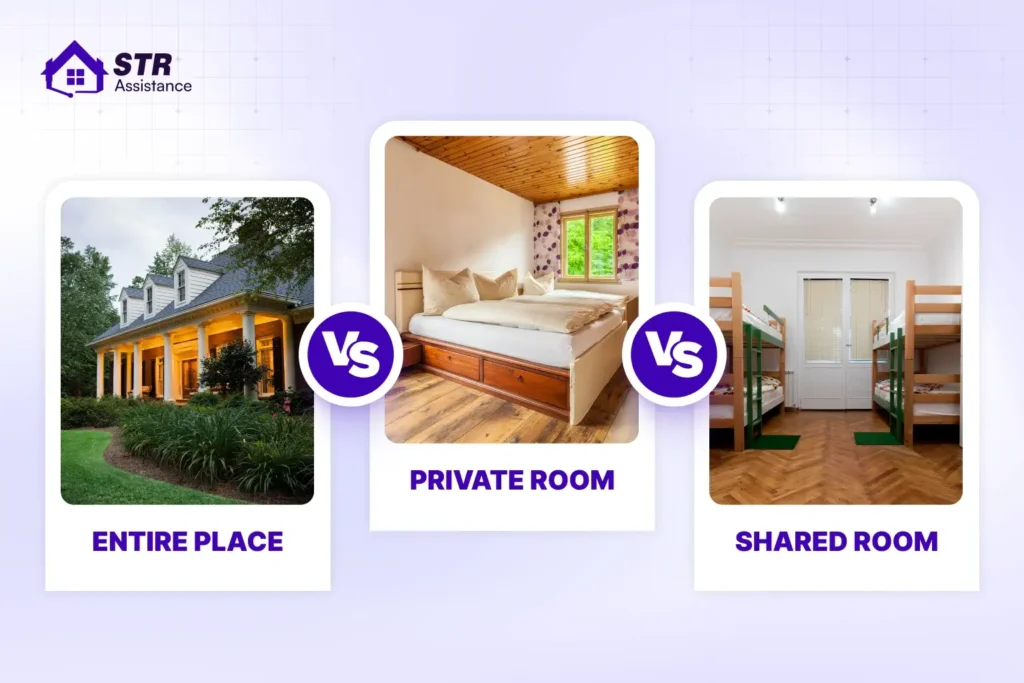
- Key Takeaways
- The entire place, private room, and shared room are defined by what’s actually shared with the guest, not by whichever label happens to attract more clicks.
- Airbnb’s own current host resource page now scopes shared rooms to professionally managed hostels with 24/7 staff, a real shift from the broader definition still sitting elsewhere on Airbnb’s own site.
- Calling a partly shared space an entire place is the single most common mistake hosts make, and it shows up as guest disappointment and defensive reviews, not just a listing-accuracy footnote.
- Private rooms typically earn 40 to 60% less per night than entire place listings in the same market, but often close the gap through lower startup cost and stronger occupancy from budget-conscious travelers.
- Owner-occupied private room hosting often clears regulatory hurdles that entire-place short-term rentals can’t, though this varies enormously by city and changes often.
- Shared rooms now make up a small, shrinking share of listings, generally well under 3%, as guest demand keeps consolidating toward privacy.
- Changing a listing’s category doesn’t erase its review history. Splitting a property into a brand new second listing does, since that new listing starts with zero reviews of its own.
Every Airbnb host chooses one of three ways to list a property: entire place, private room, or shared room. That single dropdown decision fixes almost everything else that follows.
It’s not just a formatting choice. Your income potential, guests’ expectations, and local short-term rental rules vary by city depending on which one you pick. Get the category wrong, and you’ll feel it first in your review section, not your booking calendar.
Hi, I’m Shawon, and I lead listing optimization at STR Assistance across several hundred managed properties. A good chunk of the support tickets I see start the same way: a host asking whether they’ve picked the right category, usually after a guest complaint has already been placed.
Today I will be talking from those actual conversations. I will be discussing topics to let you know exactly which category fits your actual property, what each one really costs you in income and workload, and what changes if you decide to switch later.
What "Entire Place," "Private Room," and "Shared Room" Actually Mean on Airbnb
Airbnb defines all three by one thing: how much of the space the guest actually gets to themselves, and who else might be in it during their stay. Nothing about square footage, nothing about price tier, just privacy and presence.
According to Airbnb article 317 home type definition,
- Entire place: Guests will have the whole place to themselves, including a private entrance and no shared spaces.
- Private room: Guests will have their own private bedroom with a door for sleeping. Other areas, such as a kitchen, living room, or bathroom, could be shared.
- Shared room: Guests will be sleeping in a bedroom or a common area that could be shared with others. It helps to note how many people they might be sharing with.
What Is an Entire Place on Airbnb?
An entire place means the guest is the only person using the space for the length of their stay. No host wandering through, no other guest sharing a hallway, nothing.
This space includes a bedroom, a bathroom, a kitchen, and a separate entrance the guest doesn’t share with anyone. Hosts should also make sure they clearly list the Airbnb amenity categories available at the property so guests know exactly what is included.
Airbnb allows an entire place listing even when the host lives nearby on the same property, as long as the host notes it properly in the description and stays transparent.
Airbnb clarifies this by giving an example: “We live in a separate house that shares the backyard with the guesthouse.” The category still holds. The guest just needs to know about the backyard before they book, not after.
What Is a Private Room on Airbnb?
A private room gives the guest one room that’s only theirs, with a door that closes and locks. This type of room is for those guests who want a private space within budget.
Kitchen, living room, sometimes the bathroom itself- all of it can be shared with the host or with other guests staying at the same time. The host is often physically present on the property, which is the detail that changes the most about how this space type actually feels to run day to day.
The host has to disclose his presence, something like “Host occupies the first floor of the home.” Plain, specific, and it answers the question before a guest has to ask it.
What Is a Shared Room on Airbnb?
A shared room means the guest sleeps in a space that isn’t private at all, no dedicated bedroom, just a bed or a bunk inside a room used by others too. Shared rooms are most commonly found in hostels, dormitories, and budget accommodations.
Airbnb’s host-facing resource article, updated October 13, 2025, describes shared room specifically as “a shared room in a professionally managed hostel with staff on-site 24/7.”
As of July 2026, Airbnb’s Help Center continues to list Shared Room as a standard accommodation type. However, Airbnb’s newer host guidance places increasing emphasis on private rooms and, in some contexts, discusses shared rooms primarily in relation to hostel-style accommodations. Because Airbnb frequently updates its host interface, authors should verify the live listing creation flow before making definitive claims about who can create Shared Room listings.
This creates mixed signals:
- Older documentation treats Shared Room as a standard accommodation category.
- Newer hosting guidance suggests it is primarily intended for professionally managed hostels.
Those are two live Airbnb pages saying different things about the same category. However, shared rooms now sit at a small, shrinking share of total listings, under 3%. This number keeps moving in one direction as guests prioritize privacy over price.
Common Space-Type Mislabeling Mistakes
The most frequent listing error is mislabeling a Private Room as an Entire Place, and I have seen it tons of times.
After talking to a lot of hosts, I have figured out there can be two reasons for this mislabeling; one is that the entire place looks better in search and pays better per night. Or the hosts believe that providing a private entrance, a private bedroom, or a guest suite automatically qualifies as an Entire Place. But Airbnb strictly says that for the entire place, guests must have a private entrance and no shared spaces.
Why does this matter more than it sounds like it should?
Guests experience:
- Unexpected shared spaces
- Privacy concerns
- Lower trust in the platform
- Requests for refunds or cancellations
Hosts face:
- Negative reviews
- Guest complaints
- Customer support disputes
- Potential listing corrections or reduced visibility if Airbnb determines the listing doesn’t meet the category requirements.
On Airbnb’s own host community forum, one host with a studio and a private bathroom debated exactly this: similar, higher-rated listings nearby were calling themselves the entire place, and it was tempting to do the same for the view count alone. The community’s answer split, but the strongest reply came from an experienced host who said the real test is whether the bathroom is fully private and whether there’s at least some kind of kitchenette, not whether a shared laundry room happens to sit along the path to the door.
Entire Place vs. Private Room vs. Shared Room at a Glance

An Entire Place provides a self-contained unit with no shared spaces. A Private Room offers a personal bedroom but shared common areas like the kitchen. A Shared Room is the most budget-friendly option, functioning like a hostel.
When you list your space, you need to be very clear on the type of space. Because when you list your space in the wrong category, it will impact guest expectations vs reality and can affect your review or listing ranking. I am saying this because we witness a lot of cases in STR Assistance. Hosts come to us with the wrong listing category, and most of the time they are confused about which category their space falls into.
Once you’ve chosen the right space type, your title should make the property’s strongest selling point immediately clear. These catchy Airbnb listing titles can give you ideas for highlighting privacy, amenities, location, or the type of stay you offer.
Here is a quick comparison table for you. If you are still confused, reach out to us; we can help you list your space properly.
Factor | Entire Place | Private Room | Shared Room |
Guest privacy | Full | Partial, own bedroom, shared common areas | Minimal to none |
Host presence required | No | Usually yes | Usually yes |
Typical earning potential | Highest per night | Moderate | Lowest |
Startup cost | Highest | Lowest | Lowest |
Regulatory complexity | Often higher, separate STR permit rules in many cities | Often lower, owner-occupied exemptions common | Varies, increasingly restricted |
Guest type attracted | Families, groups, privacy-focused travelers | Budget-conscious solo travelers | Backpackers, students, very budget-driven travelers |
Cleaning and turnover workload | Full property between every stay | Shared-area upkeep, more frequent host involvement | Highest interpersonal management, lowest per-guest revenue |
Screening importance | Standard | Higher, shared living space | Highest |
Entire Place: Income, Trade-offs, and Who It Fits
“Entire Place” is about exclusive access to the booked living space, not necessarily an entire property, building, or complete isolation from the host. The entire place earns the most per night of the other types of spaces, as guests get more privacy.
However, one of the biggest misconceptions is that booking an Entire Place means the host won’t be on the property. There are some other misconceptions available for the entire place which is not often discussed.
- A separate entrance is expected, but not always required by law
- Entire Place is about privacy, not property type
- Guests can still share outdoor areas
- Entire Place listings usually command higher prices
- Entire Place doesn’t guarantee complete isolation
- Entire Place doesn’t always mean an entire building
Income Potential
What makes the entire place’s premium is simple: guests are paying for full privacy and full exclusivity. It’s worth more to most travelers than a lower nightly rate with shared walls attached. It’s also the category most sensitive to seasonality and local competition. This is because entire-place guests are comparing you directly against hotels and every other entire-place listing in the area.
The income potential depends on location, property type, season, occupancy, and fees. Industry summaries show that some hosts earn around $200 to $25,000 per month. With well-reviewed listings in busy areas, hosts can reach $2,000 to $3,000 per month or more.
When a new entire-place competitor opens two blocks away, you’ll feel it faster here than in any other category. Keeping your pricing competitive matters more in this category than in the other two. To set the pricing, you can get help from our dynamic pricing service that is built around exactly that kind of tracking.
Guest Expectations You're Signing Up For
The core expectation of a guest here is absolute: zero shared space, zero surprise interaction with a host or anyone else who happens to be on the property. This is also the category where mislabeling does the most damage. This is due to the gap between what’s shown and what’s actually delivered.
A private room guest half-expects to bump into someone. An entire place guest booked precisely so they wouldn’t have to.
Regulatory and Licensing Considerations
An entire place often gets more regulatory attention than a private room because it looks more like a standalone short-term rental business. The legal requirements depend on your city, building type, zoning, and how often you host. Some cap the number of nights you can rent per year; others require some form of owner-occupancy for anything less restrictive, and enforcement patterns shift as local politics shift too.
If your listing is in a condo, apartment, or managed building, the building bylaws or HOA rules may be stricter than the city rules.
Realistic host risks
- Fines for operating without a required permit or license.
- Listing suspension or removal if Airbnb requests compliance documents in your market.
- Tax problems if you collect payments but do not register properly.
- Building complaints or legal disputes if guests create noise, access, or security issues in a residential complex.
- Insurance denial if the policy excludes short-term guest stays.
Here are specific rules for two different cities.
New York City: NYC’s rules block many short-term rentals in prohibited buildings, and only certain legal Class B accommodations or stays of 30 days or more are exempt.
Tokyo: You are capped at 180 operating days per year, with stricter ward-level limits possible.
Tokyo follows the national 180-day annual cap, but some wards add tighter day-of-week or zoning restrictions, especially in residential areas.
Private Room: Income, Trade-offs, and Who It Fits
A Private Room means guests have a separate bedroom and a door that can be locked for privacy. No one else, including the host or other guests, should not enter the room during the stay of the guest.
Private rooms are often the most affordable option after shared rooms and have a lower nightly rate for a lower barrier to entry. Also, these types of rooms are more popular among solo travelers, digital nomads, students, backpackers, and budget-conscious travelers.
However, a private room doesn’t always include a private bathroom.
Income Potential
Private rooms typically earn 40 to 60% less per night than entire place listings in the same market. The income potential is usually modest but steady rather than huge.
According to Forbes, Airbnb said private rooms are a major income source for many hosts, and reported that private-room hosting generated about $2.9 billion in 2022. Airbnb also said private rooms averaged around $60-$80 per night, which can vary based on location, seasons, and other aspects.
The main benefit of private rooms is that there are not many startup costs, as hosts don’t need to organize a separate kitchen or buy a second set of everything. This means the income is a profit.
But if any hosts want to offer premium facilities and invest in the room, they can set the price rate higher for more income potential.
Safety and Guest Screening Considerations
Here’s the part hosts underestimate the most. One host forum thread I found while researching this flagged renting to guests without the host present on-site as “very high risk,” and that framing holds up.
Private room hosting means sharing your actual living space with a stranger. This is why it’s very important to screen Airbnb guests properly by checking their Verified ID, passport, and a genuine positive review history.
You have to be very careful while screening the guests, and the best you can do is keep a checklist. Check our free Airbnb safety checklist which covers the basics most hosts skip.
The Owner-Occupancy Regulatory Advantage
In a lot of jurisdictions, though not all, private room hosting where the owner actually lives on-site faces meaningfully fewer regulatory hurdles than an unhosted entire-place short-term rental. The logic is that an on-site host provides natural supervision, which reduces noise, trash, parking, and party concerns.
Cities tend to treat this more like a traditional homestay than a commercial rental. This varies significantly by city and shifts as local ordinances get rewritten.
But some cities still require registration, business licenses, taxes, or safety inspections even for owner-occupied private rooms. For example, San Francisco uses a Short-Term Rental Registration Number system, and hosts generally need to register before listing a stay under 30 days. New Orleans short-term rental rules are among the most regulated in the U.S., and recent guides say STRs are limited to the owner’s primary residence in many cases.
When a Guest Suite Fits Better Than a Standard Private Room
If your space has its own bathroom, its own entrance, or even a small kitchenette, and it offers more privacy than a typical shared-space private room, it may be worth listing under Airbnb’s Secondary Unit or Guest Suite classification instead of a standard private room.
Shared Room in 2026: A Shrinking, Niche Category
A Shared Room is the only Airbnb accommodation type where guests share the actual sleeping area with other people. The shared room hasn’t disappeared, but it’s become a small slice of the market. This is because guests simply value privacy more than they used to, even at a higher price.
Shared Rooms are the least common Airbnb listing type and the most affordable option. Travelers seeking short, low-cost stays mostly search this type of space.
Depending on the property, guests may share the room with other Airbnb guests, hostel guests, students, or seasonal workers. Reviews matter more for Shared Rooms because the guests don’t know each other.
Shared Room's Shrinking Share of Listings
Across multiple markets and data sources, shared rooms account for a small fraction of total listings, generally well under 3%, and that share has been shrinking rather than holding steady. The shared room hasn’t disappeared, but it’s become a small slice of the market. This is because guests simply value privacy more than they used to, even at a higher price.
Airbnb’s own current documentation is inconsistent about whether a shared room is still a standard option for individual hosts; it should be treated more like a hostel. Confirm what your own listing creation flow actually shows before building any plan around this category.
When Shared Room Still Makes Sense
It hasn’t vanished entirely, and there are specific situations where it genuinely still works.
- Dense urban markets near universities or major transit hubs are one.
- Established backpacker destinations are another.
- Budget-conscious solo travelers who actually want a hostel-like social experience inside a residential setting.
How to Decide Which Listing Type Fits Your Property
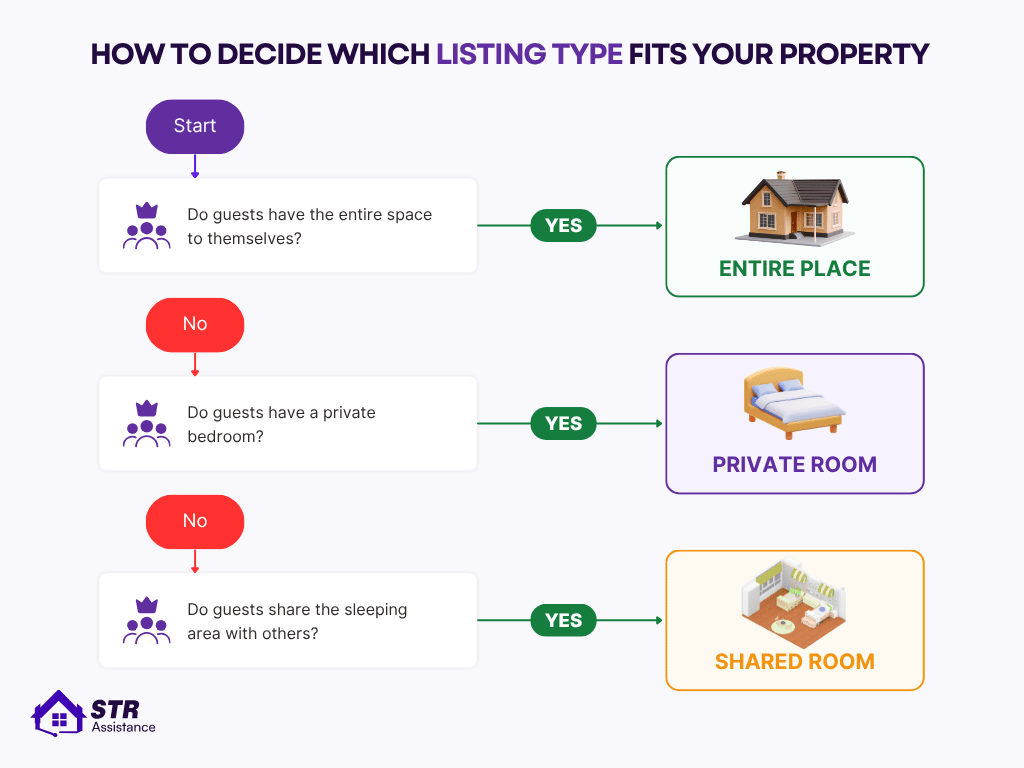
Hosts often get tense about which label they should categorize their property. Honestly, this is not that tough, as I keep advising a lot of hosts and have come up with a shortcut trick. If you have a left room that is not used, it is easy to rent it as a private room. Same as if you have a spare house where you don’t live, or even if you live, guests don’t need to interact with you, with a separate bath and kitchen, that will be labeled as the entire place. Once you choose the right listing type, following Airbnb SEO best practices can also help you optimize the listing for better search visibility.
There is a host forum thread I came across describing exactly this: a two-bedroom entire place with 99% single-guest or couple bookings, and a host wondering whether to split the unused second bedroom off into its own separate private room listing.
If Maximizing Income Is Your Main Goal
Choose Entire Place if you can offer guests exclusive use of the property.
- Usually commands the highest nightly rates.
- Appeals to families, groups, and business travelers.
- Offers greater earning potential during peak travel seasons.
If You Want to Stay in Your Home and Earn Passively
Choose a Private Room if you plan to live in the property while hosting.
- Keep living in your home while generating extra income.
- Share common areas like the kitchen or living room.
- Lower operating and cleaning costs than an Entire Place.
- Ideal if you enjoy occasional interaction with guests.
If Local Regulations Limit or Restrict Entire-Place Rentals
A Private Room may be the better option.
- Some cities allow home-sharing but restrict short-term rentals of entire homes.
- Living on-site may help you comply with local rules.
- Always check your city’s short-term rental regulations before listing.
- Review HOA, condo, or lease restrictions if applicable.
If You Have an Underused Room in an Existing Entire-Place Listing
Consider listing the room separately as a Private Room (if Airbnb’s policies and your local regulations allow it).
- Generate income from unused space.
- Increase occupancy during slower travel periods.
- Clearly explain which spaces are shared and which are private.
- Avoid double bookings by carefully managing your calendar if multiple listings are active.
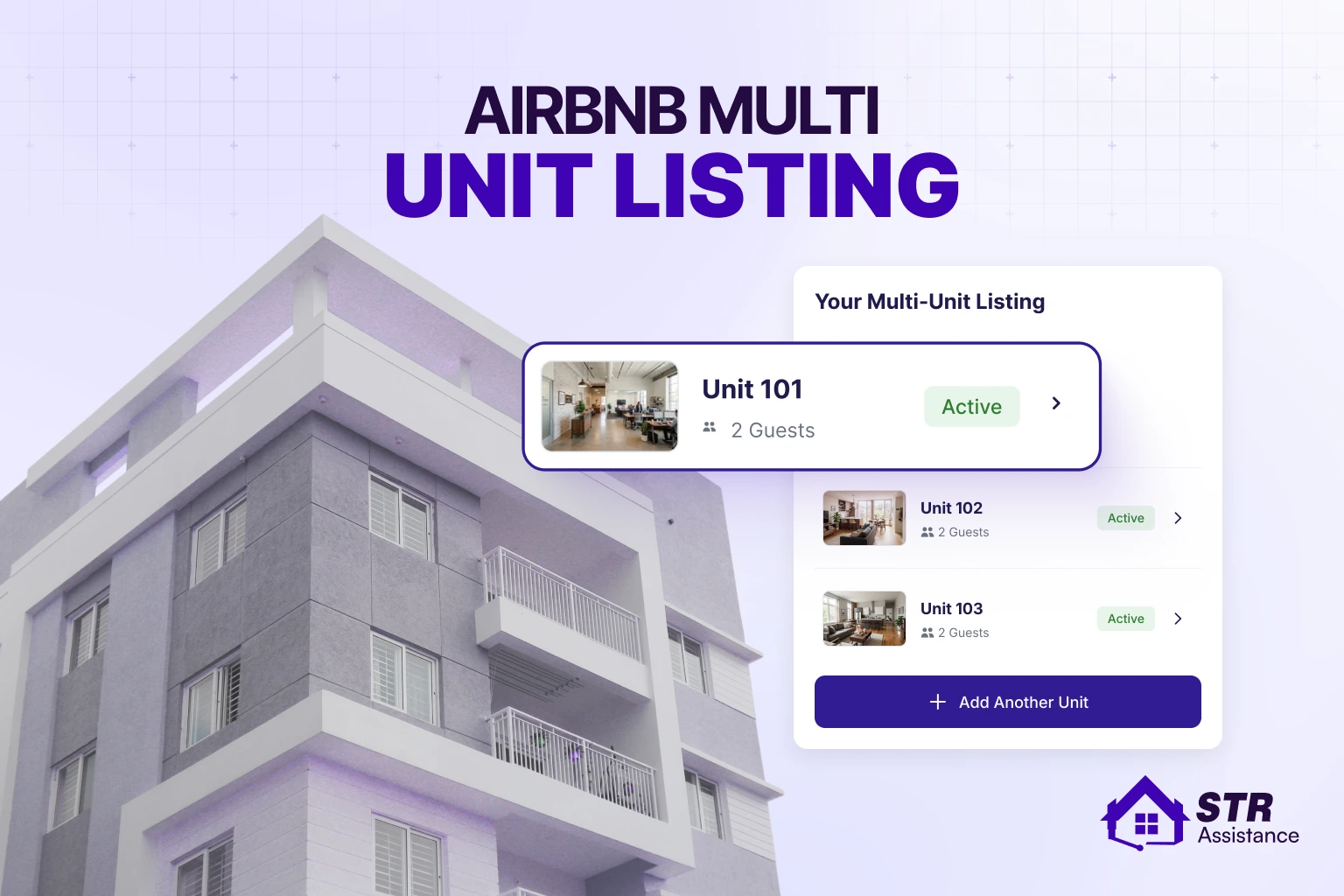
If you plan to take this further and split a property into several fully separate units rather than just one extra room, that is a different setup entirely. Our guide on listing multiple units on Airbnb covers what changes in terms of compliance, calendar management, and guest expectations once you move past a single underused room.
Avoid These Listing Type Mistakes Before You Publish Your Listing
When listing a property and selecting its listing type, many hosts make common mistakes. I always advise my hosting clients to be mindful of these, and here are the most common ones.
- Choosing the category that seems most clickable instead of the one that matches the actual setup.
- Hiding shared access in the description instead of showing it up front.
- Calling a studio with shared laundry or shared interior access an entire place without clarifying the layout.
- Assuming guests will read the full description closely enough to catch privacy caveats.
- Under-explaining host presence, separate entrances, or shared outdoor spaces.
Switching Your Listing Type: What Actually Changes
Changing your listing type is easier than most hosts assume, but there are a few important things you should know before updating it. Run through this list before you make the change, not after.
- If you’re simply updating the category field on your existing listing, its review history stays attached to that same listing. Reviews are tied to the listing itself, not to whichever category label happens to be selected.
- A brand new listing starts from zero. This only applies if you create an entirely separate listing, splitting off a room, for instance, rather than editing your current one. That new listing has no reviews of its own, no matter how established the original property is.
- Superhost status is account-wide, not listing-specific. It’s evaluated across your whole account each quarter, so switching one listing’s category doesn’t reset it on its own. A brand new second listing, though, starts without the performance history that contributed to your Superhost status in the first place.
- Your pricing comparables change. Airbnb compares you against a different pool of listings depending on your category. A private room switching to an entire place, or the reverse, needs a fresh look at nearby comparables, not the old pricing carried over unchanged.
- Your description and photos need to match immediately. A category switch without an updated description is exactly the kind of mismatch that leads back to the mislabeling problems covered earlier in this guide.
- Regulatory classification can shift too. Some cities apply different permit rules by category, so a switch from private room to entire place can trigger a different compliance requirement entirely. Check local rules before finalizing the change, not after.
How STR Assistance Helps Hosts Choose and Set Up the Right Listing Type
We Help Set Up Your Airbnb Listing
This decision looks simple from the outside: one dropdown, three options, but getting it wrong quietly costs hosts money, reviews, and sometimes a regulatory headache they didn’t see coming. Our listing management service helps hosts through it directly, property by property, rather than pointing them at a generic definition.
Here is how at STR Assistance we help hosts choose and set up the right listing type.
- An honest audit of what your specific layout genuinely offers in terms of privacy
- Help writing disclosure language that describes shared spaces plainly instead of burying them.
- Support through the actual switching process if you decide to change categories.
- Ongoing tracking of local regulatory changes that might affect which category makes sense for your property over time.
If you’d rather have someone experienced make this call with you instead of guessing, our Airbnb VA can take the day-to-day execution off your plate entirely.
Worth knowing too, your listing type also affects which listings you’re compared against in search; see our full guide to Airbnb SEO.
If you’re not sure which category actually fits your property right now, reach out, and we’ll walk through it with you directly.
FAQs
Yes, this is how splitting a listing generally works, and it's exactly the scenario covered in the underused-room section above. Just weigh the regulatory reclassification and the fresh review history that comes with any brand new listing before doing it.
No, not if you're simply changing the category on your current listing. Reviews are tied to the listing itself, not the category label. It's only creating an entirely new, separate listing that starts you at zero reviews.
It's genuinely unclear right now, and that's not us hedging unnecessarily. Airbnb's own current pages describe shared room differently depending on which one you're reading, one scoping it to professionally managed hostels, another still describing it broadly. Check your actual listing creation flow directly rather than relying on any single source, including this one.
Often, yes. Many cities apply owner-occupancy exemptions or lighter rules to hosted private rooms compared to unhosted entire-place rentals, though this varies significantly by city and changes as local ordinances get updated. Always verify current local rules rather than relying on older research.
Indirectly, yes. Your listing type changes which comparable listings you're measured against for pricing and conversion, and both of those feed directly into Airbnb's ranking system. A well-priced private room competes in a different pool than a well-priced entire place.
It can be, with real screening discipline in place. Verified ID requirements, a genuine review history bar, and a clear house-rules conversation before check-in all matter more here than in entire-place hosting, since you're sharing your actual living space with someone you haven't met.
If you're editing your existing listing's category, yes, since Superhost is evaluated across your whole account, not per listing. If you create a brand new separate listing instead, that new listing starts without the performance history that helped earn Superhost in the first place.
Yes, and for a private room specifically, it's worth setting the bar higher given that you're sharing living space directly. Requiring verified ID and a minimum review history is a reasonable, common practice for private room hosts, even if you don't apply the same requirements to an entire-place listing elsewhere in your portfolio.