Almost every Airbnb guest causes zero problems. They check in, keep to themselves, and leave the place the way they found it. Then there’s the guest blasting music at 2 AM, or the one insisting a stain was already there before they arrived. How you handle that small percentage of difficult guests says more about your hosting than almost anything else.
To deal with bad Airbnb guests, screen carefully before you accept a booking, set clear house rules early, document everything, and know exactly when to involve Airbnb support or local authorities. Most situations resolve calmly when you stay professional and act fast, without needing to escalate at all.
The STR Assistance team handles these situations daily as part of our co-hosting work: onboarding new guests, sending reminder messages, managing calendars, and writing guest reviews. Our short-term rental virtual assistants know how to manage difficult guests professionally while keeping your calendar booked.
This article covers exactly that: how to spot warning signs before you accept a booking, how to handle specific types of problematic guests once they’ve checked in, and how to keep every interaction professional throughout.
How To Identify Bad Airbnb Guests Before They Book
The first and most important thing to prevent having bad guests on Airbnb is identifying them in the first place. Recognizing bad guests before booking will save you time and money in handling and repairing your property.
Here we discussed important points to identify bad Airbnb guests before they book your property:
Incomplete Profiles
A significant share of Airbnb bookings come from guests who are new to the platform, so an incomplete profile alone isn’t automatically a red flag. It’s still worth inspecting a guest profile before accepting a reservation request. Look for:
- A clear, non-blurry profile photo.
- A join date that gives you a sense of how established the account is.
- An organized “about” section that says something real about the person, not just a blank field.
- A verified badge on Airbnb.
- Personal information including government ID, email, and phone number.
If a profile is missing most of this, it’s reasonable to ask the guest to complete it before you confirm, framed professionally as a standard security step rather than an accusation.
Negative Reviews
Reviews on a guest’s profile are one of the most direct signals of past behavior. If a guest has multiple negative reviews from previous hosts, treat that as a genuine warning sign, not something to overlook. Check whether the reviews are broadly positive and whether the guest responded to any criticism reasonably. If you decide to decline a risky request, it helps to know how that affects your Airbnb acceptance rate first.
Vague Communication
Guests who avoid giving clear, direct answers are worth watching closely. If their messages are vague or evasive about basic details, that’s often a sign they’re avoiding a conversation they’d rather not have. Use specific, concrete language yourself, and keep your house rules and expectations clear from the first message.
Unusual Requests
Most requests coming through Airbnb are straightforward, but some aren’t. Requests to book dates that aren’t actually on your calendar, or asks for access to things well outside a normal stay (a larger cooking pot is reasonable; access to your personal belongings is not) are worth evaluating carefully before you say yes.
Guests Asking to Bypass Platform Rules or Payment Policies
If a guest asks to communicate or pay outside the Airbnb platform, treat that as a serious red flag. These requests are a common tactic to avoid platform fees, sidestep Airbnb’s protections, or attempt fraud.
- Never agree to communicate outside the Airbnb platform.
- Never accept a payment request outside Airbnb’s own payment system.
- Report the guest if you suspect fraudulent activity.
Catching all of these signals consistently, across every booking request, takes attention most hosts don’t have time for. For a deeper breakdown of how to screen guests properly, see our guide on Airbnb guest screening.
Common Types of Bad Airbnb Guests and How to Handle Them
Even with careful screening, some guests will still cause problems once they’re staying with you. Here are the most common types of difficult guests and how to handle each one.
Noisy Guests
Noise complaints from neighbors are one of the most common issues hosts deal with, and they can trigger action under Airbnb’s Community Disturbance Policy if left unaddressed. To reduce noise issues before they start:
- Let your neighbors know upfront that your property is an Airbnb, so they know who to contact if there’s an issue.
- Set clear expectations with guests about respecting neighbors and quiet hours.
- Give neighbors a direct way to reach you if a problem comes up.
- Install noise-monitoring devices like Alertify or Minut to track excessive noise remotely.
- Put clear house rules in writing before the guest books.
- Mention Airbnb’s quiet hours and noise complaint policy directly, so guests understand there’s a real consequence.
House Rule Breakers
Some guests will break house rules regardless of how clearly you’ve stated them. If a guest keeps breaking rules, you can contact Airbnb to have the booking addressed. Before you consider cancelling on a problem guest yourself, know that a host-initiated cancellation can mean fees and a hit to Superhost eligibility unless you have documented grounds. Both guests and hosts agree to Airbnb’s basic conduct standards when they create an account.
To reduce rule-breaking before it starts:
- Write clear house rules directly into your listing description.
- Confirm the guest has reviewed and understood key rules before you approve the booking.
- Walk through the most important rules again in person or via message at check-in, and include a printed copy in the welcome book.
- Request a security deposit to protect your property and belongings.
- If a rule is broken, address it directly but calmly first, and give the guest a chance to correct it.
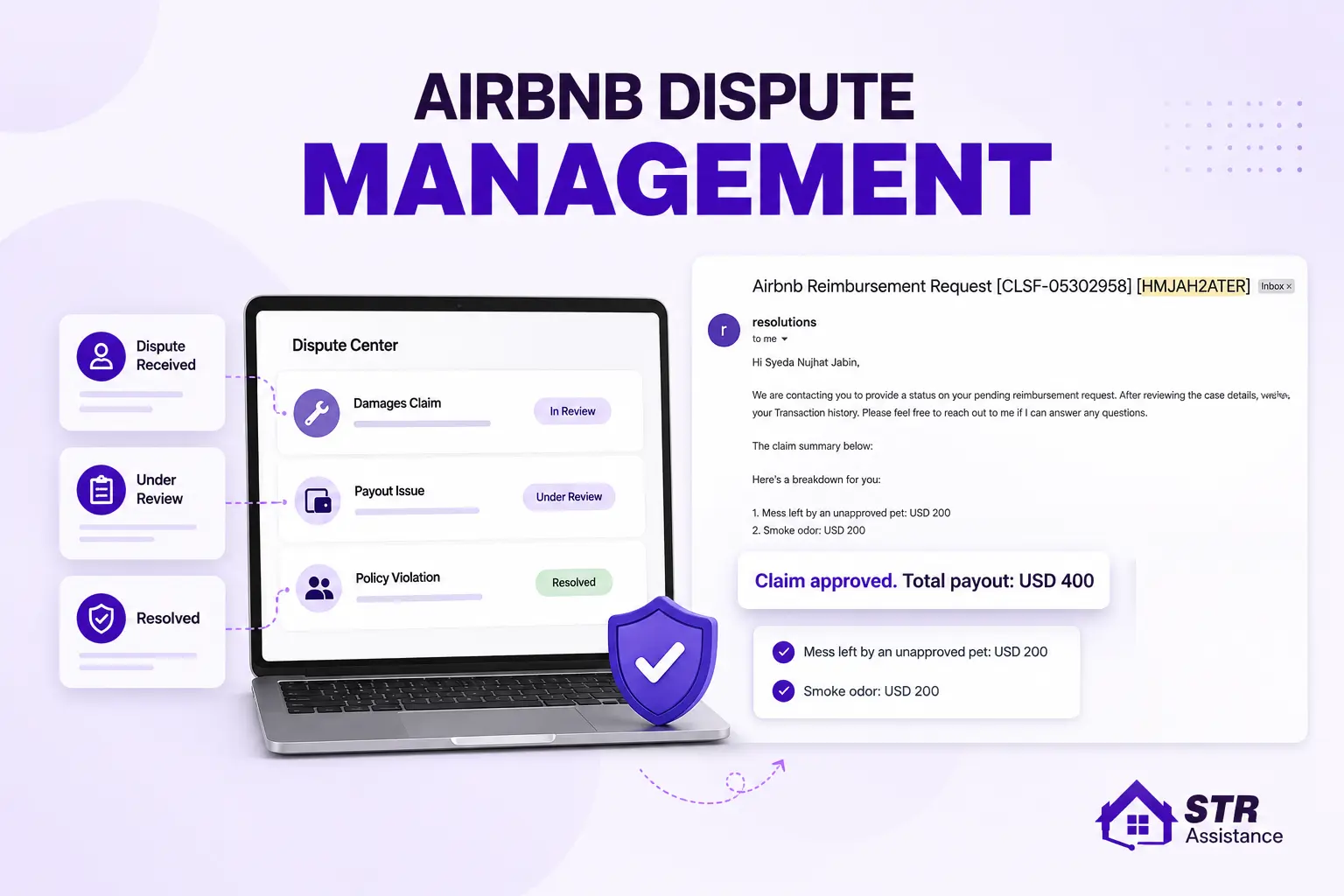
- If it continues, report the violation to Airbnb and pursue compensation for any resulting damage. For a full breakdown of how Airbnb handles these situations, see our guide on Airbnb dispute management.
- If there’s an immediate safety concern, contact local emergency services. In the US, that’s 911; in the UK, 999; across the EU, 112. Know the correct number for wherever your property is located.
Messy or Dirty Guests
Guests who leave a property messier than expected should be handled directly and professionally. Set clear cleanliness expectations upfront, and consider providing a welcome guide that covers trash disposal, dish cleaning, and general tidiness.
Offer extra trash bags or cleaning supplies if a guest needs them. If a guest genuinely doesn’t comply with reasonable cleanliness expectations, document it with photos and report it through Airbnb’s support system. You can charge a cleaning fee if the mess requires a professional clean beyond your normal turnover.
Unresponsive or Ghosting Guests
An unresponsive guest can leave your calendar in limbo, especially if they cancel at the last minute. A few things help you manage this:
- Most cancellation policies pay you out if a guest cancels within a defined window before check-in, commonly around 72 hours; the exact terms depend on the cancellation policy you’ve selected.
- Choose a cancellation policy (flexible, moderate, or strict) that matches how your business actually runs.
- Document everything: guest communication, check-in attempts, and any unusual behavior.
- Reach out proactively around arrival time to confirm the guest is still coming.
- Report a no-show to Airbnb so you’re compensated for the lost booking.
- Reopen your calendar as soon as you know the dates are free again.
If a guest cancels at the last moment, reopening your calendar quickly matters. Read 19 ways to get more bookings on Airbnb to help fill that gap faster.
Aggressive or Threatening Guests
Aggressive or threatening behavior is rare, but it needs a clear response plan. This can include a guest breaking house rules and reacting badly when confronted, entering spaces they shouldn’t, or making direct threats against you, your property, or others nearby.
To reduce this risk and respond correctly if it happens:
- Screen reservation requests carefully before accepting.
- State house rules clearly, including noise limits and guest count restrictions.
- Communicate with guests early to understand their needs and intentions.
- If an incident occurs, report it to Airbnb in detail, with evidence.
- If you feel physically threatened, contact local authorities immediately.
- Block the guest’s account from booking with you again once the situation is resolved.
Using Security Measures
Safety is one of the most common concerns hosts raise, and it’s worth taking seriously given how many people use the platform. A clean, comfortable property paired with sensible security measures goes a long way:
- Install smart locks with unique, changeable codes so previous guests can’t re-enter after checkout.
- Offer a secure, guest-only Wi-Fi network.
- Install smoke detectors, motion sensors, and carbon monoxide alarms as part of a centralized safety setup.
- Install outdoor security cameras in line with Airbnb’s disclosure rules. Indoor cameras are not permitted under Airbnb’s policy, even in shared common areas, so keep any camera coverage strictly outdoors.
- Provide guests with a clear guide covering emergency contacts, local authority numbers, and how to use any security devices on the property.
Handling Damage Claims
Damage happens, whether by accident or on purpose, and guests are responsible for paying for it. Here’s how to handle a claim properly:
- Thoroughly inspect the damage and take photos, videos, and close-ups of every affected area as evidence.
- Document the damage and get a clear repair estimate before discussing costs with the guest.
- Try to resolve the cost directly and reasonably with the guest before opening a formal claim.
- Be fair. Don’t inflate the damage or the cost; exaggerated claims hurt your credibility if Airbnb reviews the case.
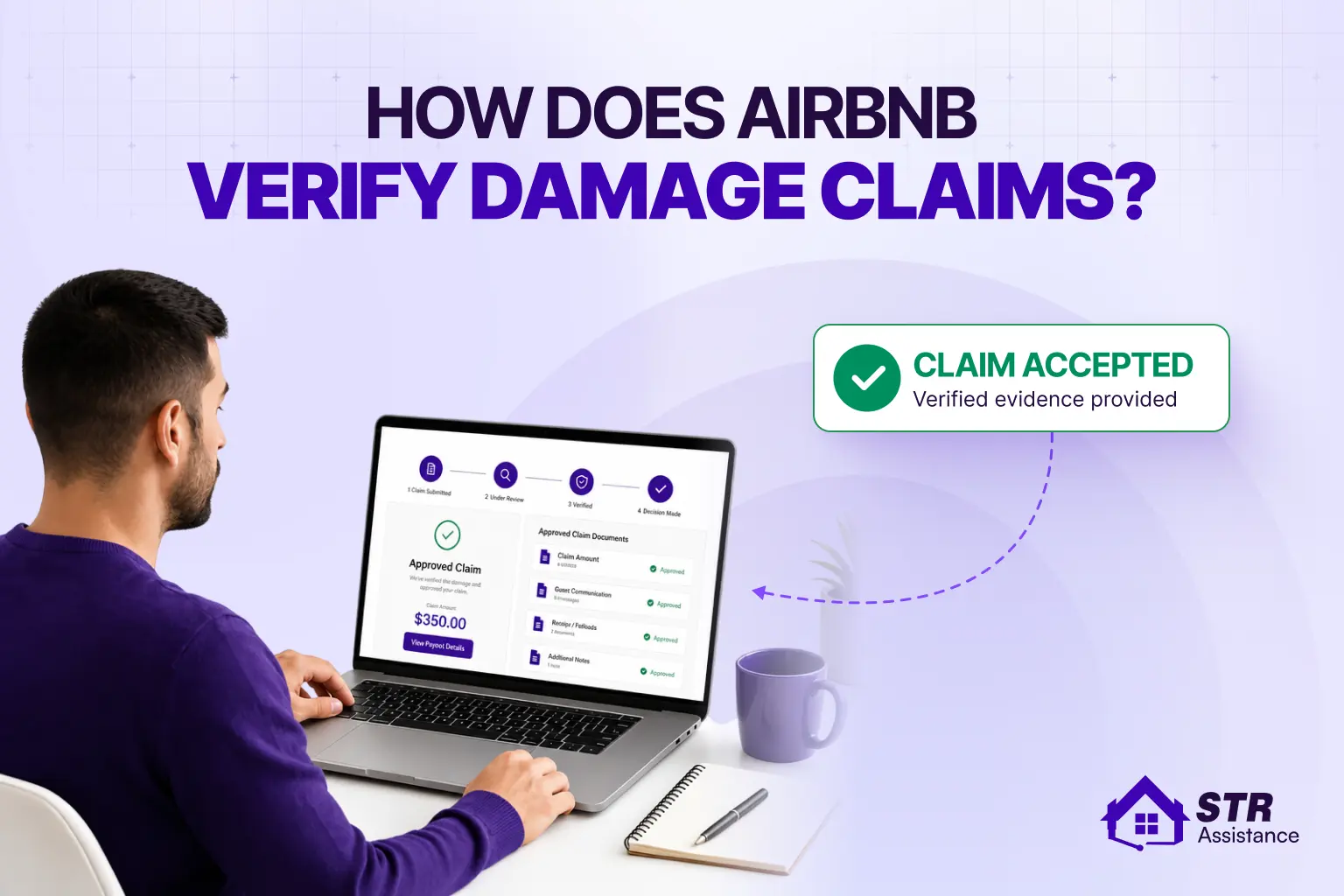
- If the guest won’t agree to pay directly, file a claim through Airbnb’s Resolution Center.
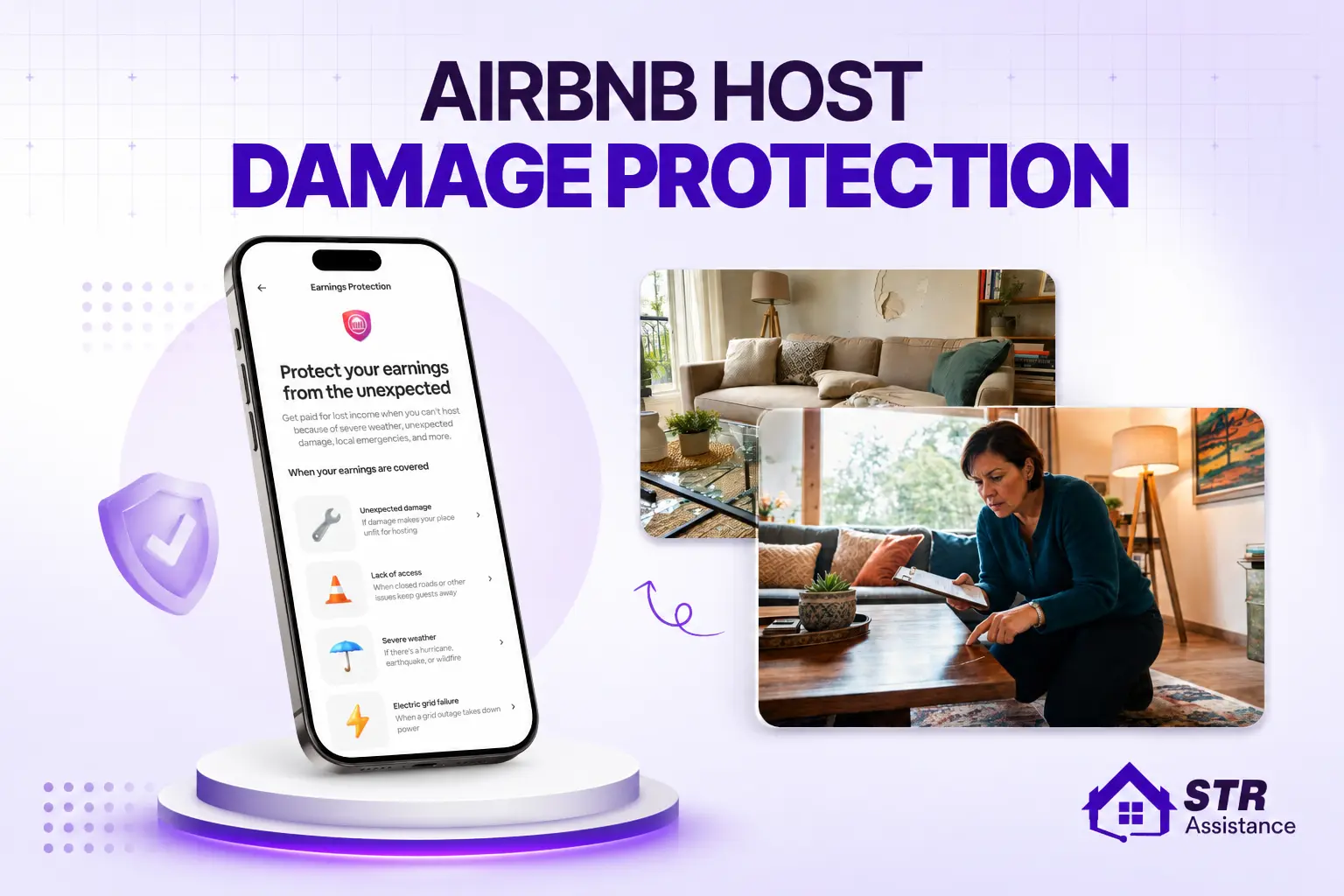
- Airbnb’s Host Damage Protection can reimburse you directly if the guest never pays, up to $3 million per incident, though the process has gotten stricter since April 2026. AI-generated or altered photos are no longer accepted as evidence, and you have 14 days from checkout (or until your next guest checks in, whichever comes first) to file. For the full process, see our guide on Airbnb Host Damage Protection.
- Requesting a security deposit upfront gives you an extra layer of protection before a guest even arrives.
Some guests respond to being charged for damage by leaving an unfair or retaliatory review. If that happens, our Airbnb review removal service can help get policy-violating reviews taken down.
Reviewing Guests Honestly
Guest reviews help other hosts make informed decisions, so give specific, honest feedback about the stay. Cover both what went well and what didn’t: cleanliness, communication, and overall behavior. A well-written guest review on Airbnb genuinely helps the next host who considers accepting that guest.
How to Set Clear Expectations to Avoid Issues?
To ensure a peaceful Airbnb rental service you have to determine how you want your guests to behave. To avoid unnecessary issues you have to set clear expectations and provide regular feedback to address any potential adjustments required.
Detailed House Rules
Be specific in your listing about what’s allowed: maximum guest count, restrictions on gatherings or events without approval, quiet hours, smoking policy, trash disposal, cleaning expectations, pets, and appliance use. Clear rules protect your relationship with neighbors as much as they protect your property. If you want a starting point rather than writing rules from scratch, our house rules template covers the essentials most hosts need.
Check-in and Check-out Instructions
Offer your guests check-in instructions which enhances your professionalism towards the arrived person. Explain to them how to access the property, what the code of the lockbox and smart lock, or key pick-up from a specific location, etc. Provide them with emergency contact information for any questions or issues upon arrival.
Clearly state your guests about the check-out time from your residence. Also, instruct them where to leave the keys. You can state the cleanliness expectations and damage clearance process before leaving the house.
Welcome Book
A welcome book is one of the simplest ways to head off problems before they start. It should include a personal welcome, your contact information, house rules (noise, guest count, cleanliness), a short neighborhood guide, appliance instructions, Wi-Fi details, and emergency contacts. If you don’t already have one, our welcome book template is a ready-to-use starting point. Done well, it answers most questions before a guest ever has to message you.
How to Communicate with Bad Airbnb Guests?
When you’re dealing with a problematic guest, stay proactive and professional. State your house rules clearly and in a friendly tone from the start, and keep a documented or recorded copy of every conversation.
Here’s an example. Say neighbors complain about excessive noise. A message like this addresses it directly without escalating the situation:
Hi [Guest's Name], I hope you're enjoying your stay at [Property Name]! I wanted to reach out about noise levels, since the neighbors mentioned things have gotten a bit loud. I understand you're having a great time with friends and family, and I just want to make sure everyone in the area can enjoy their evening too. If you could keep things a bit quieter, especially during quiet hours (10 PM to 7 AM), that would be a big help. Thanks so much for understanding, and please let me know if there's anything I can do to make the rest of your stay more comfortable. Best, [Host Name]
The Bottom Line
Most difficult guest situations get resolved by staying calm, documenting everything, and knowing which resources to pull in when you need them, whether that’s Airbnb’s own support system or local authorities. Guests who break rules, cause damage, or create noise complaints are a normal part of hosting; they’re rarely a reason to panic.
Handling these situations well is also a skill that improves over time. You’ll get better at spotting warning signs early, setting the right expectations upfront, and knowing exactly what to document if a claim ever needs to go further. Managing all of this alongside your calendar and day-to-day guest communication takes real time.
That’s where STR Assistance comes in. Our Airbnb virtual assistant team handles guest communication, difficult-guest situations, and documentation on your behalf, so you can step back from the parts of hosting that eat up the most time and stress.