- Key Takeaways
- Airbnb does not officially define or publish an acceptance rate benchmark for hosts, despite the term being widely discussed among hosts and in community forums.
- Acceptance rate and response rate are different. Acceptance rate is about accepting booking requests, while response rate is about responding to guest requests within the required timeframe.
- Response rate is an official Airbnb metric and plays a role in Superhost eligibility.
- The commonly mentioned 88% acceptance rate is not an officially confirmed Airbnb requirement. It largely comes from discussions and experiences shared by hosts.
- Declining a booking request does not automatically mean you will lose Superhost status. Having a valid reason to decline is different from ignoring or letting guest requests expire.
- Being responsive to guests matters more than simply accepting every request. Hosts should focus on answering guest queries and maintaining a good guest experience.
- If managing multiple properties makes it difficult to stay responsive, a short-term rental virtual assistant can help with guest communication, listing management, direct bookings, and other property management tasks.
Airbnb does not publish any official term for acceptance rate. But, while working with hosts several times, we have seen hosts use the term, and on Reddit and community forums, hosts often talk about how acceptance rate impacts Superhost status.
In general, what hosts mean by the acceptance rate is the percentage of booking requests a host accepts out of the total number of non-instant booking requests hosts receive, without declining or letting requests expire. But there is no proper evidence that Airbnb defines it this way, which is why others think acceptance rate includes both manual and instant bookings.
This means acceptance rate is related to Airbnb response rate, which is why many hosts think a low acceptance rate can impact Superhost status, listing ranking, and hosting performance.
While we never found any evidence of such claims in Airbnb’s official announcements or articles, there is a close link between response rate and overall Superhost status. How?
Today, let’s talk about what acceptance rate is. Is it a myth? Or is this actually a KPI Airbnb uses to evaluate Superhost status?
What Is Airbnb Acceptance Rate?
Acceptance rate is the percentage of booking requests a host accepts out of the total number of non-instant booking requests, or it can include instant booking requests too. It measures how often a host says “yes” to guests who request to book, rather than declining or letting requests expire.
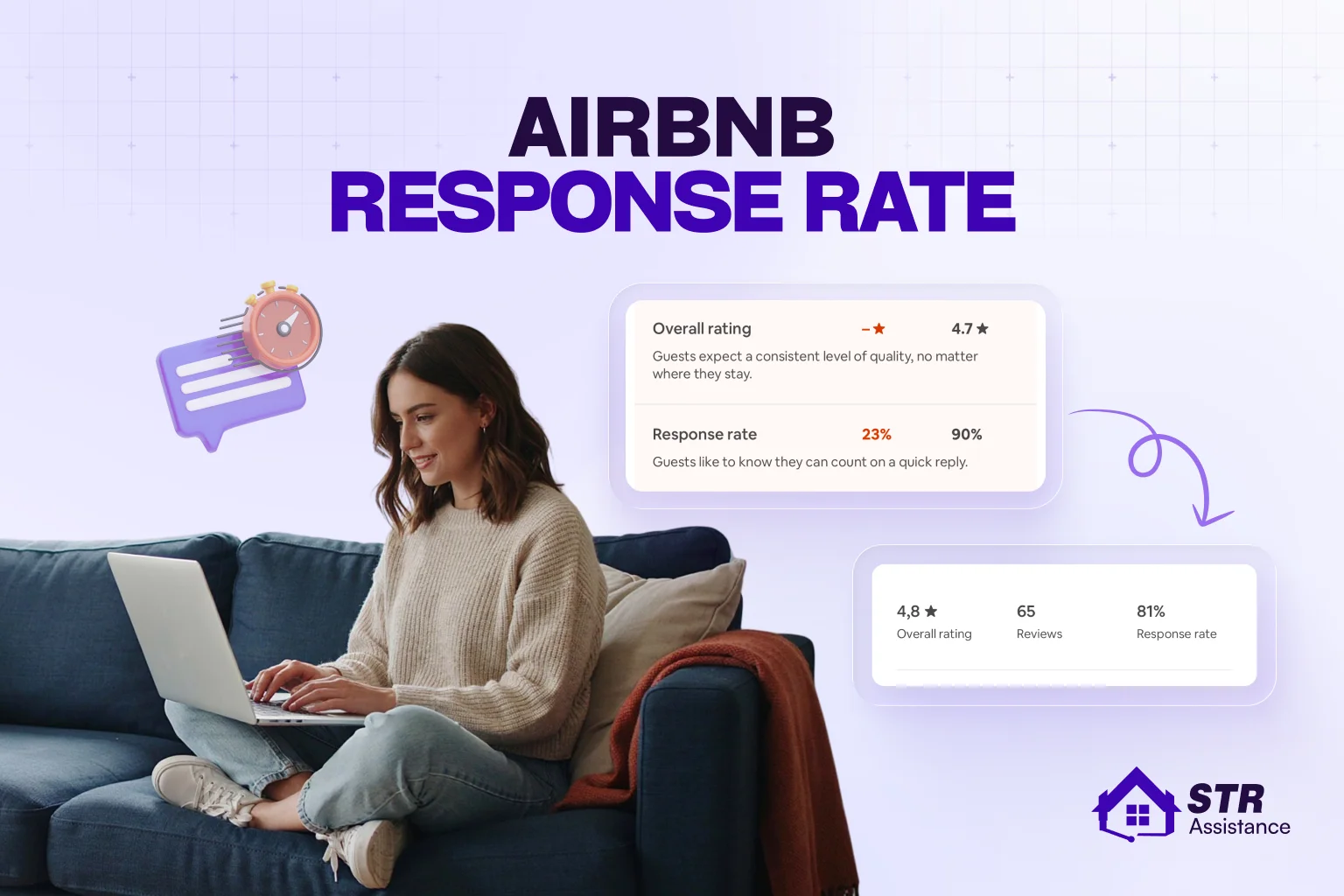
Though acceptance rate is not something official, the requirement to respond within 24 hours to a guest’s request, either by accepting or rejecting the request, is something Airbnb considers strictly and knows as response rate. To get Superhost status, hosts must maintain a 95% response rate.
How Is Airbnb Response Rate Calculated?

The response time window is 24 hours within a 30-day period, which is used to calculate your response rate as a percentage of all new inquiries and reservation requests you receive from guests.
For Superhost status, however, the response rate is calculated on a quarterly basis over a 12-month period. According to Airbnb, the assessment occurs every three months, beginning January 1, April 1, July 1, and October 1.
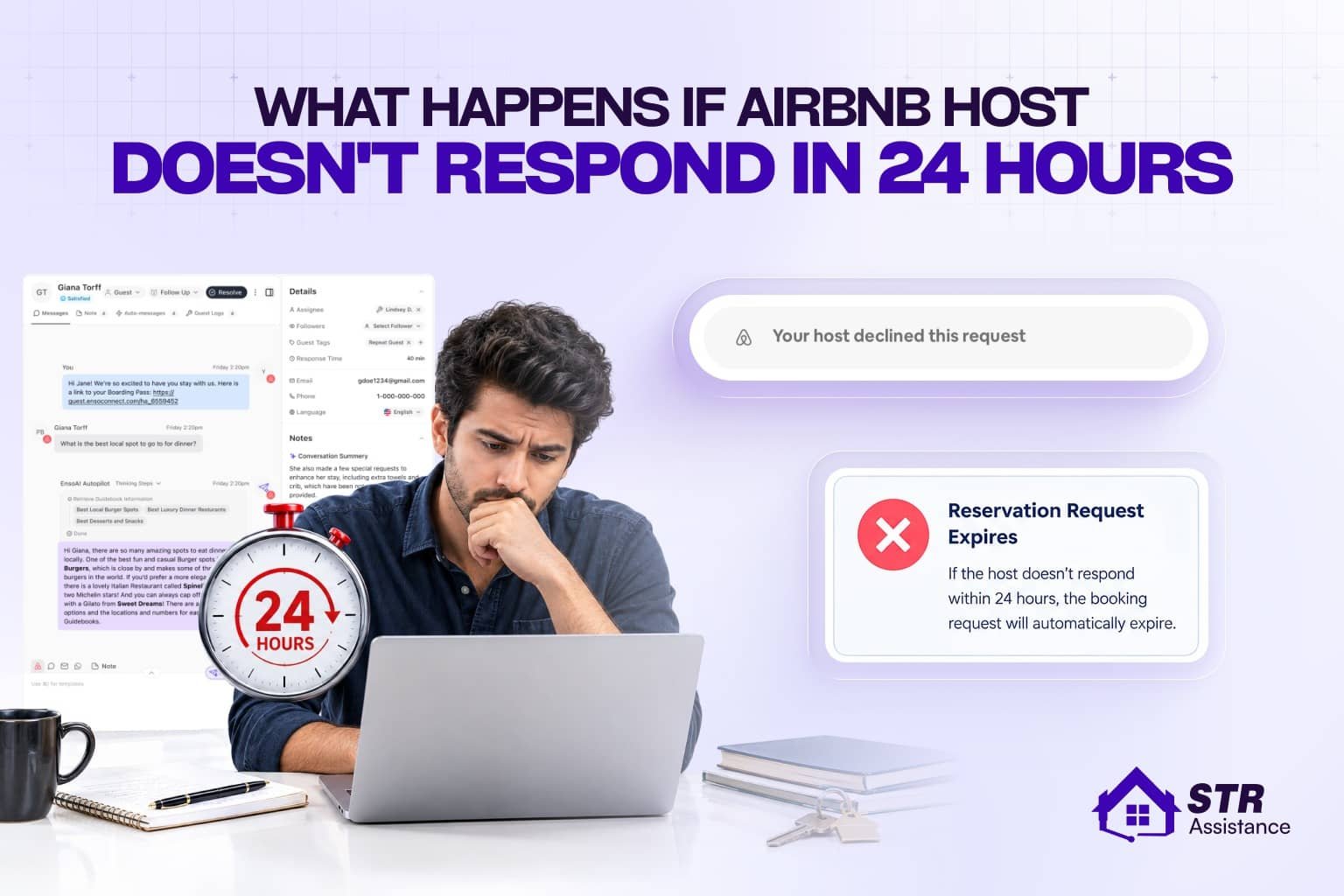
A response does not only mean accepting the booking request; you can decline too, but you have to make sure you reply to your guest rather than making them wait for days. If you let a reservation request expire without any response, this will lower your response rate.
What Is a Good Airbnb Acceptance Rate?
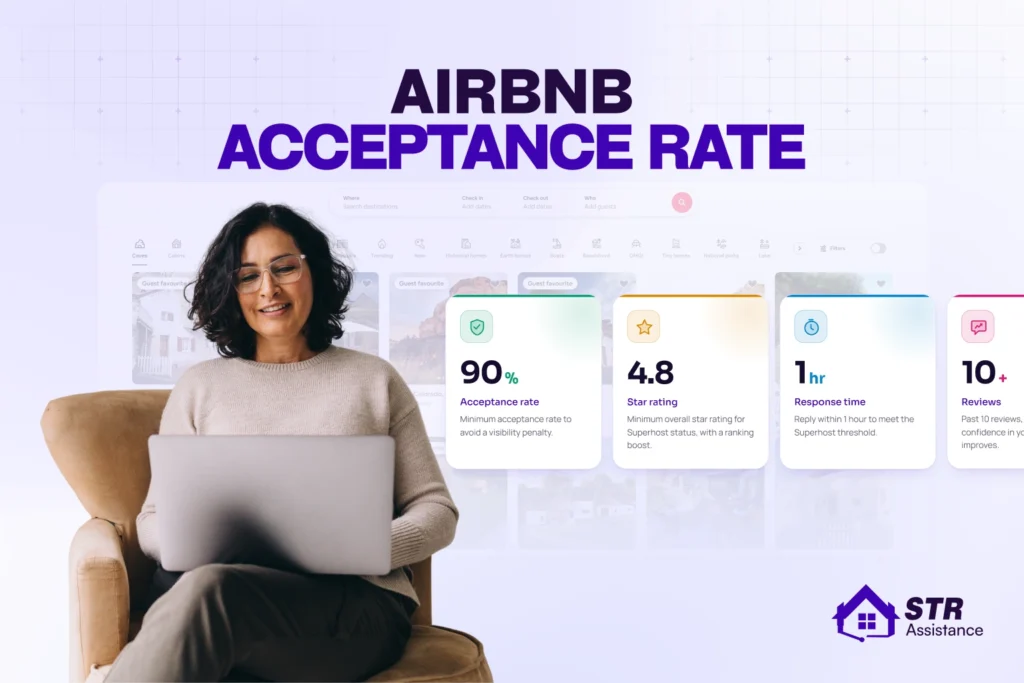
While Airbnb officially does not have any capped acceptance rate, we often hear that 88% is the benchmark to maintain Superhost status.
However, there is an 11-year-old Reddit thread that is still available, where hosts are discussing whether the acceptance rate should be 88%, and some claim their acceptance rate is 99%.
Though the thread is quite old, we found something interesting that hosts shared. To increase their acceptance rate, they try hard not to decline any requests. And if there is any suspicious guest or an incomplete Airbnb guest profile, they request the guest to complete their information if they want to book Airbnbs in the future, because other hosts screen such guests. This way, they stay safe and do not need to reject the booking request.
Acceptance Rate vs Response Rate
While Airbnb acceptance rate means the percentage of booking requests that hosts accept, with only a very small fraction of requests being declined, response rate means hosts simply need to respond to a booking request within 24 hours, either by accepting or rejecting the request.
Among the four criteria for Airbnb Superhost status, response rate is one of them, as Airbnb does not want guests to wait and have a bad experience. It favours hosts who are always responsive to their guests.
What a Low Acceptance Rate Actually Costs You
Honestly, a low acceptance rate is not costing you anything as long as you have valid reasons to decline the request and you are not unresponsive to your guests. If you have a 90% or higher response rate, this means you are always engaging with your guests. This is why Airbnb says responding means a host can decline too, but they have to answer the guest’s query.
A low acceptance rate may cost those hosts who intentionally leave guest requests unanswered, do not care about the guests’ queries, and ultimately end up with bad reviews. Otherwise, you are good to go.
How to Protect Your Acceptance Rate
Acceptance rate is based on how you handle booking requests, so it helps to understand which actions affect the metric and which options are available when you cannot or do not want to host a guest. The following practices can help you manage booking requests while keeping your listing availability and hosting preferences up to date.
Remove the Declines You Should Never Have Received
Before declining a reservation request, check whether the request resulted from your listing settings or availability not being up to date. For example, if you are unavailable on certain dates, keeping your calendar updated can prevent guests from requesting those dates in the first place. This does not remove an existing decline from your record, but it can reduce situations where you receive requests you cannot accommodate.
Decline the Inquiry, Not the Request
If a guest is only asking whether your property is available or suitable, you can respond to the inquiry without declining a reservation request. An inquiry and a reservation request are different actions on Airbnb, so make sure you understand which one you are responding to before selecting an option. If the guest has already submitted an actual booking request, however, responding to the message does not replace the need to handle the request within Airbnb’s stated timeframe.
Ask the Guest to Withdraw Instead of Declining
If a guest tells you they no longer want to proceed with a reservation request, you can ask them to cancel or withdraw the request themselves, where Airbnb provides that option. Keep the conversation factual and avoid pressuring the guest to take an action they do not want to take. If the guest does not withdraw the request, you still need to handle it according to Airbnb’s rules and deadlines.
Snooze Your Listing When You Cannot Host
If you know you will not be able to accept bookings for a period, consider changing your availability or temporarily pausing your listing rather than leaving dates open that you cannot host. Airbnb provides hosting settings that can affect whether guests can request or book your property. The exact options available can depend on your listing and account, so check your current calendar and listing settings before relying on a particular option.
Keeping this updated gets harder the more properties you manage, or when your own availability shifts unpredictably. This is where a virtual assistant Airbnb actually helps: someone watching your calendar and adjusting availability settings in real time, so you’re never caught with open dates you genuinely can’t host.
Use Instant Book With Requirements
Instant Book allows eligible guests to book without waiting for you to manually approve each reservation. Airbnb also provides host-set requirements for guests, such as having certain account information or meeting other eligibility conditions. These requirements can help you define who can use Instant Book, but they do not guarantee that every booking will be suitable for you. Review the current Instant Book settings and Airbnb’s cancellation and reservation rules before enabling it.
How We Help Hosts Manage Booking Requests
Whether it is acceptance rate, response rate, response time, or rating, Airbnb favors hosts who are responsive and responsible toward their guests and tries to provide the best guest experience. And we help hosts maintain that.
STR Assistance is a short-term rental virtual assistant company where we provide all property management tasks, from guest communication and listing management to direct booking websites and every other property management task. It can feel daunting to handle everything alone, and our STR virtual assistant help eases the burden.
If you are a solo host or have multiple properties where it becomes tough to maintain acceptance rate, response rate, and overall Superhost status, an STR remote team or an Airbnb virtual assistant can best help you. Either split the responsibilities or hand over the entire task to us. With 800+ property management experience, we will support you with all your rental management needs.
Conclusion
Airbnb acceptance rate means the percentage of booking requests a host accepts, whether they have instant booking set up or not. This is not something officially documented, but hosts often get tense about it because they think it might impact their Superhost status.
All that matters is that you provide a good guest experience, handle your Airbnbs well, and stay responsive to your guests.
Frequently Asked Questions
No. Airbnb does not publish a separate acceptance-rate threshold for Superhost status. Hosts must respond to at least 90% of new messages and accept or decline reservation requests within 24 hours.
Airbnb does not currently document a separate host acceptance-rate score or dashboard location for home hosts. Check your Host dashboard for Superhost progress, response rate, response time, and cancellation rate instead.
Not as a published Airbnb metric. An inquiry is not a reservation request requiring acceptance; it can affect your response rate if you do not respond within 24 hours.
Airbnb does not publish an acceptance-rate calculation. However, a reservation request that expires without a decision counts as a failure to respond on time and can lower your response rate. Accept or decline it within 24 hours.
One decline is not described by Airbnb as an automatic ranking penalty. However, Airbnb says declining many requests can affect reservation rates and where your listing appears in search.
Airbnb does not state that a specific number or rate of declined requests automatically triggers suspension. Repeated declines may reduce reservation performance and search placement, while suspension or removal is generally linked to repeated or serious violations of Airbnb’s hosting standards or policies.
You may decline a request you cannot accommodate, including one that conflicts with clearly stated house rules, as long as the reason complies with Airbnb’s Nondiscrimination Policy. Decline within 24 hours so it does not damage your response rate.
Airbnb does not publish an official acceptance-rate formula. Instant Book reservations are confirmed automatically for eligible guests, so there is no manual accept-or-decline decision for the host.
Airbnb does not publish an acceptance-rate metric to protect. Snoozing or unlisting prevents new inquiries and booking requests while the listing is unavailable, which can reduce the risk of missing new requests and harming your response rate.
Yes, provided the reason is legitimate and nondiscriminatory. Airbnb now supports approved booking permissions, so booking on behalf of another guest is not automatically improper; review the request details and decline within 24 hours if you cannot accommodate it.