Quick Answer: Best Direct Booking Website Builders
If you want the short version before the full comparison, here’s how we’d rank these for the situations that come up most. Read the full profiles below for the reasoning behind each one.
- Best overall for most independent hosts: Lodgify, the builder and booking engine that’s actually built for short-term rentals specifically, not general commerce.
- Best if you already run a PMS and just want a better website: CraftedStays; it plugs into your existing system instead of asking you to migrate everything.
- Best for larger, multi-property operators: Hostaway or Guesty, both scale into team permissions and channel depth a solo host doesn’t need yet.
- Best for hosts who want zero commission and full control: Houfy, with the honest tradeoff that you’re bringing your own traffic.
- Best for technically comfortable hosts who want total design freedom: WordPress with a booking plugin, more setup work, more control at the end of it.
None of these is universally “the best.” The right one depends on whether you already run a PMS, how many properties you’re managing, and how much of the setup work you actually want to do yourself. That’s the whole point of the comparison below.
A direct booking website builder is the software that lets guests book your rental straight from your own site, no OTA in between, no commission cut off the top. It’s the infrastructure layer for the host’s own rental business.
Picking one is more confusing than it should be right now, because there are a lot of website builders with their own unique features and facilities, and as a host or property owner, how do you decide which one is suitable for you? Or you may need a custom website where you can list as much as you want with custom features. Today we will solve this problem by listing the 10 best direct booking website builders for your short-term rental.
We’re not selling a builder. STR Assistance runs direct booking operations for hosts. That means this comparison has no product to push.
Today, you’ll know which type of builder actually fits your situation, what each of the ten platforms below really costs once the fine print is included, and whether you actually own your site if you ever want to leave. Also, our take from our own experience on website development for rental businesses may help you make a better decision.
What Is a Direct Booking Website Builder?
A direct booking website builder is software that gives your short-term rental its own bookable website, one where a guest can check real availability, see the actual price, and pay you directly, without ever touching Airbnb or Vrbo. But how well each platform actually delivers it varies a lot.
A general website builder gets you pages and a contact form. A direct booking builder gets you the specific features needed for a rental business.
- A booking engine that checks your real calendar.
- Payment processing that actually charges the guest’s card.
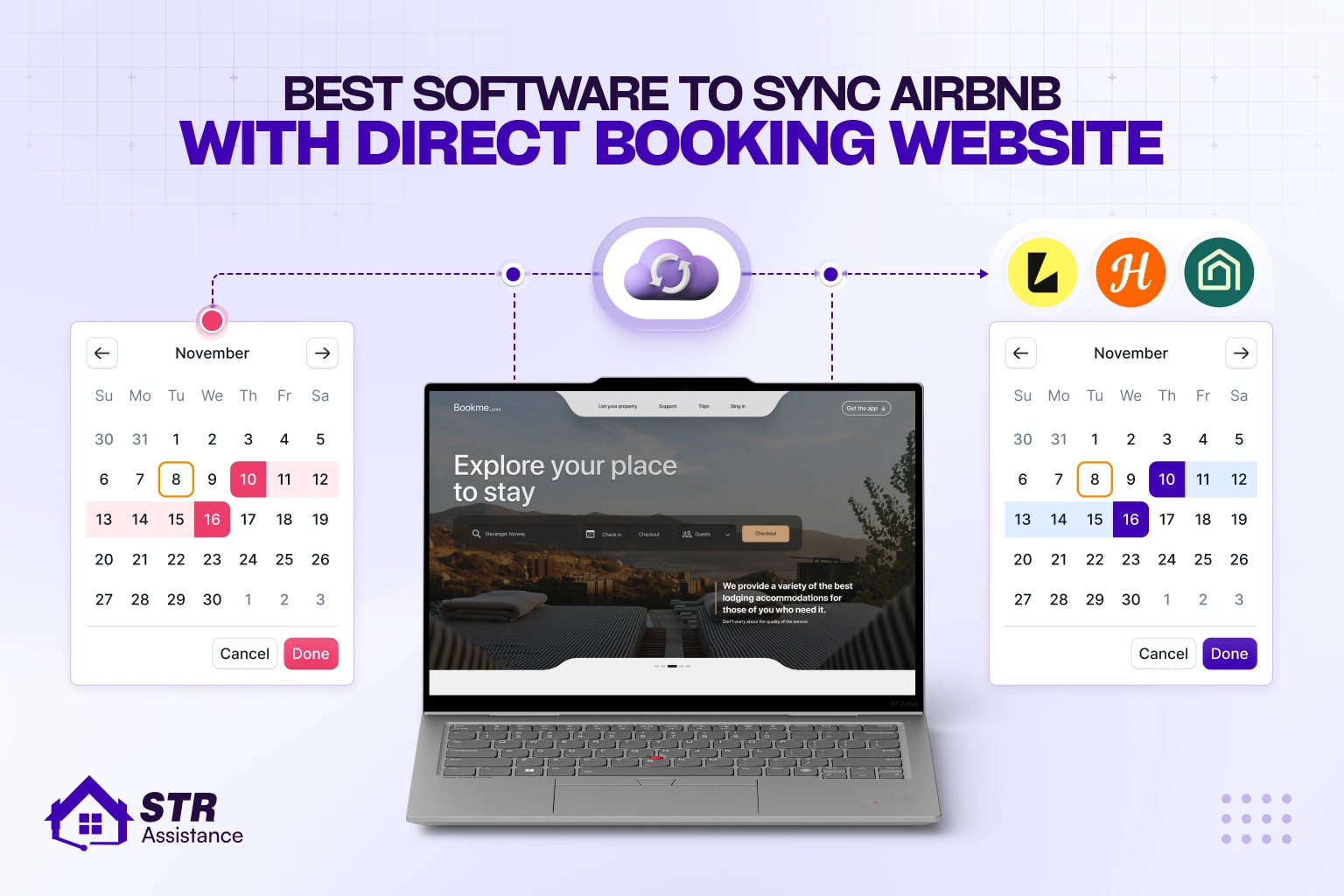
- Channel sync, so a direct booking blocks the date on Airbnb and Vrbo automatically.
- Property showcase templates.
- Tools specifically designed for property managers and hosts to create branded reservation sites
A guest can land on your site from a Google search, see the exact same real-time availability they’d see on Airbnb, and book it, and your calendar closes that date everywhere else within minutes, not hours.
Why Build a Direct Booking Website for Vacation Rentals?
A direct booking website gives you a channel you actually control: your brand, your guest relationship, your pricing rules, and your post-stay marketing. It complements Airbnb and Vrbo, not replace them, since OTAs are still where most first-time guests find you.
According to Stayfi Vacation Rental Statistics in 2026, 70% of operators have a direct-booking website. 37.5% of hosts in one Hostaway report said their direct bookings increased compared with the prior year.
6 core benefits of a direct-booking website for vacation rentals:
- Honestly, hosts talking about this openly online tend to frame it less as fee-free and more as pricing control: the freedom to decide whether the money you’d have paid an OTA becomes a discount for the guest, a welcome perk, a loyalty offer, or just profit.
- It’s making the second booking easier and cheaper. A guest who already stayed, already trusts you, and already knows the property doesn’t need Airbnb’s review system to feel safe booking again. Send them a direct link, a QR code on the fridge, a return-guest discount, and you’ve started building an audience that isn’t rented from an OTA every single time.
- That turns your website into a research tool, not just a booking page. You can finally tell whether a slow month is a pricing problem, a photo problem, or a traffic problem, instead of guessing.
- Inside Airbnb, your property exists inside Airbnb’s design language, competing on the same star rating and nightly price as everyone else on the page. A direct site lets the property be its own thing.
- This doesn’t make OTAs unnecessary. It means if one underperforms, you’ve still got a working path for past guests, referrals, and whatever traffic you’ve built yourself.
- Hosts who’ve actually built a direct channel bring this up constantly: running the property by your own rules instead of adapting every decision to an OTA’s policies and dispute process. It’s one of the most repeated benefits in real host conversations, more than the commission savings themselves.
Tip: This cuts both ways. More authority also means more responsibility, insurance, screening, and dispute handling all become fully yours instead of partly AirCover’s.
The Two Types of Builder (And Which Problem Each One Solves)
Most people list full property management systems next to pure website builders as if the two compete head-to-head. They don’t. They solve different problems, and knowing which one you actually need cuts your shortlist in half before you’ve even looked at a single price.
Website-First Builders
These start from the website and add booking capability on top. WordPress with a rental plugin, Squarespace or Wix with a widget, even Houfy’s newer AI site builder, all fall here. You get design freedom first, booking logic second.
This is the right starting point if design, content, and SEO matter more to you than deep operational automation, and if you’re not (yet) running a full PMS underneath everything. It’s also the cheapest entry point on this whole list, most of the time.
PMS-First Builders With a Website Included
Lodgify, Hostaway, Guesty, OwnerRez, Hostfully, and Uplisting all work the other way around. The website is a feature bolted onto a full property management system, calendar, channel manager, guest messaging, payments, and the site is just the guest-facing front door to all of it.
This is the right starting point once you’re managing more than a couple of units and syncing calendars manually has already started to hurt. The website stops being the product and starts being a feature of something bigger.
The Third Option Most Guides Skip: A Booking Widget on Your Existing Site
You don’t have to rebuild anything to add direct booking. CraftedStays, and most of the PMS platforms above, also offer a pure booking widget or API you can drop into a site you already like. This is genuinely the least disruptive path if you’ve already invested real time into a WordPress or Squarespace site and don’t want to start over.
10 Best Direct Booking Website Builders in 2026
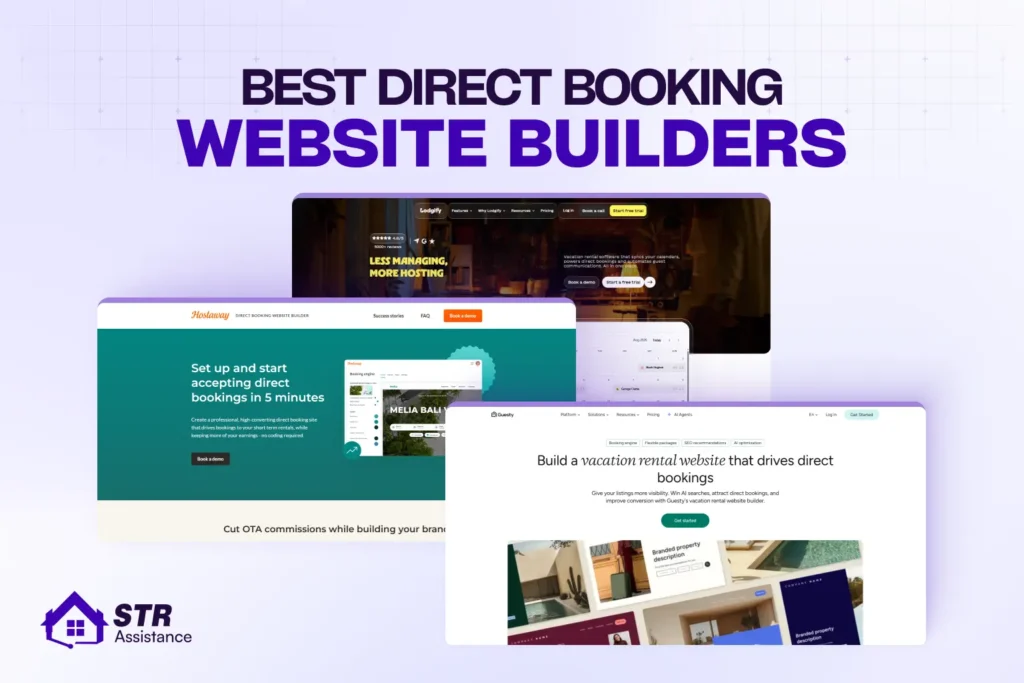
In 2026, some of the best direct booking website builders are Lodgify, Guesty, OwnerRez, Hostaway, and some more we have listed. We have selected these website builders as per demand from our own clients, research into the vacation rental marketplace, and evaluating each of the features and benefits each website builder provides.
For each platform below, “our take” comes from actually reading through what our clients who have taken direct booking website for short term rentals service from us, and the hosts on Reddit and independent review threads, not just the vendor’s own marketing page.
Builder | Starting Price | Booking Fee | Type | Google Vacation Rentals | Own Site If You Leave |
Lodgify | $16/mo (Starter, annual) | 1.9% on Starter only, 0% Professional+ | PMS-first | Yes, eligible plans | Domain portable, hosted site goes down |
Hostaway | $49/mo (Pro tier) | Conflicting: 0.5%+1.8% guest fee on one page, 3.9%+1.8% on another | PMS-first | Yes | Domain portable, hosted site goes down |
Guesty | Not publicly listed, custom quote | Not publicly confirmed | PMS-first | Not confirmed in public docs | Domain portable, hosted site goes down |
OwnerRez | $40/mo (1 property, sliding scale) | None | PMS-first | Not confirmed in public docs | WordPress plugin route keeps more independence |
Hostfully | Reportedly has a free tier, unverified | Not publicly confirmed | PMS-first | Not confirmed in public docs | Domain portable, hosted site goes down |
Uplisting | Subscription-based, check current site | None advertised | PMS-first | Not confirmed in public docs | Domain portable, hosted site goes down |
Houfy | Free listing, $11.99/mo per listing for AI site | 0% | Website-first (marketplace) | Not confirmed in public docs | You control the domain and content directly |
CraftedStays | $69.99/mo (up to 2 properties, first year) | None advertised | Widget/frontend on your PMS | Depends on connected PMS | You own the domain; site depends on PMS staying connected |
WordPress + Plugin | Varies, hosting + plugin costs | Depends on plugin/gateway | Website-first | Depends on plugin | Full ownership, it’s your own install |
Squarespace or Wix + Widget | ~$16 to $49/mo (site) + widget cost | Depends on widget | Website-first | Depends on widget | Domain portable, site content tied to platform |
Lodgify

An all-in-one vacation rental platform combining a no-code booking website, a full PMS, channel manager, and payment tools, built specifically to reduce OTA dependence while keeping every calendar in sync.
Best for: Independent hosts and small-to-mid managers who want a direct booking site without hiring a developer, from a single property up to a few dozen.
- No-code website builder with unlimited custom pages and multilingual support.
- Central calendar sync across Airbnb, Vrbo, and Booking.com, plus iCal for other channels.
- Google Vacation Rentals support on eligible plans.
- Built-in payment processing, damage deposit holds, and automated guest invoicing.
- AI writing assistant inside the unified guest inbox.
Pricing: Starter runs $16/month billed annually, but carries a 1.9% fee on every direct booking. Professional runs about $40/month with that fee dropped to zero. Ultimate sits around $59/month. The cheapest Basic tier doesn’t include the website builder at all, direct booking capability starts at Starter.
Do you own the site: Your custom domain is fully portable if you leave, Lodgify confirms this directly. The hosted site itself, templates and all, goes away when you cancel.
- Pros: genuinely built for short-term rentals specifically, not a general booking plugin adapted for the job; strong Trustpilot ratings; the website builder is consistently called out as one of the better native options in this category.
- Cons: the 1.9% fee on the entry tier eats into the exact savings you’re trying to capture; some hosts report the Basic tier feels like “a channel manager with training wheels”; support and pricing complaints show up in a minority of reviews.
Our take: Lodgify is where we point most solo and small-portfolio hosts first, because it’s the rare platform built specifically for this use case rather than repurposed from something else. Don’t judge it off the Starter tier alone. Between the missing website builder on Basic and the 1.9% fee eating into your direct-booking savings on Starter, Professional is really where the platform starts paying for itself. Skip it if you’re already committed to a different PMS, since Lodgify wants to be your whole operating system, not just your website.
Hostaway
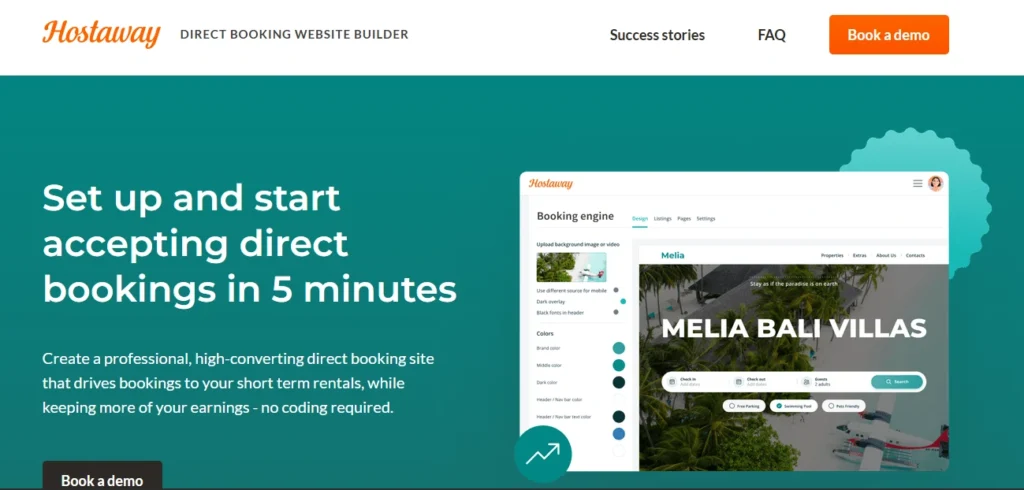
A vacation rental website builder and booking engine embedded inside Hostaway’s broader PMS and channel manager, built to keep direct bookings synchronized with everything else in your operation.
Best for: Property managers, from small operators up to teams running thousands of units, who are already using or planning to use Hostaway as their core PMS.
- No-code builder with custom branding, mobile-first templates, and an option to embed the widget on an outside site instead.
- Real-time availability synced to the central Hostaway calendar, with instant booking and digital rental agreements.
- Google Vacation Rentals and Google Analytics integration.
- AI-powered SEO tools (titles, meta descriptions, alt text) on the Pro tier specifically.
- Multi-language support for Spanish, French, Italian, Portuguese, and German.
Pricing: Here’s where you need to slow down. Hostaway’s own product page states $49/month for Pro plus a 0.5% reservation fee and a 1.8% guest fee in the US. A separate Hostaway landing page instead describes a “nominal” 3.9% payment-processing fee plus the same 1.8% guest fee. Those are two different cost structures, on two pages Hostaway itself controls. Confirm the actual current contract terms before signing anything.
Do you own the site: Domain is portable. The site itself is tied to Hostaway’s ecosystem and doesn’t survive a cancellation.
- Pros: deep operational tooling, team permissions, task automation, and smart-lock integrations that go well beyond what a simple website needs; Reddit sentiment on Hostaway broadly runs more favorably than on several competitors.
- Cons: cost is the single most consistent complaint, both the subscription and the layered fees; one Reddit host specifically flagged the added 1.8% guest fee as a dealbreaker even while liking the website itself; likely overbuilt for a single listing.
Our take: We manage listings for a few hosts on Hostaway, and the pattern is consistent: they love the operational depth once they’re past three or four units, and they resent the fee stack while they’re still at one or two. If you’re a single-property host, this is probably too much platform for what you actually need right now. If you’re already juggling team members, cleaners, and multiple channels, the automation genuinely earns its price. Get the fee structure in writing before you commit, given that Hostaway’s own pages don’t agree with each other.
Guesty
A set of website and booking-engine options built natively into Guesty’s PMS, ranging from a basic no-code site to a full Booking Engine API for custom-built development work.
Best for: Larger portfolio operators and professional managers who want a branded direct channel fully integrated with PMS, calendar, and payments in one system.
- Native API sync, which Guesty argues is safer than iCal-based competitors for avoiding calendar-lag double bookings.
- Three website tiers: Basic, Advanced (more customization, multiple sites), and a full Booking Engine API for developers.
- AI-assisted SEO content and accessibility tooling.
- Imported OTA reviews displayed directly on the booking site for trust.
- Multiple payment processors supported, including GuestyPay and Stripe.
Pricing: Guesty doesn’t publish transparent public pricing for its core product, you’ll need a custom quote. Third-party trackers mention a Guesty Lite entry point in the $16 to $23/month range for very small portfolios, but that’s a different, lighter product from the full direct-booking website stack.
Do you own the site: Domain portable, site itself is Guesty-centered and doesn’t function independently of the platform.
- Pros: genuinely robust automation, reporting, and channel-management depth; the direct-booking setup itself is frequently described as easy to configure once you’re in the ecosystem.
- Cons: cost and complexity are the two most repeated Reddit complaints, often framed as “worth it past 20 properties, questionable below that”; a handful of users report support delays and pricing-sync glitches.
Our take: Guesty makes sense once you’re managing enough units that a support team and dedicated account rep matter more than a slick template. For a host with two or three properties, the lack of public pricing alone is a signal you’re probably shopping above your current scale, skip it until you’re closer to twenty units or a real management team behind you.
OwnerRez
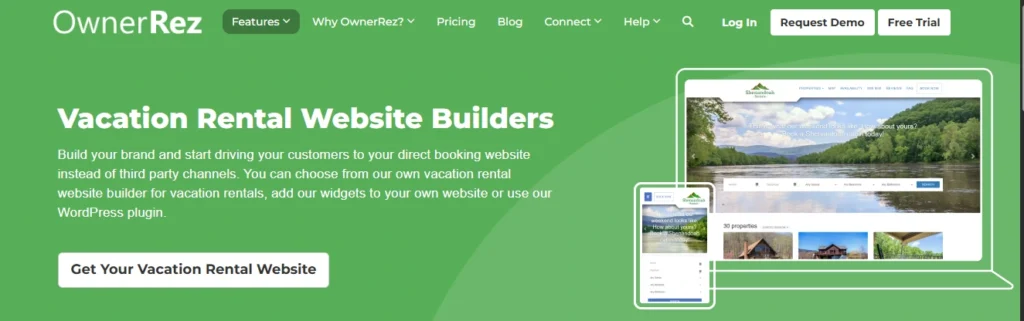
A vacation rental PMS and channel manager with a native direct booking website, plus a WordPress plugin and widgets for hosts who’d rather build their own site around OwnerRez’s booking engine.
Best for: Independent hosts and small-to-mid managers who want deep operational control and don’t mind a steeper learning curve to get it.
- Hosted, mobile-optimized template sites with real page and layout control, no coding required.
- A native WordPress plugin that pulls live OwnerRez data into a fully custom WordPress site.
- Review aggregation from both direct and OTA bookings in one place.
- E-signed rental agreements and automated security deposit scheduling.
- Promo codes that can be restricted specifically to direct-site bookings.
Pricing: Confirmed at $40/month starting for a single property, sliding down per property as your portfolio grows, with no booking fees or long-term contract. This is one of the more transparent pricing structures on this list.
Do you own the site: If you use the native site, it’s OwnerRez-hosted and goes down if you cancel. Go the WordPress-plugin route instead and you keep a fully independent site, with OwnerRez just supplying the live booking data behind it.
- Pros: no booking commission, transparent per-property pricing, and genuinely granular control over rules and workflows once you’ve climbed the learning curve.
- Cons: setup takes real time and effort, even happy users describe the first week as frustrating; the native website builder is repeatedly described by third parties as basic compared to dedicated design tools.
Our take: If you genuinely want to own your website independently of your booking software, OwnerRez plus a WordPress build is one of the cleanest ways to get there on this whole list. Just go in expecting the first week of setup to feel like homework. Skip the native site if visual design actually matters to your brand, that’s the one place OwnerRez consistently gets outshined by more design-first competitors.
Hostfully
A native website and booking engine built into Hostfully’s PMS, designed to keep direct reservations, OTA channels, and digital guidebooks running from one central system.
Best for: Short-term rental, corporate housing, and boutique hospitality managers who want a ready-to-launch site rather than building one from scratch.
- A pre-built, responsive booking site with live pricing and availability, launchable without any coding.
- Rate and availability parity across the direct site and 100+ connected channels.
- Automated digital guidebooks that double as a guest-data capture tool.
- Centralized, AI-assisted guest messaging across direct and OTA channels.
- SEO-ready site structure built for social and past-guest sharing.
Pricing: We couldn’t independently confirm exact current tiers from Hostfully’s own pricing page at the time of writing. Some vendor-adjacent content references a free entry tier, treat that as unverified until you confirm it directly on Hostfully’s site, since pricing pages change and we’re not willing to publish a number we can’t stand behind.
Do you own the site: Domain portable; the hosted site is PMS-integrated and doesn’t operate independently if you cancel.
- Pros: a genuinely simple setup story, users specifically call out having both a direct site and payment acceptance in one place, features some competing PMS tools lack entirely.
- Cons: some users report a decline in overall product experience following Hostfully’s acquisition by Guesty; third-party review summaries flag occasional bugs and limited mobile-app editing.
Our take: Hostfully earns its spot for hosts who want “ready to launch” over “build it yourself,” and the guidebook-as-marketing-tool angle is genuinely underused by competitors. Confirm current pricing directly before you plan a budget around it, and if you’re specifically worried about post-acquisition product direction, that’s a fair question to ask their sales team directly rather than assume either way.
Uplisting
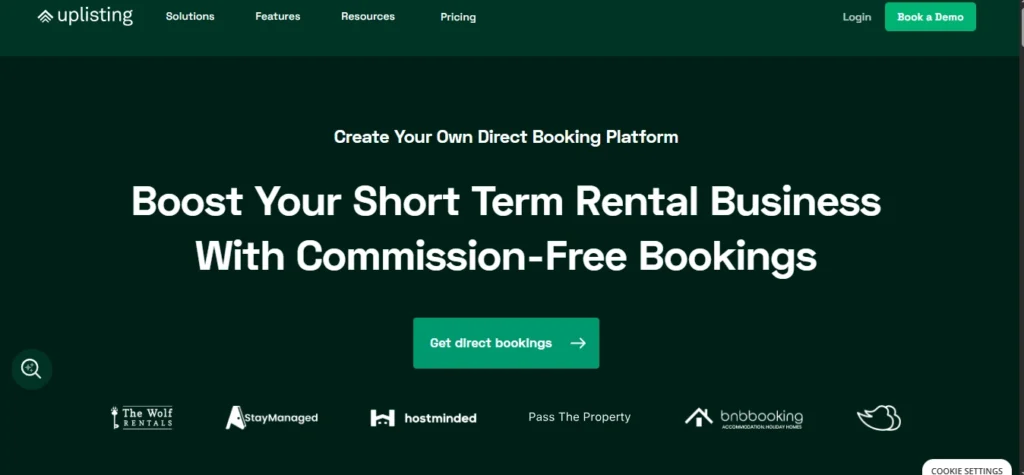
A direct booking website, channel manager, and lightweight PMS built for short-term rental operators who want commission-free direct bookings without adopting an enterprise-heavy system.
Best for: Small-to-medium portfolios wanting operational control across Airbnb, Vrbo, Booking.com, and direct bookings without a bloated system underneath it.
- Auto-generated, mobile-optimized booking pages that publish once your Airbnb account connects.
- Real-time sync of prices, availability, and restrictions across every connected channel.
- Subscription pricing with no commission taken from direct booking revenue.
- Secure Stripe payments, including 3D Secure and Strong Customer Authentication support.
- “Smart rates” that account for different OTA commission structures to target consistent net revenue.
Pricing: Uplisting uses subscription pricing without a fixed public number confirmed at the time of writing. Check their current site directly before comparing it against fixed-price competitors like Lodgify or OwnerRez.
Do you own the site: Domain is portable, but the booking pages are auto-generated and tied to the Uplisting ecosystem; they’re built for speed and conversion rather than deep custom design control.
- Pros: genuinely lean and operationally focused rather than bloated; multiple Reddit users specifically praise ease of use compared to heavier PMS platforms they’d tried first.
- Cons: auto-generated pages mean less creative control than a custom build; user-reported calendar and pricing sync glitches show up often enough to test carefully before fully committing.
Our take: Uplisting fits the host who’s outgrown a spreadsheet but doesn’t want Guesty’s price tag or complexity. It’s genuinely commission-free, which matters, but test the calendar sync thoroughly during any trial period before trusting it with a live, multi-channel calendar. That’s the one place real hosts consistently flag friction.
Houfy
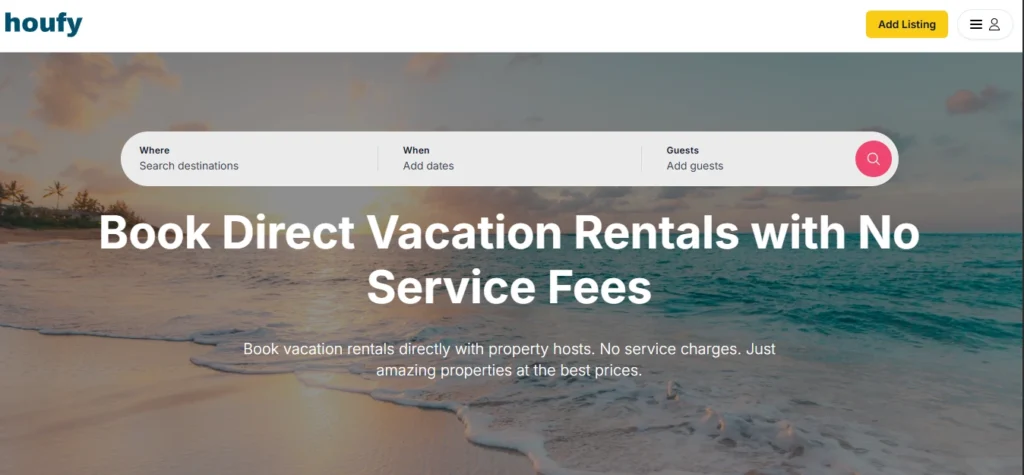
A fee-free direct booking marketplace, not a full PMS, where hosts list properties, communicate directly with guests, and can add an AI-generated branded website on the Premium tier.
Best for: Independent hosts and small portfolio owners who want zero commission and full control, and who already have some path to bringing their own traffic, repeat guests, referrals, or an existing following.
- 0% commission: hosts pay nothing per booking, guests pay no Houfy service fee either.
- Marketplace exposure alongside the AI website, so you’re not purely dependent on your own traffic.
- Direct, unrestricted guest communication, without the messaging limitations common on major OTAs.
- An AI website builder that generates a mobile-responsive, booking-ready site from a property description, with custom domain support.
- HoufyProtect, an optional damage protection product covering up to $20,000, though it’s explicitly not full property or liability insurance.
Pricing: Listing on the marketplace is free. The AI website builder runs $11.99 per listing per month, confirmed directly from Houfy’s own published material.
Do you own the site: Yes, more directly than most platforms on this list. You control the domain and content, with fewer strings tying you to Houfy’s ecosystem if you decide to leave.
- Pros: genuinely zero commission on both sides; hosts specifically praise the pricing control this gives them; one host reported 17% of their annual bookings coming through Houfy in their first year using it.
- Cons: marketplace traffic is meaningfully lower than Airbnb or Vrbo; more than one host reported listing for six months with no bookings at all, since Houfy alone doesn’t manufacture demand.
Our take: Houfy is the right call once you already have repeat guests or a following to point at your own site, since the commission savings are real and immediate. It’s the wrong call if you’re hoping it replaces Airbnb’s discovery engine on its own; it won’t, and several hosts learned that the expensive way. Pair it with actual guest screening and your own STR insurance, since Houfy hands you more control and more responsibility at the same time.
CraftedStays
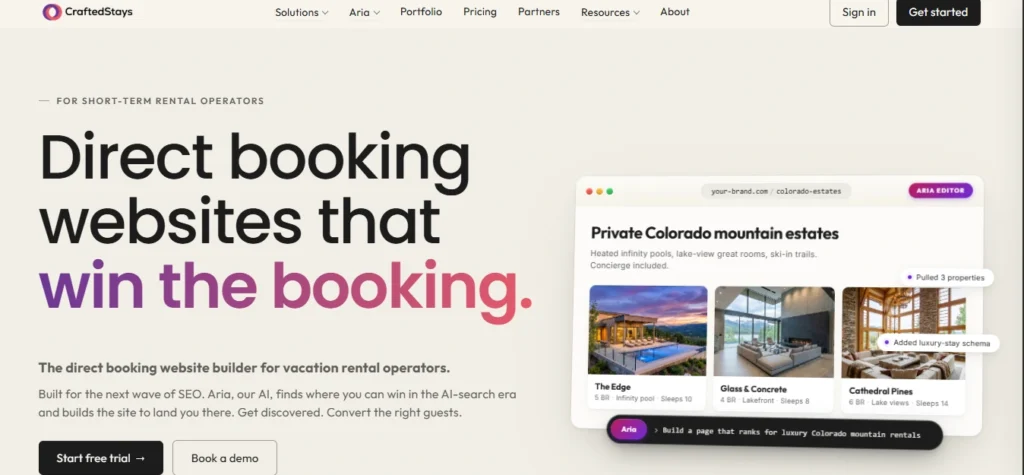
A direct booking website layer, not a full PMS, that connects to an existing system, OwnerRez, Hospitable, Hostaway, or Guesty, and turns your live property data into a branded, conversion-focused site.
Best for: Operators who already run a PMS and don’t want to migrate anything, but whose PMS’s native website looks and converts worse than they need it to.
- Fast launch: CraftedStays advertises a site live in as little as 25 minutes once your PMS is connected.
- Real-time sync of listings, pricing, photos, and booking rules between your PMS and the new site.
- Conversion-focused templates built specifically for short-term rentals, not adapted from general ecommerce.
- SEO-friendly structure with blog capability and local content support.
- Deep integrations with OwnerRez, Hospitable, Hostaway, and Guesty specifically, with lighter support for others.
Pricing: Confirmed at $69.99/month for up to two properties during the first 12 months, per CraftedStays’ own pricing page, renewing at the standard rate after that. Each additional property runs $8/month. The higher Institution tier serves 20+ property portfolios.
Do you own the site: You control the domain directly. The site’s functionality still depends on staying connected to your underlying PMS; it’s a layer on top, not a fully independent system.
- Pros: no migration required if you already like your PMS; genuinely faster and more design-forward than most native PMS website builders.
- Cons: real ongoing cost stacked on top of whatever you’re already paying your PMS; site performance is only as reliable as the underlying PMS integration.
Our take: CraftedStays solves a real, specific problem: your PMS’s built-in website is functional but looks like every other PMS website. If that’s genuinely your complaint, this is a clean fix without the disruption of switching your whole operational stack. Skip it if you’re not already happy with your PMS underneath, since CraftedStays doesn’t fix a bad PMS, it just makes the storefront in front of it look better.
WordPress With a Booking Plugin
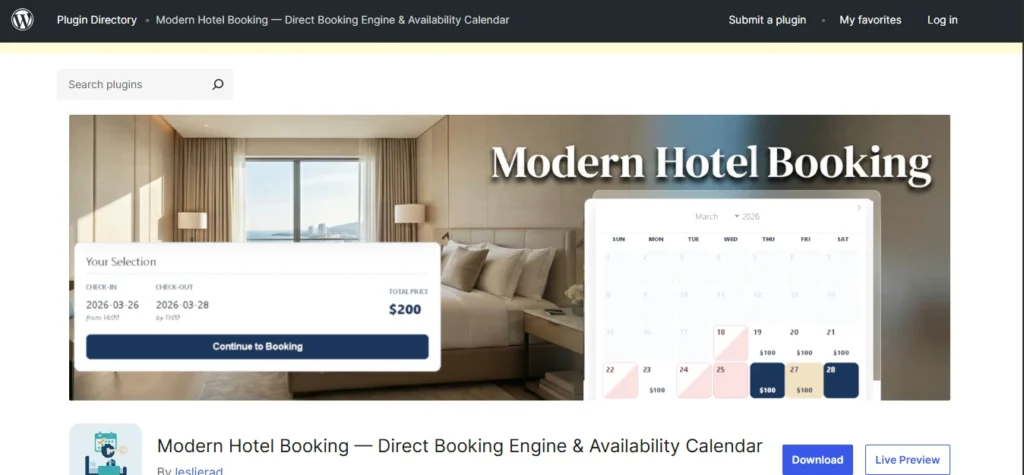
Not one single product, a customizable setup where WordPress runs the actual site and a separate plugin or PMS widget handles availability, checkout, and reservations.
Best for: Hosts and small agencies who want maximum control over branding, content, and SEO, and who either have some technical comfort or a developer on hand.
- Full domain, branding, and content control, with WordPress’s enormous plugin and theme ecosystem behind it.
- Booking plugins vary widely: some are built for overnight stays specifically, others are appointment-scheduling tools stretched to fit; know which one you’re buying before you commit.
- iCal sync available on many rental-specific plugins, though it can lag behind a real-time PMS connection.
- Strong SEO and content tooling through the standard WordPress SEO plugin ecosystem.
- Genuinely fragmented support: a problem could involve your host, your theme, your plugin, and your payment processor, with no single party responsible for the whole chain.
Pricing: Varies enormously and has no single number. Add up hosting, a premium theme, a booking plugin license, payment-processing fees, security and backup tools, and possibly a developer, and it can land anywhere from genuinely cheap to more expensive than a single all-in-one subscription, depending entirely on what you choose.
Do you own the site: Completely. This is the one option on this list where ownership isn’t even a question; it’s your own WordPress install from the ground up.
- Pros: total design and content freedom; the strongest long-term SEO ceiling of anything on this list, since nothing is templated or restricted.
- Cons: real ongoing maintenance burden, updates, security, backups; a generic booking plugin without real-time PMS sync genuinely risks double bookings across channels.
Our take: This is the right answer for a host who genuinely wants a unique brand and has the patience, or the budget for a developer, to maintain it properly. It’s the wrong answer if you just want direct bookings working reliably by next week. The strongest version of this setup pairs WordPress as the marketing front end with a PMS-connected widget for the actual booking logic, not a standalone plugin trying to do everything alone. That combination is worth planning for from the start.
Squarespace or Wix With a Booking Widget
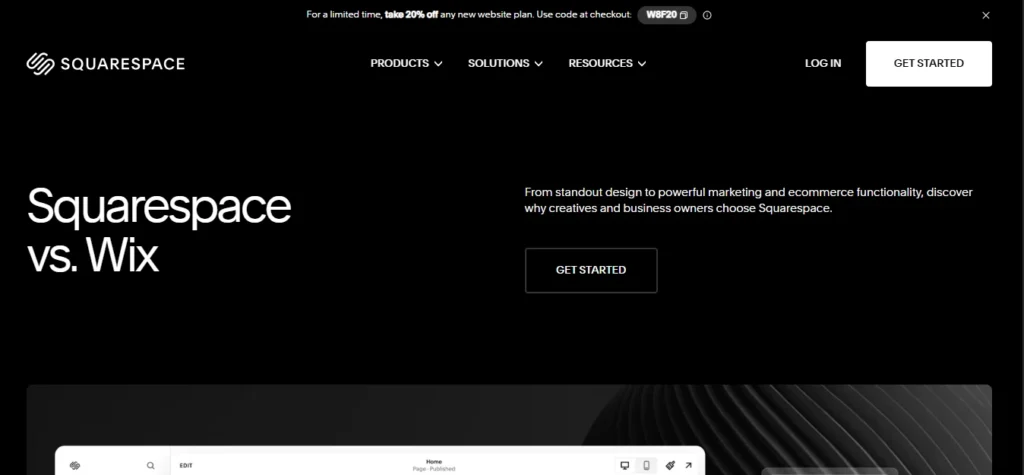
A website-first setup where Squarespace or Wix handles design, content, and SEO, while a separate widget, booking engine, or embedded PMS connection handles the actual reservation and payment flow.
Best for: A single property or small portfolio with a clear marketing plan already in place, where design quality matters as much as booking mechanics.
- Squarespace: every template genuinely looks distinct, unlike many rental-specific builders that all share one visual language. Strong blog and content tools, minimal transaction fees on higher tiers.
- Wix: broader app ecosystem and more drag-and-drop layout freedom, with Wix Bookings available natively for scheduling, though it’s built more for appointments than multi-night stays.
- Neither platform is natively built for overnight-stay booking logic. Real capability lives entirely in whichever widget or PMS connection you add on top.
- Embedded widgets can create design mismatches and slower load times, and their content isn’t always fully visible to search engines.
Pricing: Squarespace’s business-tier plans generally run in the $16 to $49/month range depending on tier, with the Basic plan carrying a 2% transaction fee that drops to 0% on higher tiers. Wix runs a comparable range. Either way, a separate booking widget or PMS connection is priced on top of the base site plan, so add that in before comparing total cost against an all-in-one competitor.
Do you own the site: Domain is portable on both platforms. The actual site content and design are tied to whichever platform you built it on, and generally don’t export cleanly to a different system if you switch later.
- Pros: genuinely better visual design out of the box than most rental-specific templates; strong content and blogging tools for SEO.
- Cons: booking capability is entirely dependent on the widget you choose, so the platform’s own reputation doesn’t guarantee your booking flow will actually be reliable; real risk of double bookings without a verified real-time PMS connection.
Our take: Choose Squarespace if design and content are genuinely your priority and you’re comfortable embedding a separate booking engine underneath. Choose Wix if you want more layout flexibility and app-store options. Either way, the platform you pick matters less than the widget you connect to it, don’t judge Squarespace or Wix’s booking capability by their design reputation, since they’re two completely separate questions.
Can You Build a Direct Booking Website Without a Builder?
Yes, and plenty of hosts do it this way on purpose, trading a dedicated rental platform for a general website builder plus a separate booking connection. It’s more assembly work upfront, and it buys you design freedom none of the template-based platforms above genuinely match.
WordPress With a Booking Plugin
Covered in full detail above, this is the highest-ceiling option on this entire list if design and long-term SEO control matter more to you than launching this week. The tradeoff is real ongoing maintenance, and picking a plugin that actually understands overnight-stay pricing rather than appointment scheduling.
Squarespace or Wix With a Booking Widget
Also covered above, this sits in between: better out-of-the-box design than most rental-specific templates, with booking reliability that depends entirely on whichever widget you connect underneath. It’s the middle path for a host who wants something that looks polished without WordPress’s maintenance overhead.
What Direct Booking Website Builders Actually Cost
A direct booking website builder for vacation rentals typically costs between $24 and $150 per month for all-in-one software platforms, or $1,000 to $8,000 upfront for custom professional builds.
Four separate cost layers stack on top of each other, and you need to know them for a real pricing for your vacation rental website.
Monthly Subscription Costs: This is the number every vendor leads with, and it ranges from effectively free (WordPress core, Houfy’s marketplace listing) up to $60 or more per month for a fuller PMS tier like Lodgify Ultimate. It’s real, but it’s rarely the whole story.
Booking Fees Hidden Inside Cheaper Plans: This is the one that catches hosts off guard most. Lodgify’s cheapest booking-capable tier still carries a 1.9% fee per direct reservation, only dropping to zero once you move up a tier.
Hostaway layers a guest-facing fee on top of its subscription, with its own pages disagreeing about the exact structure. Read the fee schedule for the specific tier you’re actually buying, not the flagship tier the marketing page leads with.
Payment Processing Fees: Separate from any platform booking fee, whoever actually processes the guest’s card- Stripe, PayPal, a built-in gateway- takes its own standard cut, typically in the 2.5 to 3% range. This exists no matter which builder you choose; it’s a cost of accepting cards, not a builder-specific markup.
The Costs That Sit Outside the Builder: None of the platforms above include everything you’ll actually need running. Domain registration, an SSL certificate (usually bundled, but confirm it), professional photography, and your own marketing spend to actually drive traffic to the new site all sit outside the subscription price entirely.
- A custom domain, usually $10 to $20 a year on its own if it’s not bundled into your plan.
- Guest screening and insurance, since none of these platforms replace what AirCover was quietly handling for you on Airbnb.
- Traffic generation, SEO work, paid ads, email marketing, none of which come free with any of these tools.
Do You Actually Own Your Direct Booking Website?
Mostly no, and this is the single most important thing to get right before you build on any of these platforms. Every PMS-first builder on this list hosts your site inside its own system. Cancel, and the site goes down with your subscription, not just the booking engine underneath it.
What you almost always keep is your custom domain, since that’s registered separately from the platform itself. What you almost always lose is everything built on top of it, the pages, the templates, the content, unless you specifically went the WordPress route or built something genuinely independent from day one.
- Lodgify: domain stays yours indefinitely, per their own FAQ. The hosted site and its content don’t survive cancellation.
- Hostaway, Guesty, Hostfully, Uplisting: same general pattern, domain portable, site itself tied to the platform.
- OwnerRez: the native site follows the same rule, but the WordPress plugin route sidesteps this entirely, since the site lives on your own WordPress install regardless of what happens to your OwnerRez subscription.
- CraftedStays: you control the domain directly, but the site’s actual functioning still depends on staying connected to your underlying PMS.
- Houfy: closer to genuine independence than most, since the AI-built site is meant to stand more on its own.
- WordPress: full, unambiguous ownership. This is the only option here where the question doesn’t really need a caveat attached.
- Squarespace or Wix: domain portable, but the actual site content generally doesn’t export cleanly to a different platform if you switch later.
How to Match the Perfect Website Builder to Your Actual Situation?
Reading ten full profiles to find the one that fits you is a lot to ask. Here’s the shortcut, sorted by the situation that’s actually driving your decision.
- You Need a Site Live Fast: If you already run a PMS and just need a booking-ready site without waiting weeks, CraftedStays is built specifically for this, live in as little as 25 minutes once your PMS connects. If you don’t have a PMS yet and want the whole system in one move, Lodgify’s no-code builder is the faster all-in-one route, though expect a few days to get it genuinely dialed in, not just live.
- Budget Is the Deciding Factor: Houfy’s marketplace listing is free, with the AI website add-on running under $12 a month. WordPress can also land cheap if you’re comfortable with the setup work yourself. Lodgify’s Starter tier gets you in the door for $16 a month, just remember the 1.9% fee that comes with it until you’re ready to move up a tier.
- You Want Complete, Custom Design Freedom: Nothing on this list beats WordPress for genuine design control, full stop. Budget real time or a developer’s fee for it, and expect the payoff to show up in SEO and brand differentiation over the following year, not on launch day.
- You’re Managing a Larger Portfolio: Once you’re running twenty or more units, the operational depth in Hostaway or Guesty starts earning its higher price tag, team permissions, task automation, and channel management that a smaller platform simply wasn’t built to handle. OwnerRez scales well too, if you’re willing to trade some visual polish for granular rule control.
- You Already Have Development Resources: WordPress plus a real-time PMS-connected booking widget, rather than a standalone plugin trying to do everything alone, is the strongest version of full technical control on this entire list.
You’re Just Testing Whether Direct Booking Is Worth It
What to Look for in a Direct Booking Website Builder
Your direct booking site needs three things to actually work: the booking mechanics that let a guest reserve and pay without friction, the pages that convince them to trust you enough to try, and the visibility and data systems that keep bringing people back after launch day.
- Booking Essentials: Booking engine, calendar availability, secure checkout, visible policies, real contact details, social proof pulled in from your OTA history, cancellation clarity: refund terms stated up front, fast page speed.
- Conversion Pages: A booking engine with nowhere to send someone is wasted. The pages that actually move a visitor toward booking: Homepage, Property pages: real photos, real pricing, real availability, Location pages, FAQ and About pages, and a “why book direct” page: spelling out the actual benefit.
- SEO and Tracking: A site nobody finds converts nothing. You need full control here, not a locked-down template pretending SEO happened automatically. Editable metadata, indexability, the site needs to actually be crawlable, internal linking and image optimization, built-in analytics.
- Google Vacation Rentals Integration: Direct connection with Google Vacation Rentals, accurate rates and availability, property details synced correctly, direct booking links, and fewer unnecessary steps between search and reservation.
- Mobile Conversion: Mobile-first UX, fast loading, simple navigation, clear pricing and availability, easy-to-tap CTAs, short booking forms, and a smooth checkout experience designed to turn mobile visitors into guests.
- Template Flexibility vs. Custom Design: Templates can get you live faster, but flexibility matters as your brand grows. Look for control over layouts, fonts, imagery, content sections, booking flows, and branding or custom design options when a standard template isn’t enough.
- Guest Data Capture and Email List Ownership: Direct bookings should build an audience you actually own. Capture guest details with consent, integrate email marketing tools, grow your subscriber list, access booking data, and avoid platforms that keep valuable guest relationships locked away.
How to Choose the Best Direct Booking Website Builder for Your Situation
The right builder comes down to three things: how many properties you’re managing, how much control you actually want versus how fast you want to launch, and where you realistically expect your direct traffic to come from.
Three broad situations cover most hosts asking this question. Here’s what each one should actually prioritize.
If You're a Single-Property Host
Speed and low friction matter more than deep customization at this stage. You need guests to check availability, book, and pay without hitting a dead end, plus enough trust signals, real reviews, clear photos, secure payment badges, to convince a stranger to book directly instead of defaulting to Airbnb.
Basic SEO control matters too, since organic traffic is how a lot of first direct bookings actually happen, but don’t over-invest in a feature set built for a ten-property operation you don’t have yet.
If You're a Growing Manager
Once you’re past two or three properties, the priority shifts hard toward things that don’t break as you scale. Channel sync stops being a nice-to-have and becomes the thing that prevents a double booking from ruining a guest’s trip and your review score in the same weekend.
Look specifically for proven multi-property handling, real PMS integration depth, and brand consistency tools that keep every listing looking like it belongs to the same operation as you add units.
If You're an SEO-First Operator
If organic search is genuinely your growth engine, prioritize platforms that hand you real editorial control, not a locked template pretending to be optimized. That means indexable pages, metadata you can actually edit per page, fast load times, and a real analytics setup, not a vague dashboard summarizing traffic in broad strokes.
The platform also needs room to publish more than template pages, blog posts, local guides, and destination content, since that’s usually where the actual search rankings come from over time.
What Happens After Your Site Goes Live?
Launching the site is the easy part. Everything Airbnb was quietly handling behind the scenes- guest verification, dispute support, payment protection- becomes your responsibility the moment a guest books directly.
Who Answers Direct Booking Enquiries
On Airbnb, a slow response hurts your metrics. On your own site, a slow response often just loses the booking entirely, since the guest has no algorithm nudging them to wait for you specifically. Someone needs to be answering these fast, every day, not just when you happen to check your inbox.
If you don’t have the bandwidth to answer within minutes at all hours, an Airbnb VA running your direct booking enquiries closes that gap without you being glued to your phone.
Guest Screening Without a Platform Doing It For You
Airbnb quietly verifies identity, checks review history, and flags risky bookings before you ever see them. A direct booking site does none of that automatically; whoever books your Stripe checkout is in, no vetting layer standing between them and your calendar unless you build one yourself.
Building that layer yourself means ID verification, a real security deposit or damage protection product, and a house-rules acknowledgment step before checkout, not after. If setting that up sounds like one more thing added to an already full week, here’s how we screen guests before a booking is accepted.
Payment Disputes and Chargebacks Without AirCover
AirCover’s protections don’t extend to a booking that happened outside Airbnb’s system. A direct booking chargeback goes through your payment processor’s own dispute process, and you’re the one assembling evidence, not a platform with a dedicated trust and safety team backing you up.
Keep every direct booking’s documentation, signed rental agreement, ID verification, messages, in one place from day one. Retrofitting a paper trail after a dispute is already open is far harder than building the habit from the first reservation.
Keeping the Calendar Accurate Across Every Channel
This is where a direct site quietly creates more risk than it removes, if you let it. Every additional booking channel is one more place a stale sync can create a double booking, and a direct site is one more channel by definition.
Real-time, verified sync between your direct site and every OTA you’re still listed on isn’t optional once you’re taking bookings from more than one place. Test it regularly, not just once at setup.
Driving Traffic (A Live Site Is Not a Booked Site)
None of the ten platforms above manufacture demand. A perfectly built site with zero visitors books exactly as many reservations as no site at all. This is the single most common mistake we see: a host spends real money getting a beautiful site live, then wonders three months later why direct bookings never showed up.
SEO, repeat-guest email campaigns, and genuinely useful destination content are what actually bring people to a direct site over time, not the site’s existence on its own. If content is the piece you’re missing, content marketing that brings guests to your own site is exactly the gap that fills.
Staying Compliant With Airbnb's Off-Platform Policy
Building your own direct booking site is completely fine. What isn’t fine is using Airbnb’s own messaging system to actively steer an Airbnb guest toward booking your direct site instead, during their stay or in the review period around it, since that specifically violates Airbnb’s off-platform policy.
Market your direct site everywhere else freely, your own marketing, past guest emails, social media, a card left in the property. Just don’t use Airbnb’s own inbox to actively pull a current or recent Airbnb guest off the platform. That’s the line, and it’s a narrower one than most hosts assume.
You can easily turn instant booking on or off from the Airbnb listing settings dashboard. Airbnb Help Center states the process clearly; here is how you can do it easily.
How We Help Hosts Run Direct Booking Websites
Picking a builder is maybe a tenth of the actual work. The other ninety percent is everything we have talked about today. This also includes answering enquiries quickly, screening guests properly, keeping the calendar accurate across every channel, and actually driving traffic to the site.
STR Assistance is a short-term rental virtual assistant company that helps property owners and hosts with their rental businesses. We also help build suitable websites for their personal brands, based on property type, budget, and everything else. So far, we have built 100+ direct booking websites, backed by years of experience in the rental industry.
We know exactly how to create an online presence for your rental business and set up listing pages, customer reviews, booking engines, real-time calendars, and everything else. Hosts using our direct booking website service can choose their preferred builder or a custom website option, whichever suits their business.
What do we additionally offer? 30 days of free support for your website once it is launched, because the real hustle starts from there.
If you want to talk through which setup actually fits your specific property before you commit to anything, our Direct Booking Website page has more detail, or you can just schedule a meeting, and we’ll walk through your situation directly.
Frequently Asked Questions
Only if you're running more than a couple of properties or listing across several channels. A single property with one calendar to manage can often get by on a website-first tool alone. Once double-checking calendars by hand starts eating real time, a PMS underneath the website earns its cost.
Yes, paired with a separate booking widget or PMS connection, since neither platform natively handles overnight-stay booking logic on its own. Covered in full detail earlier in this guide, including what each platform does and doesn't do well.
Anywhere from about 25 minutes with a fast, PMS-connected tool like CraftedStays, to several weeks or longer for a fully custom WordPress build. Most all-in-one platforms land somewhere in between, live within a few days, genuinely dialed in within a couple of weeks.
Not in any way that hurts you. They serve different guests at different stages, Airbnb brings you first-time strangers, your direct site captures repeat guests and referrals who already trust you. Most hosts run both at once without either one cannibalizing the other.
Yes, in a limited way, a payment link sent manually, a phone booking, a social media DM. It works for occasional repeat guests, but it doesn't scale, and it skips the trust signals, real-time availability, and automated payment protection a proper booking flow gives you.
Confirmed reservations already on the calendar generally stay valid, since they live in your payment processor and your own records, not just the website itself. What you lose in a switch is the site's content, design, and SEO history, unless you specifically built on something portable like WordPress from the start. Domain names are the one thing that reliably transfers across almost every platform on this list.
Yes, and this gets overlooked constantly. AirCover's protections only apply to Airbnb bookings. A direct booking needs its own liability coverage, and ideally a security deposit or damage protection product, since none of the ten platforms in this guide provide that automatically.
Marketing your direct site generally is fine. What crosses the line is using Airbnb's own messaging system to actively steer a current or recent Airbnb guest away from the platform, during their stay or the review window around it. That specifically breaches Airbnb's off-platform policy, even though building and promoting the site elsewhere doesn't.
There isn't one universal answer, and be skeptical of any comparison that gives you one, especially if that source also happens to sell the platform they're recommending. Lodgify tends to fit most independent hosts best, CraftedStays fits hosts who already have a PMS they like, and Hostaway or Guesty fit larger portfolios. The right pick depends on your situation, not a fixed ranking.
Realistically, anywhere from close to free (WordPress core, a Houfy marketplace listing) up to $60 or more a month for a fuller PMS platform, before adding payment processing fees, a domain, and any marketing spend needed to actually drive traffic. Add up the full stack, not just the headline subscription price, before comparing two platforms against each other.
If you already run a PMS, a connected tool like CraftedStays can get a site live in around 25 minutes. Building from scratch on WordPress or a full PMS platform realistically takes days to a few weeks to get genuinely right, not just technically online.
WordPress wins on design freedom and long-term SEO control, at the cost of real setup and maintenance work. A purpose-built platform wins on speed and built-in booking logic you don't have to assemble yourself. Neither is objectively faster or better across every metric, that depends entirely on which tradeoff actually matters more for your specific situation.
CraftedStays specifically integrates with OwnerRez, Hospitable, Hostaway, and Guesty, with lighter support for others. Most other PMS-first platforms on this list, Lodgify, Hostaway, Guesty, and OwnerRez themselves, are their own closed system rather than a layer you connect to a separate PMS elsewhere.
Genuinely important. Slow-loading pages measurably increase how often a visitor leaves before booking; this holds true across ecommerce broadly, not just vacation rentals specifically. Treat page speed as a real conversion factor when evaluating any of these platforms, not a cosmetic detail.
Yes, and you generally should. Every platform in this guide is built to run alongside Airbnb, Vrbo, and Booking.com, not replace them, with channel sync specifically designed to keep every calendar matching. A direct site works best as an addition to OTA presence, not a substitute for it, especially early on.
A booking engine is the guest-facing tool that actually processes a reservation and takes payment on your own site. A channel manager is the backend system syncing your availability and rates across every platform you're listed on, Airbnb, Vrbo, your direct site, all at once. Most of the platforms in this guide bundle both together, which is exactly why they cost more than a standalone website builder alone.
Only for a narrow group: established, brand-focused operators with a real budget and a design vision none of the template platforms above can deliver. For most hosts, a purpose-built platform or a well-configured WordPress site gets close enough to that quality at a fraction of the cost and timeline, without the upfront commitment a custom agency build requires.